




Kazalo vsebine
- Kaj je črni poper?
- Piperin in kurkuma
- Odmerek: kaj so uporabljali v raziskavah
- Kdaj jemati piperin?
- Črni poper v izdelkih Junai
- Stranski učinki črnega popra in piperina
- Interakcije in kdo naj se izogiba
- Viri
- Na kratko
- RESEARCH ON BLACK PEPPER
- HOW TO USE BLACK PEPPER
- HOW AND WHY JUNAI USES BLACK PEPPER
- WHO NEEDS BLACK PEPPER
- WHAT TO EXPECT WITH BLACK PEPPER
- CONTRAINDICATIONS
Na kratko
QUICK RECAP OF BLACK PEPPER
Black pepper (Piper nigrum L.) is one of the most widely used spices in history, cultivated originally on the Malabar Coast of India and traded globally for millennia
Its primary bioactive compound is piperine, an alkaloid responsible for the spice's characteristic pungency and, more relevantly, its significant effects on nutrient absorption
Piperine inhibits CYP3A4, a cytochrome P450 enzyme responsible for first-pass metabolism of many bioactive compounds in the intestinal wall and liver
Piperine also inhibits P-glycoprotein (P-gp), an efflux transporter that pumps absorbed compounds back out of intestinal epithelial cells before they reach systemic circulation
Together, these two mechanisms significantly extend the absorption window and increase peak serum concentrations of co-administered compounds
The landmark Shoba et al. (1998) study demonstrated a 2000% increase in curcumin bioavailability in humans with piperine co-administration
Piperine additionally stimulates pancreatic digestive enzyme secretion and gastric acid production via TRPV1 receptor activation, improving overall digestive efficiency
Antioxidant activity, inhibition of lipid peroxidation, and preliminary neuroprotective effects in animal models round out a research profile that is deeper than its supporting-ingredient status might suggest
In Junai formulas, black pepper is used as a fruit extract standardized to ≥95% piperine, with a 50-60:1 plant-to-extract ratio and ethyl acetate extraction
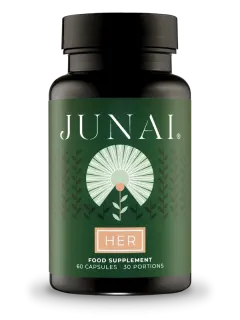
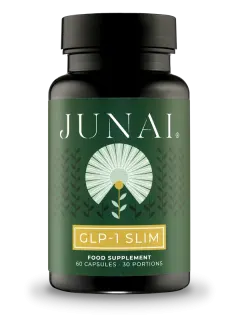
Present in HIM, HER, and SLIM, where it supports the absorption of the primary bioactive compounds in each formula
Clinical evidence supports meaningful bioavailability effects at modest piperine doses; the threshold for effect is lower than early research assumed
CYP3A4 inhibition means drug interactions are possible for those on relevant medications; check with a healthcare provider if in doubt
No standalone black pepper Junai product exists. Black pepper extract is a formulation ingredient in all three hero products
Izdelki s to sestavino
Črni poper je v teh izdelkih Junai.

KAJ JE ČRNI POPER
Črni poper je posušen, nezrel plod Piper nigrum, cvetoče vinske trte, ki izvira z Malabarske obale jugozahodne Indije. Je ena izmed najbolj trgovanih začimb v zgodovini človeštva, prisotna v vsaki večji svetovni kulinariki in prav zaradi njega so portugalski pomorščaki celo stoletje iskali morsko pot v Azijo, ki ne bi zahtevala plačila posrednikom.
Plod, imenovan koščičar, se obere še zelen in posuši na soncu, dokler se zunanja kožica ne naguba v značilno črno lupino, ki jo večina ljudi povezuje z besedo »poper«. Beli poper je isti plod, le da mu je odstranjena kožica. Zeleni poper je prav tako isti plod, le da še ni posušen. Vsi prihajajo iz iste rastline; profil okusa se razlikuje, a splošna kemijska sestava je prepoznavna pri vseh treh.
Oster, pikanten okus črnega popra izvira skoraj izključno iz ene same alkaloidne spojine: piperina. Ta se nahaja predvsem v zunanji plasti ploda in je spojina, zaradi katere vas med mletjem včasih sili na kihanje, prav tako pa je razlog, da je črni poper ena izmed najbolj proučevanih začimb v sodobni prehranski znanosti.
Črni poper je v določenem smislu posebnost med vsemi drugimi sestavinami v shrambi Junai: ni bil izbran zaradi svojega okusa ali kulinarične zgodovine, ni bil vključen zaradi svojega izjemnega antioksidativnega profila, prav tako ni bil izbran zaradi dolgotrajnih zgodovinskih povezav z ajurvedo ali katero drugo tradicionalno prakso. Črni poper je vključen v formule vseh naših ključnih izdelkov zato, ker imajo koristi piperina bistveno manj opraviti z učinki na VAS, temveč povsem s tem, kako vplivajo na druge sestavine v formulaciji.
ZAKAJ ČRNI POPER OBSTAJA ZA VAS
Večina začimb ima jasen razlog za uporabo: Kurkuma je zlata korenina, temelj azijske kulinarike, z dolgoletnim, neokrnjenim ugledom kot kraljica protivnetnih učinkovin. Ashwagandha, eno glavnih zelišč ajurvedske medicine, je adaptogen, ki vam pomaga obvladovati stres. Moringa je nahranila cele narode in telesu poleg hranilno bogate sestave prinaša tudi nekatere ugodne učinke, sorodne adaptogenom. To so sestavine, ki si jih ljudje z razlogom predstavljajo kot koristen dodatek k prehrani.
Črni poper je težje pojasniti, čeprav je pomen njegove uporabe še toliko bolj zanimiv.
Ljudje ga z navdušenjem uporabljajo že tisočletja, v različnih kulturah brez medsebojnih znanstvenih stikov in v kulinaričnih tradicijah, ki se sicer v skoraj vseh pogledih razlikujejo. V jugovzhodnoazijskih kuhinjah so ga dodajali jedem v grozdih, v rimskih kuhinjah so ga porabljali v amforah, srednjeveška Evropa pa je za njegov uvoz vzpostavila celo svetovne trgovske poti. Čeprav z njim jedi zelo izboljšamo okus, se le redki vprašajo, kaj ob vsakem zaužitju počne v našem telesu. Izkazalo se je namreč, da piperin ni zgolj aromatična spojina; med drugim pomembno vpliva na to, kako vaš prebavni sistem predela in absorbira druge bioaktivne spojine, ki v telo pridejo skupaj z njim.
Črni poper je v formulacijah podjetja Junai zato, ker absorpcija ni samoumevna. Spojina na etiketi in spojina, ki dejansko učinkuje v vaših celicah, sta dve različni stvari, razdalja med njima pa je definicija pojma biorazpoložljivost. Piperin to razdaljo skrajša in pripomore k boljši absorpciji hranil, ki jih vaše telo potrebuje. Za vse druge sestavine v formuli je to pomembneje od vsega, kar bi piperin lahko dosegel sam.
KAJ POČNE ČRNI POPER
Ker je namen črnega popra v Junai formulacijah izboljšanje absorpcije, bomo razpravo osredotočili predvsem na to področje. Kljub temu pa ima črni poper kot samostojna sestavina v strokovni literaturi še nekaj drugih posebnosti.
Povečuje učinek drugih sestavin
To je ključna točka: najpomembnejša vloga piperina je, da izboljša delovanje drugih snovi. Vaše telo ne ve, kdaj bodo v sistem vstopile določene koristne bioaktivne spojine, zato jih obravnava enako kot vse drugo užitno — težnja je, da se spojine hitro razgradijo in izločijo, še preden bi dosegle pomembnejše koncentracije. Piperin ta proces prekine. Upočasni izločanje in podaljša časovno okno, znotraj katerega telo absorbira hranila, namesto da bi jih preprosto odstranilo, ter omogoči, da večji delež učinkovin dejansko doseže krvni obtok v uporabni obliki.
Pri spojinah z izrazito slabo biorazpoložljivostjo ta razlika ni zanemarljiva. Dovolj pomembna je, da dejansko pomeni razliko med zdravilnim učinkom ali koristjo ter nekaj dodatnimi grami odpadne snovi, ki se izločijo.
Ogreje prebavo in spodbuja gibljivost prebavil
Še preden je moderna znanost lahko izmerila učinke piperina na absorpcijo, so tradicionalne medicine črni poper uporabljale zaradi nečesa, kar so opisovali z izkušnjami: ogreje prebavila in »spodbudi gibanje«. To opažanje je bilo pravilno. Piperin dejansko spodbuja aktivnost prebavnih encimov v trebušni slinavki, poveča izločanje želodčne kisline in pospeši prehod hrane skozi prebavni trakt. Gre za realen in merljiv učinek, četudi je tradicionalna razlaga obstajala že pred današnjim razumevanjem mehanizmov.
Nudi antioksidativno in nevroprotektivno podporo
Piperin izkazuje znatno antioksidativno delovanje in v raziskovalnih modelih obeta ugoden vpliv na poti dopamina in serotonina, kar pomaga preprečevati ali upočasniti napredovanje poškodb živčnih celic. Pri tem poudarjamo pomembno dejstvo: antioksidativni in nevroprotektivni učinki piperina, kot jih opisuje literatura, nastopijo pri bistveno višjih odmerkih kot tisti, kjer se že kažejo koristi za absorpcijo. Čeprav gre za zanimivo znanost, to ni razlog, da je piperin vključen v Junai formulacije. Poleg tega nudimo še veliko drugih, precej učinkovitejših antioksidantov, na primer v naši kurkumi.
Kaj je črni poper?
Črni poper (Piper nigrum) je lazeča rastlina iz družine poprovk (Piperaceae), doma na obali Malabar v južni Indiji. Poper je plod: nezreli zeleni plodovi se posušijo in počrnijo. Danes ga gojijo v tropskih deželah po vsem svetu in je ena najbolj razširjenih začimb.
Pekoč okus daje alkaloid piperin, ki ga je v posušenih plodovih v povprečju nekaj odstotkov. Piperin so raziskovalci preučevali predvsem zaradi vpliva na vsrkavanje drugih snovi in na razgradnjo drugih snovi v telesu.
Piperin in kurkuma
V eni znani raziskavi so ob piperinu izmerili precej višje ravni kurkumina v krvi, zato kurkumo tradicionalno združujemo s poprom in maščobo. Več o tem je na strani kurkuma.
Ščepec popra najdeš v receptih zlato mleko in kremna bučna juha.
Odmerek: kaj so uporabljali v raziskavah
V raziskavah so piperin ali izvleček črnega popra najpogosteje uporabljali v odmerkih 5–20 mg na dan, običajno skupaj z drugo snovjo. To je veliko več piperina, kot ga zaužiješ s poprom v hrani. Pri izdelku Junai upoštevaj odmerek in navodila z etikete in ne presezi priporočenega dnevnega vnosa.
Kdaj jemati piperin?
Raziskave niso določile najboljšega časa. Piperin je v dopolnilih običajno v isti kapsuli ali istem obroku kot snov, ob kateri so ga preučevali. Ker lahko draži sluznico, ga jemlji ob obroku.
Črni poper v izdelkih Junai
Izvleček črnega popra (piperin) je sestavina kapsul Junai Her in Junai Him. Sestavo, količino na dnevni odmerek in navodila najdeš v okvirju »Izdelki s to sestavino« na vrhu te strani in na straneh izdelkov. Izdelki so namenjeni odraslim.
Stranski učinki črnega popra in piperina
Poper v hrani je za večino ljudi varen. Pri višjih odmerkih piperina so opisani:
- Pekoč občutek, zgaga in draženje želodca.
- Kihanje in kašelj ob vdihavanju prahu.
- Draženje sluznice pri občutljivem prebavnem traktu.
Ne presezi priporočenega dnevnega vnosa.
Interakcije in kdo naj se izogiba
Piperin zavira jetrne encime (CYP3A4, CYP2D6) in prenašalec P-glikoprotein, zato lahko spremeni raven nekaterih zdravil v krvi. Piperina v dopolnilih ne jemlji brez posveta z zdravnikom ali farmacevtom, če:
- jemlješ zdravila na recept, na primer fenitoin, teofilin, propranolol ali imunosupresive,
- imaš razjedo želodca ali pogosto zgago,
- si noseča ali doješ (količine v hrani so običajno sprejemljive, višjih odmerkov ne jemlji),
- te čaka operacija: jemanje prekini vsaj dva tedna prej.
Prehransko dopolnilo ni nadomestilo za raznoliko in uravnoteženo prehrano.
Viri
- Shoba G in sod. Influence of piperine on the pharmacokinetics of curcumin in animals and human volunteers. Planta Med. 1998;64(4):353-356.
- Meghwal M, Goswami TK. Piper nigrum and piperine: an update. Phytother Res. 2013;27(8):1121-1130.
- Bhardwaj RK in sod. Piperine, a major constituent of black pepper, inhibits human P-glycoprotein and CYP3A4. J Pharmacol Exp Ther. 2002;302(2):645-650.
Na kratko
- Črni poper je posušen plod rastline Piper nigrum iz južne Indije; pekoč okus daje piperin.
- V raziskavah so uporabljali 5–20 mg piperina na dan, običajno skupaj z drugo snovjo.
- Piperin lahko spremeni vsrkavanje drugih snovi, zato ga tradicionalno združujemo s kurkumo.
- Opisani neželeni učinki so draženje želodca in zgaga.
- Opozorila in interakcije so v poglavju o stranskih učinkih.
RESEARCH ON BLACK PEPPER
As the single most important spice in the history of the world, there is more research on black pepper than there are peppercorns in your grinder. Plenty of it is interesting, but we will focus in this section on its relevance for supplements.
EFSA Claims
EFSA has not issued an authorized health claim for piperine or black pepper extract. The bioavailability-enhancing effects of piperine are well-documented in the scientific literature but fall outside the current EFSA-approved claim framework, which does not yet have a mechanism for approving claims related to the pharmacokinetic modulation of co-administered substances.
There are, however, a wide range of on-hold claims. Some of them are, frankly, unhinged. The claim about :::checks notes::: cleansing reproductive organs through capillary circulation is doing things we cannot explain, though we aren't necessarily opposed to the idea. We just hope the mechanism described in the application was internal and not topical. But the EFSA claim process rewards volume as much as precision, so here we are:
Supports appetite, digestion and absorption of nutrients
Helps to digest toxins
Helps in body weight control
(In small quantities in a polyherbal formula) increases the effectiveness of other herbal ingredients. Helps to keep the airways open
Supports the health of the whole respiratory system
Vitalizes the nervous system
Supports the health of the female reproductive system
Helps to cleanse the reproductive organs by promoting blood circulation through the fine blood vessels and capillaries
Helps to cleanse the liver and support its function by promoting blood circulation through the fine blood vessels and capillaries
Helps to cleanse the skin by promoting blood circulation through the fine blood vessels and capillaries
Has significant antioxidant properties
Helps to maintain the integrity of the body by its antimicrobial and anti-parasitic effects and support for the immune system
Helps to maintain natural digestive functions
International Studies
Key findings in the literature:
Influence of piperine on the pharmacokinetics of curcumin in animals and human volunteers
Shoba G. et al. (1998) demonstrated that 20 mg piperine co-administered with 2 g of curcumin in healthy human volunteers increased curcumin bioavailability by 2000%, with significant increases in serum concentration at 0.25, 0.5, and 1 hour post-administration and a significant reduction in elimination rate.
Piperine, a major constituent of black pepper, inhibits human P-glycoprotein and CYP3A4
Bhardwaj R.K. et al. (2002) demonstrated piperine's inhibitory effect on P-glycoprotein and CYP3A4 specifically, establishing the mechanistic basis for its interaction with co-administered pharmaceutical compounds.
Black pepper and its pungent principle-piperine: a review of diverse physiological effects
Srinivasan K. (2007) reviewed the diverse physiological effects of black pepper and piperine, documenting CYP450 inhibition, UDP-glucuronyl transferase inhibition, brush border morphology effects, digestive enzyme stimulation, and antioxidant activity across multiple experimental models.
Yan et al. (2017) demonstrated that piperine co-administration significantly increased rosmarinic acid bioavailability in a dose-dependent manner via inhibition of glucuronidation in gut and hepatic metabolism enzymes, establishing a mechanistic basis for piperine's relevance to rosemary and lemon balm supplementation specifically.
Black pepper and health claims: a comprehensive treatise
Meghwal M. & Goswami T.K. (2013) provided an updated review of Piper nigrum and piperine's biological activities, including thermogenic, antimicrobial, and neuroprotective effects, alongside the absorption-modulation mechanisms.
As a note, clinical trials have used a wide range of piperine doses, from 5 mg to 20 mg per day in humans, and have found that meaningful bioavailability effects can be observed at the lower end of that range. The threshold for effect is lower than most of the early literature assumed.
HOW TO USE BLACK PEPPER
We're assuming you know how to wield a pepper grinder to season your meal, so we'll focus mostly on how to use black pepper medicinally.
Traditional Use
Black pepper has been a fixture in Ayurvedic and traditional Chinese medicine formulations for centuries, often deliberately combined with other botanicals to improve their efficacy. Trikatu, the classic Ayurvedic blend of black pepper, long pepper, and ginger, is essentially a bioavailability formula that predates the modern concept by about 2 thousand years. Critically, trikatu was not just used as a vehicle for other herbs, but was prescribed as a digestive formula in its own right, valued for its ability to stimulate agni, the Ayurvedic concept of digestive fire, which maps surprisingly well onto what we now know about TRPV1 activation and pancreatic enzyme secretion.
In traditional Chinese medicine, black pepper appears in several classical formulas in the role of what TCM practitioners call a "guide herb", an ingredient included specifically to direct other compounds toward particular organ systems. The vocabulary is eerily similar to how we describe pepper today, and the intuition is precisely the same.
Perhaps the most quietly remarkable example comes from near eastern and South Asian cooking, where turmeric has been combined with black pepper and healthy fats in recipes for centuries, across cultures with no scientific contact with each other. Nobody knew about CYP3A4 and nobody had heard of P-glycoprotein. They just knew the combination worked, so they kept making it. Science eventually caught up and confirmed what the kitchen had been serving all along.
Modern Use
In the context of dietary supplements, black pepper is used exclusively in its extracted, standardized form. The whole spice, of course, has abundant quantities of piperine, but it's nearly impossible to gauge exactly how much you're getting just by grinding alone. There's also the question of how much piperine actually survives the cooking process intact, another variable that is nearly impossible for the home cook to control for. Standardized extracts avoid this uncertainty and ensure that piperine arrives in the intestines ready to do its job.
Standardized extract at ≥95% piperine is the relevant form. At this concentration, very small amounts of extract deliver very precise amounts of active compound. The 50-60:1 plant-to-extract ratio means that a few milligrams of extract represent a significant concentration of what the whole fruit contains.
Dosage in supplement formulas typically ranges from 2.5 to 10 mg of piperine per day. Clinical bioavailability studies have used up to 20 mg, but the research suggests that meaningful effects on absorption are present well below the higher end of that range. Small amounts, it turns out, go a long way. That the effect scales non-linearly with dose is one of piperine's more interesting pharmacological properties.
Timing matters in one specific sense: piperine must be co-administered with the compounds it is meant to support. Taking it separately, at a different time, eliminates the absorption window it creates. In a combined formula, this is handled automatically.
HOW AND WHY JUNAI USES BLACK PEPPER
Hero Products
In its 3 hero products, Junai uses a black pepper fruit extract (Piper nigrum L.) standardized to ≥95% piperine, with a plant-to-extract ratio of 50-60:1. The extraction solvent is ethyl acetate, chosen for its selectivity in isolating the alkaloid content from the fruit matrix. Maltodextrin serves as a carrier to stabilize the extract and ensure consistent dosing across batches.
The standardization to ≥95% piperine is significant: it means the extract is almost entirely the active molecule, with minimal botanical background noise, and that each milligram of extract delivers a predictable and consistent amount of piperine. At Junai's dosing levels, this precision matters more than it would at higher doses where variability would be proportionally less consequential.
Black pepper extract is present in all 3 of Junai's hero formulas: HIM, HER, and SLIM.
In HIM, piperine works alongside red maca, L-arginine, L-citrulline, zinc, and vitamin B6. Piperine's bioavailability story is most relevant for zinc in particular, which has documented absorption variability depending on dietary context and co-factors. The amino acids are well absorbed in general, as is vitamin B6, just leaving red maca to address: sadly, piperine is not known as a potentiator of red maca's macamides, but, as a lipophilic compound, fat does increase maca's bioavailability.
In HER, piperine is paired with lemon balm, chlorella, rosemary, bladderwrack, vitamin B6, and Lactobacillus rhamnosus. The piperine case in HER is anchored in the botanical fraction. Rosmarinic acid, the primary bioactive shared by both rosemary and lemon balm, is a documented piperine target: co-administration has been shown to significantly increase rosmarinic acid bioavailability via inhibition of its glucuronidation in the gut and liver. Vitamin B6 absorption is also enhanced by piperine, a finding that goes back to the foundational piperine research literature. Chlorella is the one ingredient in HER where piperine's contribution is limited, since chlorella's bioavailability is primarily a matter of physical and not chemical limitations. Across the rest of the formula, piperine earns its place.
In SLIM, piperine travels with berberine, white mulberry (Reducose), zinc, and chromium. Berberine has well-documented bioavailability challenges and the case for piperine co-administration alongside berberine is among the more mechanistically coherent pairings in the supplement literature.
Single Ingredients
Here is the piperine story for Junai's standalone ingredients:
Turmeric: This is the peas and carrots, Dick and Jane, Batman and Robin, ketchup and fries, the most iconic dynamic duo of supplement pairings. Piperine increases curcumin's bioavailability by 2000%, a truly staggering number in supplement science. If anything on earth needs to be taken with pepper, it's turmeric.
Ashwagandha: This is an interesting one. Its active compounds, the withanolides, are steroidal lactones, lipophilic, and genuinely poorly absorbed from raw powder. There's a plausible mechanistic case for piperine helping here via CYP3A4 inhibition, and a handful of studies have looked at this combination specifically.
Reishi: The bioactives here are primarily beta-glucans (water soluble, reasonably bioavailable on their own) and triterpenes (lipophilic, poorly absorbed). Piperine's case is decent for the triterpene content via the CYP3A4/P-gp route.
Moringa: The bioactives are isothiocyanates and flavonoids. There's some research suggesting piperine enhances isothiocyanate absorption, but the literature is thin. It can't hurt to take moringa alongside pepper, but the outcome won't be drastically different.
Note that our standalone products do not come with piperine already added, so if you have any of them, take them alongside one of the hero products, which all do contain piperine, to boost absorption.
WHO NEEDS BLACK PEPPER
Anyone taking a supplement formula that includes compounds with documented bioavailability constraints, particularly berberine and curcumin, and certain fat-soluble vitamins
Anyone who wants confidence that what the effects promised on a supplement label have a reasonable chance of reaching the right spot in the body
Anyone taking turmeric in any form, as here piperine's cosign isn't a recommendation but a precondition for meaningful effect
Anyone interested in how formulation quality affects supplement outcomes, for whom the bioavailability blog is worth the read
Anyone who has been eating black pepper their entire life without knowing it was doing something useful but unsung, which is most people
WHAT TO EXPECT WITH BLACK PEPPER
"Gesundheit", mostly.
Jokes aside, don't expect much actually tangible with black pepper. There's no timeline to describe, no gradual changes to your body's inflammatory responses like with curcumin, no approach towards a cortisol baseline like with adaptogens, and no immediate and pronounced effect on dietary glucose like with berberine and white mulberry. Unless you accidentally get piperine on your lips, you probably won't notice it at all.
What you can expect is that most compounds you take alongside black pepper will have a far greater chance of doing their job. The distance between a compound's demonstrated in vitro mechanisms and its actual effects within the body is usually a question of bioavailability. Piperine shortens that distance.
CONTRAINDICATIONS
At the doses used in supplement formulas, black pepper extract is well tolerated in healthy adults and has a strong safety record across both traditional use and modern clinical research.
There are nonetheless a few interactions worth knowing about.
CYP3A4-metabolized medications
Because piperine inhibits CYP3A4, it can increase the serum concentration of drugs that are metabolized through this pathway. Phenytoin (an anticonvulsant), propranolol (a beta-blocker), and theophylline (used in respiratory conditions) have all been documented in the literature. The broader category includes a significant proportion of pharmaceutical drugs. If you are on any prescription medication, particularly one where dosing precision matters, it is worth checking with a healthcare provider whether CYP3A4 inhibition is a relevant concern.
P-glycoprotein substrates
The same logic applies to drugs that are P-gp substrates. Piperine's inhibition of the efflux pump can increase absorption of co-administered compounds in ways that are not always predictable at the individual level.
Pregnancy and breastfeeding
Safety data for piperine supplementation during pregnancy and lactation is insufficient. Culinary use of black pepper presents no documented risk, but supplemental concentrations are a different matter. Avoid supplemental piperine during pregnancy and breastfeeding unless advised otherwise by a healthcare provider.
Gastrointestinal sensitivity
In some individuals, piperine's stimulation of gastric acid secretion can aggravate pre-existing gastrointestinal conditions, including acid reflux and peptic ulcer disease. This is dose-dependent and unlikely to be significant at low supplemental doses, but worth noting for those with a sensitive digestive history.
If unusual symptoms arise after beginning use, discontinue and consult a healthcare professional.
Sorodne sestavine

Kurkuma

Mehurjasti bračič
Pogosta vprašanja: Črni poper
Kaj je piperin?
Piperin je alkaloid, ki daje črnemu popru pekoč okus. V posušenih plodovih ga je nekaj odstotkov. V dopolnilih ga uporabljajo kot izvleček črnega popra.
Zakaj črni poper dodamo h kurkumi?
V raziskavah je piperin ob kurkuminu spremenil vsrkavanje kurkumina, zato kurkumo tradicionalno združujemo s poprom in maščobo. Ščepec popra je običajen v receptih za zlato mleko in juhe.
Koliko piperina na dan?
V raziskavah so uporabljali 5–20 mg piperina na dan. Pri izdelku Junai upoštevaj etiketo in ne presezi priporočenega dnevnega vnosa.
Kakšni so stranski učinki piperina?
Pri višjih odmerkih so opisani pekoč občutek, zgaga in draženje želodca. Poper v hrani je za večino ljudi varen.
Ali lahko piperin jemljem z zdravili?
Piperin lahko spremeni raven nekaterih zdravil v krvi (npr. fenitoin, teofilin, propranolol). Pred uporabo dopolnil s piperinom se posvetuj z zdravnikom ali farmacevtom.
Ali je črni poper varen v nosečnosti?
Količine popra v hrani so običajno sprejemljive. Dopolnil z izvlečkom popra v nosečnosti in med dojenjem ne jemlji brez posveta z zdravnikom.
Izdelki s to sestavino
Črni poper je v teh izdelkih Junai.
Naroči se na nasvete
Mesečni vpogled v sestavine, prehrano in energijo – naravnost v tvoj poštni nabiralnik.
Povezane objave

Piperin: zakaj je pomembna sestavina v prehranskih dopolnilih
Piperin, bioaktivna spojina, ki se nahaja v marsikaterem prehranskem dopolnilu, ima ključno vlogo pri absorpciji drugih spojin.

Biorazpoložljivost: zakaj absorpcija hranil igra ključno vlogo pri prehranskih dopolnilih
Biorazpoložljivost opisuje delež zaužite snovi, ki po prebavi preide v krvni obtok in je na voljo telesu za uporabo.

Kurkuma: Zlati Ritual Ravnovesja in Regeneracije
Vse o koristih kurkume: močan antioksidant in protivnetno sredstvo za regeneracijo in vsakodnevno zdravje