




Kazalo vsebine
- Kaj je Reducose®?
- Bela murva in 1-deoksinojirimicin
- Reducose® v izdelku Junai
- Stranski učinki
- Interakcije in kdo naj se izogiba
- Na kratko
- HOW WHITE MULBERRY WORKS
- RESEARCH ON WHITE MULBERRY
- HOW TO USE WHITE MULBERRY
- HOW AND WHY JUNAI USES WHITE MULBERRY
- WHO NEEDS WHITE MULBERRY
- WHAT TO EXPECT WITH WHITE MULBERRY
- CONTRAINDICATIONS
Na kratko
QUICK RECAP
Everything you need to know about white mulberry, DNJ, and Reducose® in plain language:
White mulberry (Morus alba) is a deciduous tree native to China, cultivated for millennia and now grown across five continents
Its leaves contain 1-deoxynojirimycin (DNJ), a naturally occurring iminosugar that inhibits alpha-glucosidase, the intestinal enzyme responsible for breaking complex carbohydrates into absorbable glucose
By slowing that conversion, DNJ moderates the rate at which glucose enters the bloodstream after a meal, blunting the postprandial spike and reducing the corresponding insulin surge
Slower glucose entry stimulates a more sustained GLP-1 satiety response, meaning you feel genuinely full for longer after meals
Steadier blood sugar and reduced insulin load creates a hormonal environment less conducive to fat storage and more responsive to the body's natural hunger signals
Junai sources DNJ as Reducose®, a standardized white mulberry leaf extract patented by Phynova, produced at a 50:1 extraction ratio and standardized to a minimum of 5% DNJ
SLIM delivers 250mg of Reducose® per serving, the exact dose validated across more than 11 human clinical trials
Paired with berberine in SLIM, DNJ covers the upstream half of carbohydrate metabolism while berberine handles the downstream cellular response, together addressing the full arc of glucose management in a single capsule
Izdelki s to sestavino
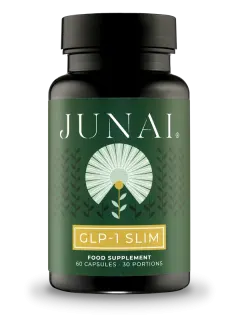
Reducose® je v teh izdelkih Junai.
KAJ STA REDUCOSE® IN BELA MURVA?
Reducose®, farmacevtske družbe Phynova, je standardiziran ekstrakt iz listov bele murve (Morus alba L.). Bela murva je hitro rastoče listnato drevo, ki izvira iz severne Kitajske, kjer jo gojijo dosledno in skrbno že vsaj štiri tisoč let. Ne zaradi njenega sadja, ki je majhno, bledo in skorajda nezanimivo po skoraj vseh kulinaričnih standardih. Temveč zaradi njenih listov. Listi bele murve so edina naravna hrana za Bombyx mori, domačo svilo, katere kokoni so zgradili Svileno pot in katere požrešni apetit po listih murve je drevo potegnila čez prostranstva Srednje Azije, skozi Perzijo in Levant ter na koncu čez Evropo.
Danes Morus alba raste na 5 kontinentih, kjer prenaša slabo zemljo in sušo ter proizvaja svoje široke, lobaste, nazobčane liste v obilju skozi celo toplo sezono. Kitajski zdravniki so nekoč pripravljali čaj iz listov murve za krvni sladkor in vročino. Ayurvedski zdravilci so prav tako poznali list in ga uporabljali v formulacijah, ki so se osredotočale na metabolične in dihalne težave.
List ni prav nič posebnega: svetlo zelen, generično oblikovan, rahlo grob na dotik. A znotraj tega lista je nič manj kot izjemno: intenzivne koncentracije majhnega iminosladkorja, imenovanega 1-deoksinojirimicin, ali DNJ. Kot je pogosto pri tradicionalni medicini, so zdravilci v preteklosti izkoriščali močno bioaktivno spojino stoletja, preden je bila znanstveno razložena. Ta spojina je DNJ, ki jo uporabljamo v naši formuli za Junai Slim.
ZAKAJ BELA MURVA OBSTAJA ZATE
Ko poješ obrok, ki vsebuje ogljikove hidrate, se tvoj prebavni sistem takoj loti dela, razgrajuje kompleksne verige v preproste sladkorje s pomočjo encimov, ki obložijo steno tvojega tankega črevesa. Glukoza poplavi tvojo kri, tvoj trebušna slinavka pa se odzove tako, da sprosti inzulin, da ga obvlada. Inzulin opravi svoje delo, včasih celo preveč dobro, in tvoja krvni sladkor pade. S tem pade tudi tvoja energija, in prej ko slej se lakota vrne z maščevanjem v obliki nujnih želja. Morda se celo počutiš omotično, vrtoglavo in potno. Segreješ po prigrizku, in cikel se ponovi.
Ta padec krvnega sladkorja po obroku z visokim deležem ogljikovih hidratov imenujemo postprandialna hipoglikemija. Bela morva obstaja zate ker je postprandialni skok glukoze in naslednji padec resničen. DNJ, iminosladkor, ki ga vsebujejo njeni listi, je eno najmočnejših botaničnih orodij, ki jih poznamo za omilitev načina in hitrosti, s katero glukoza vstopa v krvni obtok.
Toda izogibanje energijskemu padcu je le ena od prednosti DNJ. Ko glukoza vstopa v krvni obtok bolj postopoma, ima črevesje čas, da stori nekaj, česar ne more storiti med skokom: sprosti GLP-1, signalni hormon, ki potuje do možganov in preprosto pove, da si sit.
Listi bele morve torej delujejo na dveh ravneh, tako da signalizirajo občutek sitosti tvojim možganom in uravnavajo raven krvnega sladkorja za bolj enakomerne vzorce lakote in energije čez dan.
Tvoja mama je vedno govorila, da je uživanje listnate zelenjave najboljši način za hujšanje, a ni imela pojma, kako dobesedno je imela prav.
Kaj je Reducose®?
Reducose® je zaščiteno ime podjetja Phynova za standardiziran izvleček listov bele murve (Morus alba). Bela murva je listopadno drevo, ki izvira iz Kitajske, gojijo jo že tisočletja, danes pa raste na vseh celinah razen Antarktike. Njeni listi so tradicionalno hrana za sviloprejke, v tradicionalni kitajski kulturi pa jih uporabljajo tudi v čajih.
Bela murva in 1-deoksinojirimicin
V listih bele murve je 1-deoksinojirimicin, v kratkem DNJ, naravno prisoten iminosladkor. Izvleček Reducose® je standardiziran na 5 % DNJ. Standardizacija pomeni, da je vsebnost te spojine v vsaki seriji enaka in navedena.
Reducose® v izdelku Junai
Reducose® je sestavina kapsul Junai GLP-1 Slim; ena odmerek vsebuje 250 mg izvlečka. Sestavo, odmerek in navodila za uporabo najdeš v okvirju »Izdelki s to sestavino« na vrhu te strani in na strani izdelka. Izdelek je namenjen odraslim.
V istem izdelku sta tudi berberin in cink.
Stranski učinki
Reducose® je prehransko dopolnilo in ni zdravilo. Pri izvlečku bele murve so opisani:
- Prebavne težave: napenjanje, vetrovi, driska ali nelagodje v trebuhu, predvsem na začetku uporabe.
Če se težave ponavljajo, jemanje prekini in se posvetuj z zdravnikom. Ne presezi priporočenega dnevnega vnosa.
Interakcije in kdo naj se izogiba
Izvlečka bele murve ne jemlji brez posveta z zdravnikom ali farmacevtom, če:
- jemlješ zdravila za sladkorno bolezen ali drugo zdravilo na recept,
- imaš bolezen črevesja ali ledvic,
- si noseča ali doješ (podatkov je malo),
- si mlajši od 18 let,
- te čaka operacija: jemanje prekini vsaj dva tedna prej.
Prehransko dopolnilo ni nadomestilo za raznoliko in uravnoteženo prehrano.
Na kratko
- Reducose® je standardiziran izvleček listov bele murve (Morus alba) podjetja Phynova.
- Standardiziran je na 5 % spojine DNJ.
- Junai GLP-1 Slim vsebuje 250 mg Reducose® na odmerek.
- Opisane težave so predvsem prebavne; opozorila so v poglavju o stranskih učinkih.
HOW WHITE MULBERRY WORKS
White mulberry has 1 primary pathway for its effects and 2 secondary pathways. Its primary pathway is:
DNJ, the iminosugar that inhibits alpha-glucosidase
Its secondary pathways are:
Promoting epithelial cells to produce GLP-1
Its strong antioxidant compound profile
Carbohydrate absorption and glucose control
DNJ is an iminosugar, meaning its molecular structure closely resembles glucose. That resemblance is the key to its mechanism, as it allows it compete within the small intestine directly with true carbohydrates in binding to alpha-glucosidase, the body's natural enzyme responsible for breaking complex sugars down into absorbable glucose. DNJ binds to alpha-glucosidase significantly more readily than the carbohydrates do, effectively occupying all the enzyme's capacity and slowing the body's ability to process carbs.
The pharmaceutical world has already experimented in this area. Acarbose, a prescription medication for type 2 diabetes, works through the same alpha-glucosidase inhibition mechanism. The extreme difference is in the body's tolerability to the 2 compunds. Acarbose is notorious for gastrointestinal side effects, bloating, flatulence, and cramping, because it inhibits the enzyme so aggressively that undigested carbohydrates reach the large intestine in significant quantities, where gut bacteria ferment them enthusiastically. DNJ, at the concentrations present in Reducose®, inhibits the same enzyme with considerably more precision, moderating rather than completely blocking glucose absorption. The clinical data on Reducose® show meaningful reductions in postprandial blood glucose without the GI penalty that makes acarbose so poorly tolerated.
The downstream consequence of that moderated glucose entry is a flatter insulin response, and a flatter insulin response means the body is not being asked to shuttle large quantities of glucose into storage. Less glucose available for storage ranslate directly to a reduced capacity for lipogenesis, the process by which the liver converts excess blood glucose into fat. The gate slows the flood. The flood never reaches the dam.
Satiety and hunger regulation
The gut is not a passive tube. It is an active endocrine organ, and what happens along its lining during and after a meal determines much of how hungry or full you feel for the hours that follow.
When glucose enters the small intestine gradually, as it does when DNJ is present, specialized cells called L-cells lining the intestinal wall are stimulated more evenly and for longer. These L-cells release GLP-1, glucagon-like peptide-1, a hormone that travels through the bloodstream to the hypothalamus and delivers the satiety signal. The slower and more sustained the glucose entry, the more prolonged the GLP-1 release, and the more durable the signal to the brain that the meal has been adequate.
This is the same hormonal pathway that injectable GLP-1 receptor agonists like semaglutide (Ozempic) target directly, through pharmacological force. DNJ works the upstream end of the same system, through the gentler mechanism of moderating what the gut gets to metabolize in the first place. The result is genuine satiety, not appetite suppression through pharmacological intervention, but the body's own hunger regulation system functioning the way it was designed to function before processed food outpaced it.
Cellular antioxidant support
White mulberry leaf contains a meaningful concentration of polyphenolic flavonoids alongside its DNJ content. The three most significant are rutin, quercetin, and chlorogenic acid, which we wrote about extensively in our pages on turmeric and rosemary. Each operates as a free radical scavenger, donating electrons to neutralize reactive oxygen species before they can cause oxidative damage to cell membranes, proteins, and DNA.
Rutin has additional activity as a capillary-stabilizing compound and shows modest anti-inflammatory behavior through inhibition of certain pro-inflammatory enzymes. Quercetin has one of the broader evidence bases of any dietary flavonoid, with activity across multiple oxidative and inflammatory pathways. Chlorogenic acid contributes both antioxidant activity and some independent evidence for glucose metabolism support, making it a quiet but relevant supporting actor on a page primarily about carbohydrate control.
None of these flavonoids are the reason you take white mulberry. But they certainly are wonderful added benefits if you're already using mulberry for satiety signalling or α-glucosidase inhibition.
The SLIM synergy with berberine
DNJ's work is intestinal and immediate. It happens at the brush border of the small intestine, in the window between swallowing a meal and that meal becoming glucose in circulation. It is a gate mechanism, and like all gate mechanisms, it is defined by what it slows rather than what it stops entirely. Some glucose gets through, which is hardly a flaw in the mechanism. Glucose is fuel, and the goal was never to starve the engine, only to stop overflooding it.
Berberine picks up exactly where DNJ's mechanism ends. Once glucose enters circulation, berberine's primary mechanism, activation of AMPK (adenosine monophosphate-activated protein kinase), the enzyme often described as the cell's master metabolic switch, improves the efficiency with which cells take up and utilize that glucose. Insulin sensitivity increases and the glucose that made it past the gate gets processed more effectively and stored less readily as fat. DNJ moderates the input. Berberine optimizes the response. This sequencing is the whole reason we put these 2 ingredients into the same capsule for Junai SLIM.
RESEARCH ON WHITE MULBERRY
White mulberry and its primary bioactive compound DNJ have accumulated one of the more convincing clinical evidence trails in the botanical blood sugar management space. This is not a traditional ingredient waiting for science to catch up. The human data is specific, replicated, and frankly well ahead of where the regulators have been willing to follow.
EFSA Claims
The European Food Safety Authority permits the following health claim for white mulberry leaf extract:
contributes to the maintenance of normal blood glucose levels after meals, when consumed as part of a meal containing carbohydrates.
That is the totality of what EFSA will commit to. It is a characteristically cautious position for an ingredient whose clinical data shows postprandial glucose reductions of over 40% in randomized controlled trials. EFSA's framework requires a level of evidence that most pharmaceutical compounds would struggle to meet, applied to botanical ingredients whose research funding will never match that of a patented drug. The EFSA claim is real and true, but it is also a significant understatement of what the research actually demonstrates.
International Studies
Unlike many botanicals whose evidence base rests on animal models and mechanistic speculation, white mulberry and Reducose® specifically have been tested extensively in human clinical trials, with results that are consistent, significant, and directly applicable to the doses present in SLIM.
The landmark Reducose® study by Thondre et al., published in Nutrition and Metabolism, 2021. 38 healthy participants in a randomized, double-blind, placebo-controlled trial showed reductions in postprandial blood glucose and insulin of over 40% at 2 hours following a sucrose spike. Sucrose was chosen deliberately as the carbohydrate source because it requires alpha-glucosidase for breakdown, making it a direct and honest test of DNJ's specific mechanism of action.
In a study by the Oxford Brookes Centre for Nutrition and Health, 37 healthy people consumed 200 mg, 225 mg, or 250 mg of Reducose® before a full mixed meal. All three doses significantly reduced glucose and insulin area under the curve at 120 minutes compared to placebo, with reductions ranging from 30 to 38%. The fact that 200 mg produced results statistically comparable to 250 mg suggests the mechanism is robust and not threshold-dependent. SLIM delivers 250mg per serving.
A 28-Day Repeated Dose Toxicological Study of an Aqueous Extract of Morus Alba L
A dedicated safety assessment of Reducose® at supplementation doses found no adverse effects across the full 28-day protocol. Combined with an acute oral toxicity threshold placed at levels unreachable through dietary supplementation, and a real-world safety record covering over 380 million servings, the tolerability profile of Reducose® is exceptionally well characterized.
Broader Morus alba meta-analyses
Multiple independent meta-analyses of white mulberry leaf extracts across the international literature confirm consistent, significant reductions in postprandial glucose with a tolerability profile that compares favorably to pharmaceutical alpha-glucosidase inhibitors. The traditional use of mulberry leaf in Chinese and Ayurvedic medicine for blood sugar management has, in short, been vindicated completely.
HOW TO USE WHITE MULBERRY
White mulberry is one of the more time-sensitive ingredients in the entire Junai product range. Its mechanism is meal-specific and acute, which means how and when you take it matters as much as the dose itself. For best results, take it immediately before or with your first bite of a carb-heavy meal, usually your biggest meal of the day.
Unlike ingredients such as turmeric, which works best as a systemic, when a base level of its active compounds have been established within your body, white mulberry must be present when carbohydrates enter your digestive tract. It has a very short half-life in your body, so timing here outweighs consistency. We hate that sentence, by the way, and would much rather just reassure you and say "even if you forget to take it with meals, consistency is what's important." Sadly, with Reducose®, that's simply not the case.
Traditional Use
Mulberry leaf has been consumed as tea in Chinese and Ayurvedic traditions for centuries, typically prepared by steeping dried leaves in hot water and drinking the infusion before or with meals. The timing was not incidental. Traditional practitioners understood, without the vocabulary of alpha-glucosidase inhibition, that the leaf worked best in proximity to food. Mulberry leaf tea remains widely consumed across East and South Asia today, both as a functional beverage and as a cultural practice with deep roots in Chinese and Ayurvedic medicine.
Modern Use
Modern formulations with white mulberry tend to use Reducose®, a leaf extract patented by pharmaceutical company Phynova. It is produced at a 50:1 extraction ratio, meaning 50 grams of raw mulberry leaf go into every gram of extract. Each SLIM serving delivers 250mg of Reducose®, the equivalent of 12.5 grams of raw mulberry leaf, standardized to a minimum of 5% DNJ.
The clinical studies on Reducose® used dosages of 250mg, which is exactly what our Junai SLIM delivers in a single serving of 2 capsules. The dose-ranging trial confirmed that the mechanism is effective from as low as 200mg, so SLIM's 250mg sits comfortably within the validated range with a small margin of confidence built in.
Take SLIM with or immediately before a meal containing carbohydrates. This is non-negotiable for Reducose®: DNJ needs to be present at the brush border of the small intestine at the same time as the carbohydrates you are eating. Take it too long before a meal and the window closes. Take it after and the spike has already begun. On lighter, lower-carb meals, the effect will be proportionally more modest, which is entirely appropriate given that the mechanism is carbohydrate-dependent by design.
HOW AND WHY JUNAI USES WHITE MULBERRY
A common thread in our ingredient selection is traditional medicine being validated by rigorous modern clinical science. White mulberry has been used for thousands of years, for exactly the same purpose whose mechanism science has now identified and described. We knew that pairing it with berberine would give our customers a powerful double punch to help them achieve and maintain their target weight, so it was an easy choice.
Junai uses white mulberry in its formulation for Junai SLIM in the form of Reducose®, a standardized white mulberry leaf extract developed and patented by British pharmaceutical company Phynova. We are contractually required to name it, which we are happy to do, because it happens to be the best available form of DNJ on the market and we would have chosen it regardless.
Reducose® is produced through aqueous extraction, meaning water is the sole solvent used to concentrate the active compounds from the raw leaf material. The extraction ratio is 50:1. The resulting extract is standardized to a minimum of 5% DNJ by weight, verified by high performance liquid chromatography at each batch. That standardization matters because DNJ content in raw mulberry leaf varies considerably depending on season, geography, and plant maturity. Reducose® removes that variability so every capsule of SLIM contains exactly what the label says it contains.
The clinical evidence behind Reducose® specifically, rather than white mulberry leaf extract generically, was a significant factor in our decision. Phynova has funded and published more than 11 human clinical trials on Reducose®, with consistent results across various carbohydrate sources, different meal compositions, and several dosing protocols. That is an unusually robust base of evidence for a branded botanical extract and it is the reason we specify Reducose® rather than sourcing a generic mulberry extract at a lower cost.
Our SLIM formulation delivers 125mg of Reducose® per capsule, 250mg per serving. That is the exact dose validated across Phynova's clinical research. It is also the dose at which the berberine and DNJ combination makes its fullest argument. Berberine handles the downstream cellular response to glucose. Reducose® manages the rate and volume of glucose that gets there in the first place. Together they cover carbohydrate metabolism from the moment food enters your digestive tract to the moment glucose enters your cells. That is why they share a capsule.
WHO NEEDS WHITE MULBERRY
White mulberry extract is not a general wellness ingredient. It is a precise, meal-specific tool for a specific metabolic problem. The following people have the most to gain from white mulberry supplementation.
You eat carbohydrates and feel the crash.
If you know the feeling of a carb-heavy meal owning your afternoon, the energy dip, the brain fog, the inevitable craving that follows, white mulberry extract addresses your exact problem at the precise point where it originates.
You are managing your weight.
The postprandial blood sugar spike and the insulin response it triggers are two of the most consistent drivers of fat storage and dysregulated hunger. Blunting both, meal after meal, with a consistent white mulberry supplement, creates a cumulative metabolic environment meaningfully more conducive to weight loss and weight management.
You have insulin resistance or prediabetes.
DNJ's mechanism directly targets the core dysfunction of insulin resistance, glucose entering the bloodstream too quickly and significantly for insulin to handle. White mulberry slows that entry. It is not a treatment for insulin resistance or type 2 diabetes, but it is a well-evidenced tool for managing one of its primary drivers. Absolutely consult your doctor if these circumstances describe you and, if you are already on blood-sugar medication, do not begin taking Reducose or white mulberry without your doctor's approval.
You are already taking berberine.
If you are supplementing with berberine for its AMPK-activating, insulin-sensitizing effects, white mulberry and DNJ cover the upstream half of the same story. Together in Junai SLIM, the two compounds address carbohydrate metabolism more completely than either does alone.
You want the benefits of GLP-1 without the needle.
The satiety benefits of Reducose® operate through the same hormonal pathway as the most talked-about class of weight management drugs on the market, through a gentler, upstream, and entirely botanical mechanism.
WHAT TO EXPECT WITH WHITE MULBERRY
Along with berberine, white mulberry is one of the few ingredients in the entire Junai range lineup where you do not have to wait weeks to feel something. The mechanism is acute and the effects are noticeable from the first properly timed dose.
For the first meal
Take SLIM immediately before or with a carb-heavy meal and pay attention to the 2 hours that follow. The energy plateau that replaces the familiar spike and crash is the clearest early signal that DNJ is doing its job. You may also notice that your hunger returns later and with less urgency than usual. That is the GLP-1 satiety signal working as described.
In the first week
The effects compound with consistency. Meals that previously derailed your energy or triggered cravings now pass unremarkably. The cumulative effect of repeatedly blunted postprandial spikes begins to establish a more stable blood sugar baseline across the day. Some people notice improved sleep quality in the first week, likely a downstream consequence of more stable evening blood sugar levels.
In the first month
The longer arc of white mulberry's benefits becomes literally visible around the waist. Sustained postprandial glucose control, taken consistently with meals, creates a hormonal environment less conducive to fat storage and more responsive to the body's natural hunger and satiety signals. Combined with berberine's downstream AMPK activation, the first month of consistent SLIM use is where the formulation argument stops being theoretical and starts being something you can feel and, if you are tracking, measure.
White mulberry is not a background ingredient that accumulates quietly over months. It is a precise, immediate tool that rewards consistent, well-timed use. The results are proportional to the discipline with which you use it.
CONTRAINDICATIONS
White mulberry and its star compound DNJ are well-tolerated in healthy adults at the doses present in SLIM. The safety record across Reducose®'s clinical trials and real-world use is exceptional. That said, the following circumstances warrant caution or medical consultation before use:
Blood sugar medication
This is the primary contraindication. DNJ's alpha-glucosidase inhibition combined with insulin, metformin, or other glucose-lowering medications sets the stage for the meaningful risk of hypoglycemia. If you are managing type 1 or type 2 diabetes medically, do not begin taking white mulberry or Reducose® without your doctor's explicit approval and monitoring.
Hypoglycemia.
If you are prone to low blood sugar episodes independent of medication, white mulberry's glucose-moderating effects may compound that tendency, particularly on low-carbohydrate meals. Take it only with meals containing meaningful carbohydrate content.
Digestive sensitivity
At doses significantly higher than those present in SLIM, DNJ can produce gastrointestinal effects including bloating and loose stools, consistent with the broader alpha-glucosidase inhibitor class. At SLIM's 250mg serving, this is rarely an issue, but individuals with existing digestive sensitivity should begin with a single capsule per meal and assess tolerance before moving to the full serving.
Drug interactions
Beyond glucose-lowering medications, white mulberry has shown mild interactions with certain anticoagulants in preliminary research. If you are on any chronic medication, consult your physician before adding white mulberry supplementation to your routine.
Pregnancy and breastfeeding
There is simply insufficient clinical data on the use of white mulberry extract during pregnancy or lactation to establish safety. Err toward caution and consult your physician before use
If you experience unusual symptoms, discontinue use and consult a healthcare professional.
Sorodne sestavine

Berberin

Krom

Cink
Pogosta vprašanja: Reducose®
Kaj je Reducose®?
Reducose® je zaščiteno ime za standardiziran izvleček listov bele murve (Morus alba), ki ga proizvaja podjetje Phynova. Standardiziran je na 5 % spojine DNJ.
Kaj je DNJ?
DNJ je 1-deoksinojirimicin, naravno prisoten iminosladkor v listih bele murve. Izvleček Reducose® ga vsebuje 5 %.
Koliko Reducose® je v izdelku Junai?
Junai GLP-1 Slim vsebuje 250 mg Reducose® na odmerek. Navodila za uporabo so na strani izdelka.
Kakšni so stranski učinki?
Pri izvlečku bele murve so opisane predvsem prebavne težave: napenjanje, vetrovi in driska. Posvet z zdravnikom je potreben, če jemlješ zdravila za sladkorno bolezen ali druga zdravila na recept.
V katerem izdelku Junai je Reducose®?
Reducose® je sestavina kapsul Junai GLP-1 Slim. Sestavo najdeš na strani izdelka.
Izdelki s to sestavino
Reducose® je v teh izdelkih Junai.
Naroči se na nasvete
Mesečni vpogled v sestavine, prehrano in energijo – naravnost v tvoj poštni nabiralnik.
Povezane objave

GLP-1 je naravna podpora hujšanju in ohranjanju zdrave telesne teže
GLP-1 ima ključno vlogo pri uravnavanju telesne teže, apetita in presnove.

Kaj so fat burnerji
Razkrimo nekaj mitov in resnic o fat burnerjih, predvsem kaj so fat burnerji, kako delujejo ter kateri je najboljši.