




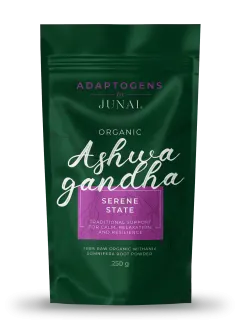
What is ashwagandha?
Ashwagandha (Withania somnifera, also called Indian ginseng) is a plant from the Ayurvedic tradition. In food supplements, mainly the root is used, as a powder and as an extract, which may be standardised to a withanolide content. The amount and the content of active compounds differ quite a lot between products, so there is no single dose that fits all of them.
The US National Center for Complementary and Integrative Health (NCCIH) points out that research on ashwagandha is limited and the quality of evidence varies. This page therefore gives no advice about effects, only an overview of the amounts usually found on labels.
What amounts are listed on products
In clinical studies the amounts vary widely depending on the extract. For one commonly used high-concentration root extract, as in the study by Chandrasekhar et al. from 2012, the daily amount was 600 mg of extract. Among products on the market, usual amounts are from about 250 to 600 mg of extract a day, and a few grams for root powder.
Studies and products differ in extract, standardisation and duration, so they cannot be compared directly. The only number that counts for you is the amount on the packaging of the product you have.
When choosing a product it is also useful to look at which part of the plant it is made from (root or leaf), whether an extract is stated and how many kilograms of root were used for one kilogram of extract, and whether the product is organic. For capsules, check how many mg are in one capsule and how many capsules are intended per day, as the numbers differ greatly between products.
Safety and the liver
Reports of liver injury after taking ashwagandha are rare, but they exist. Cases from Iceland and the US described by Björnsson and colleagues in 2020 were linked with yellowing of the skin and dark urine. If you notice such signs, stop taking the product and seek medical help.
Because of the lack of data, ashwagandha is not recommended during pregnancy and breastfeeding. People with thyroid conditions, autoimmune diseases and those who take sedatives or medicines that suppress the immune system should also be careful. All of them should talk to a doctor first.
Frequently asked questions
How much ashwagandha a day?
It depends on the product. Extract labels often list 250–600 mg a day, and root powder a few grams. Always follow the instructions on the product packaging.
Is the range on this page my dose?
No. It is an overview of the amounts usually found on labels, not a personal recommendation. For personal advice, talk to a doctor or pharmacist.
When should I not take ashwagandha?
During pregnancy and breastfeeding, with thyroid or liver conditions, and when taking sedatives or medicines that suppress the immune system, talk to a doctor first.
What does standardised extract mean?
It is an extract with a set content of selected compounds, for ashwagandha often withanolides. The amount of extract and the amount of withanolides are not the same thing, so read the label.
How long can I take ashwagandha?
Studies usually last a few weeks to a few months. Long-term data are limited, so follow the product instructions and talk to a doctor if in doubt.
Sources
- NCCIH – Ashwagandha: what you need to know
- Chandrasekhar K et al. – A prospective, randomized double-blind, placebo-controlled study of a high-concentration full-spectrum extract of ashwagandha root (2012)
- Björnsson HK et al. – Ashwagandha-induced liver injury: a case series from Iceland and the US Drug-Induced Liver Injury Network (2020)
Updated: October 2026
For information only, not a substitute for medical advice.