




Inhalt
- Was ist rote Maca?
- Dosis: Was in Studien verwendet wurde
- Wann Maca einnehmen?
- Rote Maca im Produkt Junai
- Nebenwirkungen von roter Maca
- Wechselwirkungen und wer darauf verzichten sollte
- Quellen
- Kurz gesagt
- HOW RED MACA WORKS
- RESEARCH ON RED MACA
- HOW TO USE RED MACA
- HOW AND WHY JUNAI OFFERS RED MACA
- WHO NEEDS RED MACA
- WHAT TO EXPECT WITH RED MACA
- CONTRAINDICATIONS
Kurz gesagt
QUICK RECAP OF RED MACA
Red maca (Lepidium meyenii) is a cruciferous vegetable from the Peruvian highlands, consumed in root form, distinct from yellow and black maca in phytochemical profile and clinical activity
Its primary active compounds are benzylglucosinolate and benzyl isothiocyanate (BITC), sulfur-containing compounds that act in androgen-sensitive tissue
Red maca is the only maca variant with consistent evidence for reducing prostate size and BPH-associated markers in preclinical models, an effect attributed to its elevated glucosinolate profile
Macamides, fatty acid amides unique to maca, support energy and mood by inhibiting FAAH and raising anandamide levels without stimulant activity
Junai uses a 5:1 concentrated red maca root powder to deliver a clinically meaningful glucosinolate load per serving
Effective dosing requires consistency over 6 to 16 weeks; this is not a short-cycle ingredient
Red maca does not raise testosterone and provides its benefits without touching the HPG axis
Those with thyroid conditions or hormone-sensitive health histories should consult a healthcare provider before use
Red maca supports male reproductive health, including sperm count, sperm motility, and libido, through mechanisms that are independent of testosterone or LH modulation
Produkte mit dieser Zutat
Rote Maca ist in diesen Junai Produkten enthalten.
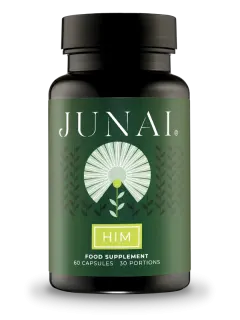
Rote Maca (Lepidium meyenii, englisch Red Maca) ist eine Pflanze aus den peruanischen Anden, die traditionell in der Volksmedizin zur Unterstützung von sexueller Ausdauer, Energie und Vitalität verwendet wird. Sie kann dazu beitragen, gesunde sexuelle Funktionen zu erhalten, die Libido zu stimulieren und möglicherweise die Fruchtbarkeit zu fördern. Außerdem kann sie die Gesundheit des reproduktiven Systems bei Männern unterstützen und die körperliche sowie mentale Leistungsfähigkeit verbessern.
Unterstützt sexuelle Ausdauer und Energie
Rote Maca kann zu einem gesunden Sexualleben beitragen, da sie natürliche Verbindungen enthält, die das hormonelle Gleichgewicht fördern. Sie kann auch zu gesteigerter sexueller Ausdauer beitragen.
Fördert körperliche und geistige Leistungsfähigkeit
Oft genutzt als natürlicher Energielieferant, enthält sie zahlreiche bioaktive Verbindungen wie Aminosäuren, Vitamine und Mineralstoffe, die körperliche und geistige Leistungsfähigkeit unterstützen. Einige Studien deuten darauf hin, dass sie Vitalität und Ausdauer verbessern kann, besonders bei Personen, die Müdigkeit oder Stress erleben. (z. B. Studie zeigte positive Effekte auf Stimmung und Energie mit roter Maca)
Traditionell wird sie eingesetzt, um Vitalität zu fördern und Erschöpfung zu reduzieren, indem sie hilft, Körper und Geist auf körperliche und geistige Belastungen einzustellen.
Stimuliert sexuelle Begierde
Rote Maca gilt als natürlicher Aphrodisiakum, das die Libido steigern kann. Sie kann die sexuelle Funktion positiv beeinflussen, insbesondere bei Männern und Frauen mit niedrigem Libido oder hormonellem Ungleichgewicht.
Unterstützt bei Männern ein gesundes Reproduktionssystem
Rote Maca wird oft mit einer verbesserten männlichen sexuellen Funktion in Verbindung gebracht, da sie traditionell die Gesundheit des reproduktiven Systems unterstützt. Studien zeigen, dass Maca dazu beitragen kann, Testosteronwerte (in bestimmten Kontexten) zu steigern und die erektile Funktion sowie den Libido bei Männern zu verbessern.
Was ist rote Maca?
Maca (Lepidium meyenii) ist eine einjährige oder zweijährige Pflanze aus der Familie der Kreuzblütler (Brassicaceae), zu der auch Rettich, Grünkohl und Meerrettich gehören. Sie wächst in den peruanischen Anden in Höhen von über 4000 Metern, wo sie seit Jahrhunderten angebaut wird. Verwendet wird die verdickte Wurzelknolle, die einer kleinen Radieschen- oder Rübenknolle ähnelt.
Die Wurzelknollen gibt es in verschiedenen Farben: Gelb ist am häufigsten, Rot und Schwarz sind seltener. Rote Maca ist die Bezeichnung für die Farbvariante derselben Art, nicht für eine andere Pflanze. Traditionell wird sie gekocht, gebacken oder zu Mehl gemahlen; in Nahrungsergänzungsmitteln findet man sie als Pulver oder Extrakt in Kapseln.
Dosis: Was in Studien verwendet wurde
In Studien wurden bei Erwachsenen am häufigsten 1,5–3 g Wurzelpulver pro Tag verwendet, meist 8–12 Wochen lang, oft in Form von wärmebehandelter (gelatinisierter) Maca. Zu roter Maca gibt es weniger Daten als zu gelber Maca.
Bei dem Produkt Junai beachte die Dosis und die Angaben auf dem Etikett und überschreite die empfohlene tägliche Verzehrsmenge nicht.
Wann Maca einnehmen?
Studien haben keinen besten Zeitpunkt festgelegt. Das Pulver nahmen die Teilnehmenden üblicherweise morgens oder tagsüber ein, gemischt in ein Getränk oder Essen. Da es bei manchen am Abend den Schlaf stören kann, nehmen viele Maca lieber am Vormittag ein.
Rote Maca im Produkt Junai
Rote Maca ist eine Zutat der Kapseln Junai Him. Zusammensetzung, Menge pro Tagesdosis und Hinweise findest du im Kasten »Produkte mit dieser Zutat« oben auf dieser Seite und auf der Produktseite. Das Produkt ist für Erwachsene bestimmt.
Sieh dir auch Zink und schwarzen Pfeffer an, die im selben Produkt enthalten sind.
Nebenwirkungen von roter Maca
In Studien wurden beschrieben:
- Verdauungsbeschwerden: Blähungen, Unwohlsein im Bauch, Übelkeit.
- Unruhe oder schlechterer Schlaf bei manchen, wenn sie sie abends einnehmen.
- Glucosinolate: Maca enthält als Kreuzblütler Stoffe, die in großen Mengen die Schilddrüse beeinflussen können.
Wenn die Beschwerden wiederkehren, setze die Einnahme ab und sprich mit einem Arzt. Überschreite die empfohlene tägliche Verzehrsmenge nicht.
Wechselwirkungen und wer darauf verzichten sollte
Nimm rote Maca nicht ohne Rücksprache mit einem Arzt oder Apotheker ein, wenn du:
- Probleme mit der Schilddrüse hast oder Schilddrüsenhormone einnimmst,
- eine Erkrankung hast, die von Sexualhormonen beeinflusst wird, oder Hormonpräparate einnimmst,
- schwanger bist oder stillst (es gibt nur wenige Daten),
- blutgerinnungshemmende Mittel oder Blutdruckmedikamente einnimmst,
- jünger als 18 Jahre bist.
Nahrungsergänzungsmittel sind kein Ersatz für eine abwechslungsreiche und ausgewogene Ernährung.
Quellen
- Gonzales GF. Ethnobiology and ethnopharmacology of Lepidium meyenii (Maca), a plant from the Peruvian highlands. Evid Based Complement Alternat Med. 2012;2012:193496.
- Beharry S, Heinrich M. Is the hype around the reproductive health claims of maca (Lepidium meyenii Walp.) justified? J Ethnopharmacol. 2018;211:126-170.
- Verordnung (EU) Nr. 432/2012: Für Maca sind keine gesundheitsbezogenen Angaben zugelassen.
Kurz gesagt
- Maca ist eine Wurzelknolle aus den peruanischen Anden, Rot ist eine der Farbvarianten derselben Art.
- In Studien wurden 1,5–3 g Pulver pro Tag verwendet, meist 8–12 Wochen lang.
- Beschriebene unerwünschte Wirkungen sind Verdauungsbeschwerden und Unruhe; Maca enthält Glucosinolate.
- Im Produkt Junai ist rote Maca eine Zutat der Kapseln Junai Him.
- Warnhinweise und Wechselwirkungen stehen im Abschnitt zu den Nebenwirkungen.
HOW RED MACA WORKS
There's some good news and some bad news. We'll start with the bad: unlike some of Junai's other ingredients, which have been exhaustively researched and documented (think creatine, turmeric, ashwagandha, etc.), science isn't still quite 100% sure why maca or, more specifically, precisely what within maca's vast array of phytochemicals, makes it do what it does. The good news is that there are likely candidates and that, even if precise compounds haven't been isolated and named, clinical trials deliver consistent, repeatable results.
As usual, the science in this section will not be watered down, even if the language will be as readable as possible.
Reproductive and sexual health support
The primary candidates responsible for red maca's benefits on sexual and reproductive health are benzylglucosinolate and its metabolite benzyl isothiocyanate (BITC). BITC has demonstrated activity in androgen receptor (receptors are proteins that recognize steroids, hormones, vitamins, and certain other molecules, and androgen receptors are such proteins that specifically sense hormones like e.g. testosterone) signalling pathways. Research has established that these effects occur independently of changes in serum testosterone or luteinising hormone (the signal that triggers testosterone production). This rules out the simple explanation, namely that maca stimulates the HPG axis (hypothalamic-pituitary-gonadal axis, the hormonal chain of command for reproductive function) in the way that something like ashwagandha does. It appears to be working downstream, in tissue-level responsiveness rather than circulating hormone levels.
For sperm specifically, multiple studies have documented increases in sperm count and motility with maca supplementation, with the effect accumulating over 6 to 16 weeks. The proposed mechanism here involves antioxidant activity in testicular tissue and possible modulation of seminal plasma composition, both of which affect sperm viability. BITC's antioxidant and anti-inflammatory activity in sensitive tissue is the most plausible molecular bridge between the glucosinolate profile and the fertility outcomes.
The net result is reproductive tissue that is better maintained, working at a higher baseline, even when the hormonal picture looks the same on a blood panel.
Prostate and urinary tract health
Red maca has significant effects in reducing prostate enlargement resulting from benign prostate hyperplasia (BPH), a condition that will affect the majority of men during their lifetime. This was shown in trials involving male rats that were given testosterone supplements to induce their prostate growth (this is a standard model for studying BPH). The effect was dose-dependent (an important factor in efficacy studies) and was not mediated by testosterone suppression, as the animals' circulating androgen levels were the same. This means red maca was doing something at the tissue level, influencing how prostate cells respond to androgenic signals, rather than simply reducing the androgenic signal itself.
The leading candidate here is again the glucosinolate-BITC pathway. BITC has demonstrated anti-proliferative activity (meaning it inhibits the unchecked cell division that drives tissue overgrowth) in prostate cell lines in vitro. The working hypothesis is that red maca's elevated BITC content modulates androgen receptor activity within prostate tissue without affecting systemic hormone levels, making it a local effect rather than a systemic one.
Energy and mood without the edge
Maca contains, or better develops with post-harvest drying, a signature class of compounds called macamides. These fatty acid amides (we'd explain what that is exactly, but you'd need a year of organic chemistry just to still have a blank look on your face), unique to the Lepidium meyenii plant, interact with the body's endocannabinoid system (the one responsible for maintaining neurological, emotional/cognitive, and metabolic homeostasis). They do so by inhibiting fatty acid amide hydrolase (FAAH), the enzyme that breaks down anandamide (the body's own endocannabinoid, sometimes called the "bliss molecule"). This raises circulating anandamide levels without introducing exogenous cannabinoids (in layman's terms: gets you some of the happiness associated with being high but without, ahem, inhaling). The result is a modest but real modulation of mood and stress response.
Another pathway to mood regulation is offered by maca's flavonoids and the plant's documented effects on monoamine oxidase (MAO). During drying, it develops tetrahydro-β-carbolines, natural alkaloids that act as mild, reversible MAO inhibitors (the main mechanism behind outdated MAOI anti-depressants, the main type developed and produced in the 1950s), slowing the breakdown of mood-regulating neurotransmitters like serotonin and dopamine.
Critically: neither of the pathways discussed above involves the adrenal axis, meaning the lift is not borrowed from tomorrow.
RESEARCH ON RED MACA
There is an extensive body of research on red maca, but we admit that the science is not as robust as it is for some other ingredients we carry. The research is nonetheless unanimous: maca has repeatable, dose-dependent effects on androgen-sensitive tissue, self-reported feelings of reproductive health, and energy and stamina levels. Unlike for turmeric and its star compound curcumin, for example, science has not identified a single powerhouse molecule in maca to which we could attribute the lion's share of its positive effects on humans. The state of science could be best summarized as follows: we know what maca does, we know that it does so consistently, we just aren't quite sure which of maca's veritable pharmacopoeia of compounds is doing the heavy lifting.
EFSA Claims
As with a huge list of other botanical primary ingredients, there are currently no officially published claims endorsed by EFSA. In general, botanical substances are stuck in European regulatory limbo. There are 4 on-hold claims, all of which are completely in line both with traditional practice and modern research findings.
Has sexual potency strengthening properties, enhances libido, and promotes sexual desire
Increases sperm quantity and motility, helps maintain a healthy male reproductive system, and supports both male and female sexual function
Prevent bone loss, helps reduce risk of bone loss, and contributes to the maintenance of normal bone strength in post-menopausal women
Source of energy that supports physical and mental performance and helps maintain optimal stamina, feelings, and vitality
International Studies
Lepidium meyenii (Maca): A Plant from the Highlands of Peru – from Tradition to Science
A fantastic review of the state of science on maca. If you just read one article about it, make it this one
A study reporting on self-perceived improvements in male reproductive health
Research demonstrating actual increases in seminal volume with maca
Another study on the improvements in sperm concentration and motility
Red maca (Lepidium meyenii) reduced prostate size in rats
Compelling research on maca's ability to reduce prostate size in BPH
This study specifically focuses on how the traditional practices of drying maca for storage actually increase its array of bioactive compounds
An article with very general info on maca's effects, with specific emphasis on how variations in growing environment lead to different phytochemical profiles
Ethnobiology and Ethnopharmacology of Lepidium meyenii (Maca), a Plant from the Peruvian Highlands
This paper has some useful information on native practices and the history and development of maca usage
A useful article describing things this page mostly didn't cover, namely maca's benefits for female reproductive health
HOW TO USE RED MACA
Red maca is most commonly consumed as a powder, which can be mixed into liquids, smoothies, or food. Effective doses in clinical studies have ranged from 1.5 to 3.5 grams of dried root equivalent per day. With a 5:1 concentrate, like the one Junai offers, this translates to roughly 300–700 mg of powder per day. Consistent daily dosing matters much more than precise timing.
Traditional Use
Some of the ingredients Junai offers and works with have been true globalists for millennia. Moringa traveled from the Himalayan foothills to nearly everywhere it doesn't freeze, turmeric was transported from one end of the ancient Silk Road to the other, and rosemary has even been found gracing the tombs of Egyptian pharaohs. In contrast, red maca remained relatively stationary until very recently. Rather extreme and specific growing conditions limited the spread of this crop and, as such, we basically just have one microregion's usage to draw examples from.
Maca was domesticated in the Peruvian central Andes, on the Junin Plateau, somewhere a little over 2500 years ago. Traditionally dried after harvest until the hypocotyls are hard as stone, they can be stored for years and used to trade for other staple foods grown at lower altitudes, including as far away as in Lima. There are no pre-Columbian written records on the plant, but Spanish conquistadors immediately reported on the oral tradition still carried by locals that variously praised the plant's benefits for energy, stamina, and fertility. Locals also suggested the plant as a feed crop for Spanish cattle, which had trouble reproducing at high altitude.
In the Andes today, maca is often boiled with milk and cinnamon into a drink called maca chica, or fermented into a low-alcohol beverage called chicha de maca.
Modern Use
Modern research has shown that native practice, just like in the case of turmeric, closely matches scientific fact: maca's bioactive macamides only develop during the drying process, and boiling the roots seems to increase the amount of active metabolites. Thus the native tradition of drying the roots in the open sun is not incidental to the plant's rich capacity for bioactivity; it is the very production mechanism.
Powdered forms available in today's supplements, like the raw powder Junai provides, retain the root's full phytochemical profile of glucosinolates. Gelatinized maca (where the starch has been broken down by heat and pressure) also exists and is easier to digest for some people.
Timing
Maca's mechanisms are slow and cumulative. Morning or evening, with food or without — consistency across weeks is the variable that drives outcomes, not the clock. Red maca's bioavailability is modestly improved with fat, so if you manage to tie consumption to a meal with healthy fats, great, but don't sweat the timing.
Duration
The fertility and reproductive tissue effects in clinical trials were observed at 6 weeks minimum, with more pronounced findings at 12 and 16 weeks. This is not a 2-week ingredient, so give it an honest go for a couple of months and then recheck your baseline.
HOW AND WHY JUNAI OFFERS RED MACA
We are obsessed with the intersection of tradition and science, especially when that tradition so closely matches subsequent research findings that come a millennium after native cultures had long figured it out. To protect itself against the increased UV radiation exposure at high altitude, as well as against the cold and biting wind, maca developed an impressive quiver of bioactive compounds. Locals domesticated the plant and found a storage solution that increased its usefulness, and developed cooking methods that helped them maximize the root's potential even more. These are the compelling stories that convince Junai that an ingredient is worth our respect and attention.
Junai offers pure ground red maca root powder at a 5:1 concentration (meaning 5 kg of plant goes into 1 kg of root powder). The concentration ratio was chosen to deliver a clinically relevant glucosinolate load in a practical per-serving volume. Raw powder was selected over gelatinised or extracted forms to preserve the full-spectrum phytochemical profile, including the benzylglucosinolate content that underpins the prostate and reproductive findings.
Red maca is a core ingredient in Junai HIM, our men's health formula, where it provides men with strong support for reproductive and prostate health, and contributes to the improvement in energy and mood baseline through the macamide pathways described above. As a part of HIM, it is complementary to, but distinct from, the support for nitric oxide production and vasodilation provided by L-arginine and L-citrulline. Further, it combines with HIM's component zinc, a direct cofactor in spermatogenesis, making maca a mechanistically logical companion for fertility-oriented supplementation.
WHO NEEDS RED MACA
As a core component of Junai HIM, this page has largely focused on the red maca's benefits for men. There is quite a bit more to say on its benefits for women, but we'll save that for another article. For now, you might need to take advantage of this high-altitude Andean root vegetable if you are a man who is:
Actively working on fertility outcomes, including sperm count, motility, or semen quality
In your thirties and beyond and want to maintain prostate health before symptoms become a conversation at the doctor's office
Experiencing reduced libido without a clear hormonal explanation, particularly relevant if testosterone tests have come back unremarkable
Looking for sustained energy and mood support that doesn't involve stimulants or the cortisol borrowing that comes with them
Dealing with high training loads where oxidative stress in muscular and reproductive tissue is a real and underappreciated variable
WHAT TO EXPECT WITH RED MACA
As explained above, maca is a slow burn. Don't expect anything significant to happen quickly, but keep your eyes on a prize that pays off over 2 to 4 months.
Weeks 1 to 2:
Possibly nothing measurable. Maca is not a day-one ingredient. Some people notice a modest shift in energy or mood in the first week; others don't, and that is not a sign that it is not working.
Weeks 3 to 4:
The energy and mood effects tend to consolidate here. Self-reported improvements in drive and general well-being show up in trial data around this window.
Weeks 6 to 12:
This is where the reproductive outcomes start to show up in the clinical literature. Sperm parameter improvements were documented in studies at the 6-week mark and were more pronounced at 12 and 16. Prostate-related outcomes require similar timelines. Maca is doing slow, structural work in tissue that does not turn over quickly.
What red maca will not do: produce a detectable change in reproductive hormone levels (testosterone, luteinizing hormone, or follicle-stimulating hormone). If you are expecting blood panel movement, you will be disappointed. The work is happening elsewhere. Trust the mechanism, not the marker.
CONTRAINDICATIONS
Red maca is generally considered quite safe, [+++] both as a foodstuff and in dosages typical of supplementation. Like with every plant on earth, though, some people have reported side effects. Chief among these is:
Digestive issues: as a taproot, maca is rich in starches that cause pain, cramps, or bloating in some people
Further, caution and consultation regarding red maca are recommended in the following circumstances:
Thyroid conditions: Maca is a cruciferous vegetable and contains glucosinolates, which in large quantities can interfere with thyroid function by inhibiting iodine uptake in the thyroid gland. At standard supplemental doses this is generally not clinically significant, especially if iodine intake is sufficient.
Hormone-sensitive conditions: Although maca does not appear to directly modulate serum hormone levels, it acts in androgen-sensitive tissue, so men with a history of prostate cancer or prostate-specific antigen (PSA) concerns should consult a physician before use.
Pregnancy and breastfeeding: Concentrated glucosinolate loads in supplement form have not been studied in pregnant or breastfeeding women and so the precautionary position is to avoid supplemental maca during pregnancy and breastfeeding and to rely on dietary sources if desired.
If you experience any unusual symptoms after beginning supplementation, discontinue use and consult a healthcare professional.
Verwandte Zutaten

Häufige Fragen: Rote Maca
Was ist rote Maca?
Rote Maca ist die Farbvariante der Wurzelknolle Lepidium meyenii, die in den peruanischen Anden wächst. Neben Rot gibt es auch gelbe und schwarze Maca.
Welche Nebenwirkungen hat rote Maca?
Beschrieben sind Verdauungsbeschwerden (Blähungen, Übelkeit) und bei manchen Unruhe oder schlechterer Schlaf, wenn sie abends eingenommen wird. Maca enthält Glucosinolate, deshalb ist bei Problemen mit der Schilddrüse ein Gespräch mit einem Arzt nötig.
Wie viel Maca pro Tag?
In Studien wurden 1,5–3 g Pulver pro Tag verwendet. Beim Produkt Junai halte dich an das Etikett und überschreite die empfohlene tägliche Verzehrsmenge nicht.
Wann sollte man Maca einnehmen?
Studien haben keinen besten Zeitpunkt festgelegt. Üblicherweise wurde sie morgens oder tagsüber eingenommen; da sie abends den Schlaf stören kann, nehmen viele sie am Vormittag ein.
Was ist der Unterschied zwischen roter, gelber und schwarzer Maca?
Es handelt sich um Farbvarianten derselben Art. Gelb ist am häufigsten, Rot und Schwarz sind seltener; zu roter Maca gibt es in Studien weniger Daten.
Ist Maca in der Schwangerschaft sicher?
Es gibt nur wenige Daten. Nimm Maca in der Schwangerschaft und während des Stillens nicht ohne Rücksprache mit einem Arzt ein.
In welchem Produkt Junai ist rote Maca enthalten?
Rote Maca ist eine Zutat der Kapseln Junai Him. Zusammensetzung und Anwendungshinweise findest du auf der Produktseite.
Produkte mit dieser Zutat
Rote Maca ist in diesen Junai Produkten enthalten.
Tipps abonnieren
Ein monatlicher Einblick in Zutaten, Ernährung und Energie – direkt in dein Postfach.
Verwandte Beiträge

Ein 400 Millionen Jahre andauernder Krieg in deinem Schrank mit Nahrungsergänzungsmitteln
Wie so viele andere antagonistische Paare in der biologischen Geschichte sind auch Seidenspinner und weiße Maulbeere in einen Tanz chemischer Kriegsführung verstrickt. Aus genau solchen Auseinandersetzungen stammen Pflanzenextrakte, die du heute in Nahrungsergänzungsmitteln findest: Das, was für die vorgesehene Zielstruktur Gift ist, kann bei uns Wunder wirken — aber nur, wenn du weißt, wie du richtig und in den richtigen Dosen damit umgehst.

Ashwagandha: dein Adaptogen für Tage, an denen alles zu viel ist
Die Gedanken wirbeln, der Körper ist angespannt, und die Energie schwankt hoch und runter wie ein Jojo. Wenn dir das bekannt vorkommt, bist du nicht allein und hast wahrscheinlich schon von Ashwagandha gehört. Was bewirkt diese uralte Wurzel eigentlich für dich und wie benutzt du sie, damit sie wirkt?

Kreatin für Frauen: Muskeln, Gehirn und Knochen
Wahrscheinlich stellst du dir Kreatin als Pulver für Bodybuilder aus dem Fitnessstudio vor. Die Wahrheit ist ziemlich anders und für Frauen vielleicht interessanter, als du denkst. Es geht nicht nur um Muskeln; es geht um Energie, Gehirn und Knochen.