




Inhoud
- Wat is rode maca?
- Dosering: wat werd in onderzoeken gebruikt
- Wanneer neem je maca?
- Rode maca in het product Junai
- Bijwerkingen van rode maca
- Interacties en wie het moet vermijden
- Bronnen
- Kort samengevat
- HOW RED MACA WORKS
- RESEARCH ON RED MACA
- HOW TO USE RED MACA
- HOW AND WHY JUNAI OFFERS RED MACA
- WHO NEEDS RED MACA
- WHAT TO EXPECT WITH RED MACA
- CONTRAINDICATIONS
In het kort
QUICK RECAP OF RED MACA
Red maca (Lepidium meyenii) is a cruciferous vegetable from the Peruvian highlands, consumed in root form, distinct from yellow and black maca in phytochemical profile and clinical activity
Its primary active compounds are benzylglucosinolate and benzyl isothiocyanate (BITC), sulfur-containing compounds that act in androgen-sensitive tissue
Red maca is the only maca variant with consistent evidence for reducing prostate size and BPH-associated markers in preclinical models, an effect attributed to its elevated glucosinolate profile
Macamides, fatty acid amides unique to maca, support energy and mood by inhibiting FAAH and raising anandamide levels without stimulant activity
Junai uses red maca root powder, with no carriers or extraction, to keep the full phytochemical profile
Effective dosing requires consistency over 6 to 16 weeks; this is not a short-cycle ingredient
Red maca does not raise testosterone and provides its benefits without touching the HPG axis
Those with thyroid conditions or hormone-sensitive health histories should consult a healthcare provider before use
Red maca supports male reproductive health, including sperm count, sperm motility, and libido, through mechanisms that are independent of testosterone or LH modulation
Producten met dit ingrediënt
Rode maca zit in deze Junai producten.
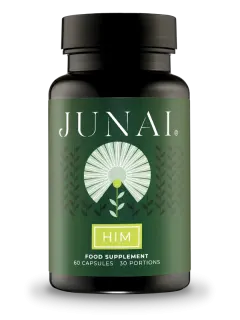
Rode maca (Lepidium meyenii, Engels Red maca) is een plant afkomstig uit de Peruaanse Andes die traditioneel in de volksgeneeskunde wordt gebruikt ter ondersteuning van seksuele uithoudingsvermogen, energie en vitaliteit. Het kan bijdragen aan het behoud van gezond seksueel functioneren, stimuleert het seksueel verlangen en heeft mogelijk een gunstige invloed op de vruchtbaarheid. Daarnaast kan het de gezondheid van het voortplantingssysteem bij mannen ondersteunen en de fysieke en mentale prestaties verbeteren.
Helpt het seksuele uithoudingsvermogen en energie te behouden
Rode maca kan het gezonde seksuele functioneren ondersteunen omdat het natuurlijke verbindingen bevat die het hormonale evenwicht bevorderen. Ook kan het bijdragen aan een verbeterd seksueel uithoudingsvermogen.
Ondersteunt fysieke en mentale prestaties
Het wordt vaak gebruikt als een natuurlijke bron van energie, want het bevat talrijke bioactieve stoffen, waaronder aminozuren, vitaminen en mineralen, die de fysieke en mentale prestaties ondersteunen. Sommige onderzoeken tonen aan dat het kan helpen bij het behouden van vitaliteit en uithoudingsvermogen, vooral bij mensen die uitputting of stress ervaren. Traditioneel wordt het gebruikt om vitaliteit te verhogen en vermoeidheid te verminderen, omdat wordt aangenomen dat het het lichaam helpt zich aan te passen aan zowel fysieke als mentale inspanningen.
Stimuleert seksueel verlangen
Rode maca staat bekend als een natuurlijk afrodisiacum dat het seksueel verlangen stimuleert en het libido verhoogt. Het kan een positief effect hebben op de seksuele functie, vooral bij mannen en vrouwen die last hebben van een laag libido of hormonale disbalans.
Helpt bij mannen een gezond voortplantingssysteem te behouden
Rode maca wordt vaak geassocieerd met het verbeteren van de mannelijke seksuele functie, omdat het traditioneel de gezondheid van het voortplantingssysteem ondersteunt. Uit onderzoek blijkt dat maca het testosteronniveau kan verhogen en de erectiele functie en libido bij mannen kan verbeteren.
Wat is rode maca?
Maca (Lepidium meyenii) is een eenjarige of tweejarige plant uit de kruisbloemenfamilie (Brassicaceae), waartoe ook radijs, kool en mierikswortel behoren. Ze groeit in de Peruaanse Andes op een hoogte van meer dan 4000 meter, waar ze al eeuwenlang wordt geteeld. Het eetbare deel is een verdikte wortelknol, vergelijkbaar met een radijs of raap.
Wortelknollen komen in verschillende kleuren voor: geel is het meest voorkomend, rood en zwart zijn zeldzamer. Rode maca is de naam voor de gekleurde vorm van dezelfde soort, niet voor een andere plant. Traditioneel wordt ze gekookt, gebakken of gemalen tot bloem; in supplementen vind je haar als poeder of extract in capsules.
Dosering: wat werd in onderzoeken gebruikt
In onderzoeken werd bij volwassenen meestal 1,5–3 g wortelknolpoeder per dag gebruikt, doorgaans 8–12 weken, vaak in de vorm van verhitte (gegelatiniseerde) maca. Er zijn minder gegevens over rode maca dan over gele.
Bij het product Junai volg je de dosering en de aanwijzingen op het etiket en overschrijd je de aanbevolen dagelijkse inname niet.
Wanneer neem je maca?
Onderzoeken hebben het beste moment niet vastgesteld. Deelnemers namen het poeder meestal 's ochtends of overdag, gemengd in een drankje of een gerecht. Omdat het bij sommige mensen 's avonds de slaap kan verstoren, nemen veel mensen maca liever in de ochtend.
Rode maca in het product Junai
Rode maca is een ingrediënt van de capsules Junai Him. De samenstelling, de hoeveelheid per dagelijkse dosis en de instructies vind je in het vak »Producten met dit ingrediënt« bovenaan deze pagina en op de productpagina. Het product is bedoeld voor volwassenen.
Bekijk ook zink en zwarte peper, die in hetzelfde product zitten.
Bijwerkingen van rode maca
In onderzoeken zijn beschreven:
- Spijsverteringsproblemen: een opgeblazen gevoel, ongemak in de buik, misselijkheid.
- Onrust of slechter slapen bij sommige mensen, als ze het 's avonds nemen.
- Glucosinolaten: als kruisbloemige bevat maca stoffen die bij grote hoeveelheden de schildklier kunnen beïnvloeden.
Als de klachten terugkeren, stop dan met het gebruik en overleg met een arts. Overschrijd de aanbevolen dagelijkse inname niet.
Interacties en wie het moet vermijden
Neem rode maca niet zonder overleg met een arts of apotheker als je:
- problemen met je schildklier hebt of schildklierhormonen gebruikt,
- een aandoening hebt die door geslachtshormonen wordt beïnvloed, of hormonale geneesmiddelen gebruikt,
- zwanger bent of borstvoeding geeft (er zijn weinig gegevens),
- geneesmiddelen gebruikt tegen bloedstolling of voor de bloeddruk,
- jonger bent dan 18 jaar.
Een voedingssupplement is geen vervanging voor een gevarieerde en evenwichtige voeding.
Bronnen
- Gonzales GF. Ethnobiology and ethnopharmacology of Lepidium meyenii (Maca), a plant from the Peruvian highlands. Evid Based Complement Alternat Med. 2012;2012:193496.
- Beharry S, Heinrich M. Is the hype around the reproductive health claims of maca (Lepidium meyenii Walp.) justified? J Ethnopharmacol. 2018;211:126-170.
- Verordening (EU) nr. 432/2012: voor maca zijn geen toegestane gezondheidsclaims.
Kort samengevat
- Maca is een wortelknol uit de Peruaanse Andes; rood is een van de kleurvormen van dezelfde soort.
- In onderzoeken werd 1,5–3 g poeder per dag gebruikt, meestal 8–12 weken.
- De beschreven bijwerkingen zijn spijsverteringsproblemen en onrust; maca bevat glucosinolaten.
- In het product Junai is rode maca een ingrediënt van de capsules Junai Him.
- Waarschuwingen en interacties staan in het hoofdstuk over bijwerkingen.
HOW RED MACA WORKS
There's some good news and some bad news. We'll start with the bad: unlike some of Junai's other ingredients, which have been exhaustively researched and documented (think creatine, turmeric, ashwagandha, etc.), science isn't still quite 100% sure why maca or, more specifically, precisely what within maca's vast array of phytochemicals, makes it do what it does. The good news is that there are likely candidates and that, even if precise compounds haven't been isolated and named, clinical trials deliver consistent, repeatable results.
As usual, the science in this section will not be watered down, even if the language will be as readable as possible.
Reproductive and sexual health support
The primary candidates responsible for red maca's benefits on sexual and reproductive health are benzylglucosinolate and its metabolite benzyl isothiocyanate (BITC). BITC has demonstrated activity in androgen receptor (receptors are proteins that recognize steroids, hormones, vitamins, and certain other molecules, and androgen receptors are such proteins that specifically sense hormones like e.g. testosterone) signaling pathways. Research has established that these effects occur independently of changes in serum testosterone or luteinizing hormone (the signal that triggers testosterone production). This rules out the simple explanation, namely that maca stimulates the HPG axis (hypothalamic-pituitary-gonadal axis, the hormonal chain of command for reproductive function) in the way that something like ashwagandha does. It appears to be working downstream, in tissue-level responsiveness rather than circulating hormone levels.
For sperm specifically, multiple studies have documented increases in sperm count and motility with maca supplementation, with the effect accumulating over 6 to 16 weeks. The proposed mechanism here involves antioxidant activity in testicular tissue and possible modulation of seminal plasma composition, both of which affect sperm viability. BITC's antioxidant and anti-inflammatory activity in sensitive tissue is the most plausible molecular bridge between the glucosinolate profile and the fertility outcomes.
The net result is reproductive tissue that is better maintained, working at a higher baseline, even when the hormonal picture looks the same on a blood panel.
Prostate and urinary tract health
Red maca has significant effects in reducing prostate enlargement resulting from benign prostate hyperplasia (BPH), a condition that will affect the majority of men during their lifetime. This was shown in trials involving male rats that were given testosterone supplements to induce their prostate growth (this is a standard model for studying BPH). The effect was dose-dependent (an important factor in efficacy studies) and was not mediated by testosterone suppression, as the animals' circulating androgen levels were the same. This means red maca was doing something at the tissue level, influencing how prostate cells respond to androgenic signals, rather than simply reducing the androgenic signal itself.
The leading candidate here is again the glucosinolate-BITC pathway. BITC has demonstrated anti-proliferative activity (meaning it inhibits the unchecked cell division that drives tissue overgrowth) in prostate cell lines in vitro. The working hypothesis is that red maca's elevated BITC content modulates androgen receptor activity within prostate tissue without affecting systemic hormone levels, making it a local effect rather than a systemic one.
Energy and mood without the edge
Maca contains, or better develops with post-harvest drying, a signature class of compounds called macamides. These fatty acid amides (we'd explain what that is exactly, but you'd need a year of organic chemistry just to still have a blank look on your face), unique to the Lepidium meyenii plant, interact with the body's endocannabinoid system (the one responsible for maintaining neurological, emotional/cognitive, and metabolic homeostasis). They do so by inhibiting fatty acid amide hydrolase (FAAH), the enzyme that breaks down anandamide (the body's own endocannabinoid, sometimes called the "bliss molecule"). This raises circulating anandamide levels without introducing exogenous cannabinoids (in layman's terms: gets you some of the happiness associated with being high but without, ahem, inhaling). The result is a modest but real modulation of mood and stress response.
Another pathway to mood regulation is offered by maca's flavonoids and the plant's documented effects on monoamine oxidase (MAO). During drying, it develops tetrahydro-β-carbolines, natural alkaloids that act as mild, reversible MAO inhibitors (the main mechanism behind outdated MAOI anti-depressants, the main type developed and produced in the 1950s), slowing the breakdown of mood-regulating neurotransmitters like serotonin and dopamine.
Critically: neither of the pathways discussed above involves the adrenal axis, meaning the lift is not borrowed from tomorrow.
RESEARCH ON RED MACA
There is an extensive body of research on red maca, but we admit that the science is not as robust as it is for some other ingredients we carry. The research is nonetheless unanimous: maca has repeatable, dose-dependent effects on androgen-sensitive tissue, self-reported feelings of reproductive health, and energy and stamina levels. Unlike for turmeric and its star compound curcumin, for example, science has not identified a single powerhouse molecule in maca to which we could attribute the lion's share of its positive effects on humans. The state of science could be best summarized as follows: we know what maca does, we know that it does so consistently, we just aren't quite sure which of maca's veritable pharmacopoeia of compounds is doing the heavy lifting.
EFSA Claims
As with a huge list of other botanical primary ingredients, there are currently no officially published claims endorsed by EFSA. In general, botanical substances are stuck in European regulatory limbo. There are 4 on-hold claims, all of which are completely in line both with traditional practice and modern research findings.
Has sexual potency strengthening properties, enhances libido, and promotes sexual desire
Increases sperm quantity and motility, helps maintain a healthy male reproductive system, and supports both male and female sexual function
Prevent bone loss, helps reduce risk of bone loss, and contributes to the maintenance of normal bone strength in post-menopausal women
Source of energy that supports physical and mental performance and helps maintain optimal stamina, feelings, and vitality
International Studies
Lepidium meyenii (Maca): A Plant from the Highlands of Peru – from Tradition to Science
A fantastic review of the state of science on maca. If you just read one article about it, make it this one
A study reporting on self-perceived improvements in male reproductive health
Research demonstrating actual increases in seminal volume with maca
Another study on the improvements in sperm concentration and motility
Red maca (Lepidium meyenii) reduced prostate size in rats
Compelling research on maca's ability to reduce prostate size in BPH
This study specifically focuses on how the traditional practices of drying maca for storage actually increase its array of bioactive compounds
An article with very general info on maca's effects, with specific emphasis on how variations in growing environment lead to different phytochemical profiles
Ethnobiology and Ethnopharmacology of Lepidium meyenii (Maca), a Plant from the Peruvian Highlands
This paper has some useful information on native practices and the history and development of maca usage
A useful article describing things this page mostly didn't cover, namely maca's benefits for female reproductive health
HOW TO USE RED MACA
Red maca is most commonly consumed as a powder, which can be mixed into liquids, smoothies, or food. Effective doses in clinical studies have ranged from 1.5 to 3.5 grams of dried root per day. Junai HIM provides 400 mg of red maca root powder per daily serving. That's a consistent daily contribution as part of a broader formula, not the standalone clinical dose. If you want to supplement maca at trial doses, standalone powder is the practical route. Consistent daily dosing matters much more than precise timing.
Traditional Use
Some of the ingredients Junai offers and works with have been true globalists for millennia. Moringa traveled from the Himalayan foothills to nearly everywhere it doesn't freeze, turmeric was transported from one end of the ancient Silk Road to the other, and rosemary has even been found gracing the tombs of Egyptian pharaohs. In contrast, red maca remained relatively stationary until very recently. Rather extreme and specific growing conditions limited the spread of this crop and, as such, we basically just have one microregion's usage to draw examples from.
Maca was domesticated in the Peruvian central Andes, on the Junin Plateau, somewhere a little over 2500 years ago. Traditionally dried after harvest until the hypocotyls are hard as stone, they can be stored for years and used to trade for other staple foods grown at lower altitudes, including as far away as in Lima. There are no pre-Columbian written records on the plant, but Spanish conquistadors immediately reported on the oral tradition still carried by locals that variously praised the plant's benefits for energy, stamina, and fertility. Locals also suggested the plant as a feed crop for Spanish cattle, which had trouble reproducing at high altitude.
In the Andes today, maca is often boiled with milk and cinnamon into a drink called maca chica, or fermented into a low-alcohol beverage called chicha de maca.
Modern Use
Modern research has shown that native practice, just like in the case of turmeric, closely matches scientific fact: maca's bioactive macamides only develop during the drying process, and boiling the roots seems to increase the amount of active metabolites. Thus the native tradition of drying the roots in the open sun is not incidental to the plant's rich capacity for bioactivity; it is the very production mechanism.
Powdered forms available in today's supplements, like the raw powder Junai provides, retain the root's full phytochemical profile of glucosinolates. Gelatinized maca (where the starch has been broken down by heat and pressure) also exists and is easier to digest for some people.
Timing
Maca's mechanisms are slow and cumulative. Morning or evening, with food or without: consistency across weeks is the variable that drives outcomes, not the clock. Red maca's bioavailability is modestly improved with fat, so if you manage to tie consumption to a meal with healthy fats, great, but don't sweat the timing.
Duration
The fertility and reproductive tissue effects in clinical trials were observed at 6 weeks minimum, with more pronounced findings at 12 and 16 weeks. This is not a 2-week ingredient, so give it an honest go for a couple of months and then recheck your baseline.
HOW AND WHY JUNAI OFFERS RED MACA
We are obsessed with the intersection of tradition and science, especially when that tradition so closely matches subsequent research findings that come a millennium after native cultures had long figured it out. To protect itself against the increased UV radiation exposure at high altitude, as well as against the cold and biting wind, maca developed an impressive quiver of bioactive compounds. Locals domesticated the plant and found a storage solution that increased its usefulness, and developed cooking methods that helped them maximize the root's potential even more. These are the compelling stories that convince Junai that an ingredient is worth our respect and attention.
Junai uses pure ground red maca root powder (5 kg of fresh root dries down to 1 kg of powder), with no carriers and no extraction. Raw powder was selected over gelatinized or extracted forms to preserve the full-spectrum phytochemical profile, including the benzylglucosinolate content that underpins the prostate and reproductive findings.
Red maca is a core ingredient in Junai HIM, our men's health formula, where it provides men with strong support for reproductive and prostate health, and contributes to the improvement in energy and mood baseline through the macamide pathways described above. As a part of HIM, it is complementary to, but distinct from, the support for nitric oxide production and vasodilation provided by L-arginine and L-citrulline. Further, it combines with HIM's component zinc, a direct cofactor in spermatogenesis, making maca a mechanistically logical companion for fertility-oriented supplementation.
WHO NEEDS RED MACA
As a core component of Junai HIM, this page has largely focused on the red maca's benefits for men. There is quite a bit more to say on its benefits for women, but we'll save that for another article. For now, you might need to take advantage of this high-altitude Andean root vegetable if you are a man who is:
Actively working on fertility outcomes, including sperm count, motility, or semen quality
In your thirties and beyond and want to maintain prostate health before symptoms become a conversation at the doctor's office
Experiencing reduced libido without a clear hormonal explanation, particularly relevant if testosterone tests have come back unremarkable
Looking for sustained energy and mood support that doesn't involve stimulants or the cortisol borrowing that comes with them
Dealing with high training loads where oxidative stress in muscular and reproductive tissue is a real and underappreciated variable
WHAT TO EXPECT WITH RED MACA
As explained above, maca is a slow burn. Don't expect anything significant to happen quickly, but keep your eyes on a prize that pays off over 2 to 4 months.
Weeks 1 to 2:
Possibly nothing measurable. Maca is not a day-one ingredient. Some people notice a modest shift in energy or mood in the first week; others don't, and that is not a sign that it is not working.
Weeks 3 to 4:
The energy and mood effects tend to consolidate here. Self-reported improvements in drive and general well-being show up in trial data around this window.
Weeks 6 to 12:
This is where the reproductive outcomes start to show up in the clinical literature. Sperm parameter improvements were documented in studies at the 6-week mark and were more pronounced at 12 and 16. Prostate-related outcomes require similar timelines. Maca is doing slow, structural work in tissue that does not turn over quickly.
What red maca will not do: produce a detectable change in reproductive hormone levels (testosterone, luteinizing hormone, or follicle-stimulating hormone). If you are expecting blood panel movement, you will be disappointed. The work is happening elsewhere. Trust the mechanism, not the marker.
CONTRAINDICATIONS
Red maca is generally considered quite safe [+++] , both as a foodstuff and in dosages typical of supplementation. Like with every plant on earth, though, some people have reported side effects. Chief among these is:
Digestive issues: as a taproot, maca is rich in starches that cause pain, cramps, or bloating in some people
Further, caution and consultation regarding red maca are recommended in the following circumstances:
Thyroid conditions: Maca is a cruciferous vegetable and contains glucosinolates, which in large quantities can interfere with thyroid function by inhibiting iodine uptake in the thyroid gland. At standard supplemental doses this is generally not clinically significant, especially if iodine intake is sufficient.
Hormone-sensitive conditions: Although maca does not appear to directly modulate serum hormone levels, it acts in androgen-sensitive tissue, so men with a history of prostate cancer or prostate-specific antigen (PSA) concerns should consult a physician before use.
Pregnancy and breastfeeding: Concentrated glucosinolate loads in supplement form have not been studied in pregnant or breastfeeding women and so the precautionary position is to avoid supplemental maca during pregnancy and breastfeeding and to rely on dietary sources if desired.
If you experience any unusual symptoms after beginning supplementation, discontinue use and consult a healthcare professional.
Gerelateerde ingrediënten

Veelgestelde vragen: Rode maca
Wat is rode maca?
Rode maca is de gekleurde vorm van de wortelknol Lepidium meyenii, die groeit in de Peruaanse Andes. Naast rood kennen we ook gele en zwarte maca.
Wat zijn de bijwerkingen van rode maca?
Er zijn spijsverteringsproblemen beschreven (een opgeblazen gevoel, misselijkheid) en bij sommige mensen onrust of slechter slapen als ze het 's avonds nemen. Maca bevat glucosinolaten, dus bij schildklierproblemen is overleg met een arts nodig.
Hoeveel maca per dag?
In onderzoeken werd 1,5–3 g poeder per dag gebruikt. Bij het product Junai volg je het etiket en overschrijd je de aanbevolen dagelijkse inname niet.
Wanneer neem je maca?
Onderzoeken hebben het beste moment niet vastgesteld. Meestal werd het 's ochtends of overdag genomen; omdat het 's avonds de slaap kan verstoren, nemen veel mensen het in de ochtend.
Wat is het verschil tussen rode, gele en zwarte maca?
Het gaat om kleurvormen van dezelfde soort. Geel is het meest voorkomend, rood en zwart zijn zeldzamer; er zijn minder onderzoeksgegevens over rode maca.
Is maca veilig tijdens de zwangerschap?
Er zijn weinig gegevens. Neem maca tijdens de zwangerschap en borstvoeding niet zonder overleg met een arts.
In welk product Junai zit rode maca?
Rode maca is een ingrediënt van de capsules Junai Him. De samenstelling en gebruiksaanwijzing vind je op de productpagina.
Producten met dit ingrediënt
Rode maca zit in deze Junai producten.
Schrijf je in voor tips
Elke maand een blik op ingrediënten, voeding en energie – rechtstreeks in je inbox.
Gerelateerde berichten

400 miljoen jaar durende oorlog in jouw kast met voedingssupplementen
Net als zoveel andere antagonistische paren in de biologische geschiedenis zitten ook de zijderups en de witte moerbei verstrikt in een dans van chemische oorlogvoering. Juist uit zulke conflicten komen plantaardige extracten voort die je vandaag de dag in voedingssupplementen vindt: wat voor het bedoelde doelwit vergif is, kan bij ons wonderen doen, maar alleen als we er op de juiste manier en in de juiste doses mee omgaan.

Ashwagandha: jouw adaptogeen voor dagen waarop het te veel wordt
Je gedachten tollen, je lichaam is gespannen en je energie schommelt op en neer als een jojo. Als dit je bekend voorkomt, ben je niet alleen en heb je waarschijnlijk al van ashwagandha gehoord. Maar wat doet deze eeuwenoude wortel eigenlijk voor jou en hoe gebruik je hem zodat het werkt?

Creatine voor vrouwen: spieren, hersenen en botten
Je stelt je creatine waarschijnlijk voor als een poeder voor bodybuilders uit de sportschool. De waarheid is heel anders en voor vrouwen misschien interessanter dan je denkt. Het gaat niet alleen om spieren; het gaat om energie, hersenen en botten.