



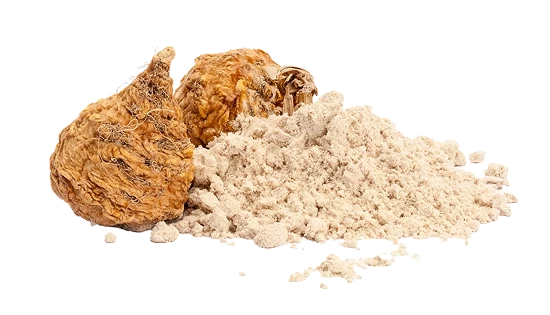
Crvena maca (Lepidium meyenii, engleski Red maca) je biljka koja potječe iz peruanskih Anda i tradicionalno se koristi u narodnoj medicini za podršku spolnoj izdržljivosti, energiji i vitalnosti. Može pridonijeti održavanju zdravog spolnog djelovanja, potaknuti spolnu želju te ima potencijalno blagotvoran učinak na plodnost. Također može podupirati zdravlje reproduktivnog sustava kod muškaraca i poboljšavati tjelesne i mentalne performanse.
Pomaže u održavanju spolne izdržljivosti i energije
Crvena maca može pomoći u održavanju zdravog spolnog djelovanja jer sadrži prirodne spojeve koji podupiru hormonalnu ravnotežu. Također može pridonijeti povećanoj spolnoj izdržljivosti.
Podupire tjelesne i mentalne performanse
Često se koristi kao prirodni izvor energije jer sadrži brojne bioaktivne sastojke, uključujući aminokiseline, vitamine i minerale koji podupiru tjelesne i mentalne performanse. Neka istraživanja su pokazala da može pomoći u održavanju vitalnosti i izdržljivosti, posebno kod osoba koje doživljavaju iscrpljenost ili stres. Tradicionalno se koristi za poboljšanje vitalnosti i smanjenje umora, jer bi trebala pomoći tijelu da se prilagodi fizičkim i mentalnim naporima.
Potpomaže seksualnu želju
Crvena maca je poznata kao prirodni afrodizijak koji potiče seksualnu želju i povećava libido. Pozitivno može utjecati na seksualnu funkciju, posebno kod muškaraca i žena koji pate od niskog libida ili hormonske neravnoteže.
Kod muškaraca pomaže očuvanju zdravog reproduktivnog sustava
Crvena maca je često povezana s poboljšanjem muške seksualne funkcije, jer tradicionalno podržava zdravlje reproduktivnog sustava. Istraživanja su pokazala da maca može pomoći u povećanju razine testosterona te poboljšati erektilnu funkciju i libido kod muškaraca.
WHAT RED MACA DOES
Reproductive and sexual health support
Red maca has the most consistently replicated data among the maca variants for male reproductive outcomes. Men who supplement with maca in clinical settings report the return of their libido, not as a spike but as a baseline, the kind that doesn't require circumstance to activate. Sperm quality improves in the metrics that matter: count and motility. Though researchers don't quite understand exactly how maca works on male reproductive health, clinical data robustly support the plant in this role.
Prostate and urinary tract health
The prostate is one of those organs you don't usually think about until it starts making itself known, usually at 02:00, in the form of a bathroom trip that never used to be necessary. Red maca has been shown to mitigate the non-cancerous prostate enlargement that affects the majority of men at some point in their lives. This is the most color-specific finding about maca, with red being the only variant with consistent evidence for keeping prostate tissue in check.
Energy and mood without the edge
Red maca has well-documented effects on people's energy and mood, including in populations experiencing fatigue and stress-related mood disruption. This isn't stimulant territory. There is no caffeine, no cortisol spike, and no afternoon wall, but an improved baseline with fewer and less drastic dips. This subtle shift is difficult to quantify incrementally, but it consistently shows up in trial data and, more usefully, in how people describe their fourth week of supplementation.
HOW RED MACA WORKS
There's some good news and some bad news. We'll start with the bad: unlike some of Junai's other ingredients, which have been exhaustively researched and documented (think creatine, turmeric, ashwagandha, etc.), science isn't still quite 100% sure why maca or, more specifically, precisely what within maca's vast array of phytochemicals, makes it do what it does. The good news is that there are likely candidates and that, even if precise compounds haven't been isolated and named, clinical trials deliver consistent, repeatable results.
As usual, the science in this section will not be watered down, even if the language will be as readable as possible.
Reproductive and sexual health support
The primary candidates responsible for red maca's benefits on sexual and reproductive health are benzylglucosinolate and its metabolite benzyl isothiocyanate (BITC). BITC has demonstrated activity in androgen receptor (receptors are proteins that recognize steroids, hormones, vitamins, and certain other molecules, and androgen receptors are such proteins that specifically sense hormones like e.g. testosterone) signalling pathways. Research has established that these effects occur independently of changes in serum testosterone or luteinising hormone (the signal that triggers testosterone production). This rules out the simple explanation, namely that maca stimulates the HPG axis (hypothalamic-pituitary-gonadal axis, the hormonal chain of command for reproductive function) in the way that something like ashwagandha does. It appears to be working downstream, in tissue-level responsiveness rather than circulating hormone levels.
For sperm specifically, multiple studies have documented increases in sperm count and motility with maca supplementation, with the effect accumulating over 6 to 16 weeks. The proposed mechanism here involves antioxidant activity in testicular tissue and possible modulation of seminal plasma composition, both of which affect sperm viability. BITC's antioxidant and anti-inflammatory activity in sensitive tissue is the most plausible molecular bridge between the glucosinolate profile and the fertility outcomes.
The net result is reproductive tissue that is better maintained, working at a higher baseline, even when the hormonal picture looks the same on a blood panel.
Prostate and urinary tract health
Red maca has significant effects in reducing prostate enlargement resulting from benign prostate hyperplasia (BPH), a condition that will affect the majority of men during their lifetime. This was shown in trials involving male rats that were given testosterone supplements to induce their prostate growth (this is a standard model for studying BPH). The effect was dose-dependent (an important factor in efficacy studies) and was not mediated by testosterone suppression, as the animals' circulating androgen levels were the same. This means red maca was doing something at the tissue level, influencing how prostate cells respond to androgenic signals, rather than simply reducing the androgenic signal itself.
The leading candidate here is again the glucosinolate-BITC pathway. BITC has demonstrated anti-proliferative activity (meaning it inhibits the unchecked cell division that drives tissue overgrowth) in prostate cell lines in vitro. The working hypothesis is that red maca's elevated BITC content modulates androgen receptor activity within prostate tissue without affecting systemic hormone levels, making it a local effect rather than a systemic one.
Energy and mood without the edge
Maca contains, or better develops with post-harvest drying, a signature class of compounds called macamides. These fatty acid amides (we'd explain what that is exactly, but you'd need a year of organic chemistry just to still have a blank look on your face), unique to the Lepidium meyenii plant, interact with the body's endocannabinoid system (the one responsible for maintaining neurological, emotional/cognitive, and metabolic homeostasis). They do so by inhibiting fatty acid amide hydrolase (FAAH), the enzyme that breaks down anandamide (the body's own endocannabinoid, sometimes called the "bliss molecule"). This raises circulating anandamide levels without introducing exogenous cannabinoids (in layman's terms: gets you some of the happiness associated with being high but without, ahem, inhaling). The result is a modest but real modulation of mood and stress response.
Another pathway to mood regulation is offered by maca's flavonoids and the plant's documented effects on monoamine oxidase (MAO). During drying, it develops tetrahydro-β-carbolines, natural alkaloids that act as mild, reversible MAO inhibitors (the main mechanism behind outdated MAOI anti-depressants, the main type developed and produced in the 1950s), slowing the breakdown of mood-regulating neurotransmitters like serotonin and dopamine.
Critically: neither of the pathways discussed above involves the adrenal axis, meaning the lift is not borrowed from tomorrow.
RESEARCH ON RED MACA
There is an extensive body of research on red maca, but we admit that the science is not as robust as it is for some other ingredients we carry. The research is nonetheless unanimous: maca has repeatable, dose-dependent effects on androgen-sensitive tissue, self-reported feelings of reproductive health, and energy and stamina levels. Unlike for turmeric and its star compound curcumin, for example, science has not identified a single powerhouse molecule in maca to which we could attribute the lion's share of its positive effects on humans. The state of science could be best summarized as follows: we know what maca does, we know that it does so consistently, we just aren't quite sure which of maca's veritable pharmacopoeia of compounds is doing the heavy lifting.
EFSA Claims
As with a huge list of other botanical primary ingredients, there are currently no officially published claims endorsed by EFSA. In general, botanical substances are stuck in European regulatory limbo. There are 4 on-hold claims, all of which are completely in line both with traditional practice and modern research findings.
Has sexual potency strengthening properties, enhances libido, and promotes sexual desire
Increases sperm quantity and motility, helps maintain a healthy male reproductive system, and supports both male and female sexual function
Prevent bone loss, helps reduce risk of bone loss, and contributes to the maintenance of normal bone strength in post-menopausal women
Source of energy that supports physical and mental performance and helps maintain optimal stamina, feelings, and vitality
International Studies
Lepidium meyenii (Maca): A Plant from the Highlands of Peru – from Tradition to Science
A fantastic review of the state of science on maca. If you just read one article about it, make it this one
A study reporting on self-perceived improvements in male reproductive health
Research demonstrating actual increases in seminal volume with maca
Another study on the improvements in sperm concentration and motility
Red maca (Lepidium meyenii) reduced prostate size in rats
Compelling research on maca's ability to reduce prostate size in BPH
This study specifically focuses on how the traditional practices of drying maca for storage actually increase its array of bioactive compounds
An article with very general info on maca's effects, with specific emphasis on how variations in growing environment lead to different phytochemical profiles
Ethnobiology and Ethnopharmacology of Lepidium meyenii (Maca), a Plant from the Peruvian Highlands
This paper has some useful information on native practices and the history and development of maca usage
A useful article describing things this page mostly didn't cover, namely maca's benefits for female reproductive health
HOW TO USE RED MACA
Red maca is most commonly consumed as a powder, which can be mixed into liquids, smoothies, or food. Effective doses in clinical studies have ranged from 1.5 to 3.5 grams of dried root equivalent per day. With a 5:1 concentrate, like the one Junai offers, this translates to roughly 300–700 mg of powder per day. Consistent daily dosing matters much more than precise timing.
Traditional Use
Some of the ingredients Junai offers and works with have been true globalists for millennia. Moringa traveled from the Himalayan foothills to nearly everywhere it doesn't freeze, turmeric was transported from one end of the ancient Silk Road to the other, and rosemary has even been found gracing the tombs of Egyptian pharaohs. In contrast, red maca remained relatively stationary until very recently. Rather extreme and specific growing conditions limited the spread of this crop and, as such, we basically just have one microregion's usage to draw examples from.
Maca was domesticated in the Peruvian central Andes, on the Junin Plateau, somewhere a little over 2500 years ago. Traditionally dried after harvest until the hypocotyls are hard as stone, they can be stored for years and used to trade for other staple foods grown at lower altitudes, including as far away as in Lima. There are no pre-Columbian written records on the plant, but Spanish conquistadors immediately reported on the oral tradition still carried by locals that variously praised the plant's benefits for energy, stamina, and fertility. Locals also suggested the plant as a feed crop for Spanish cattle, which had trouble reproducing at high altitude.
In the Andes today, maca is often boiled with milk and cinnamon into a drink called maca chica, or fermented into a low-alcohol beverage called chicha de maca.
Modern Use
Modern research has shown that native practice, just like in the case of turmeric, closely matches scientific fact: maca's bioactive macamides only develop during the drying process, and boiling the roots seems to increase the amount of active metabolites. Thus the native tradition of drying the roots in the open sun is not incidental to the plant's rich capacity for bioactivity; it is the very production mechanism.
Powdered forms available in today's supplements, like the raw powder Junai provides, retain the root's full phytochemical profile of glucosinolates. Gelatinized maca (where the starch has been broken down by heat and pressure) also exists and is easier to digest for some people.
Timing
Maca's mechanisms are slow and cumulative. Morning or evening, with food or without — consistency across weeks is the variable that drives outcomes, not the clock. Red maca's bioavailability is modestly improved with fat, so if you manage to tie consumption to a meal with healthy fats, great, but don't sweat the timing.
Duration
The fertility and reproductive tissue effects in clinical trials were observed at 6 weeks minimum, with more pronounced findings at 12 and 16 weeks. This is not a 2-week ingredient, so give it an honest go for a couple of months and then recheck your baseline.
HOW AND WHY JUNAI OFFERS RED MACA
We are obsessed with the intersection of tradition and science, especially when that tradition so closely matches subsequent research findings that come a millennium after native cultures had long figured it out. To protect itself against the increased UV radiation exposure at high altitude, as well as against the cold and biting wind, maca developed an impressive quiver of bioactive compounds. Locals domesticated the plant and found a storage solution that increased its usefulness, and developed cooking methods that helped them maximize the root's potential even more. These are the compelling stories that convince Junai that an ingredient is worth our respect and attention.
Junai offers pure ground red maca root powder at a 5:1 concentration (meaning 5 kg of plant goes into 1 kg of root powder). The concentration ratio was chosen to deliver a clinically relevant glucosinolate load in a practical per-serving volume. Raw powder was selected over gelatinised or extracted forms to preserve the full-spectrum phytochemical profile, including the benzylglucosinolate content that underpins the prostate and reproductive findings.
Red maca is a core ingredient in Junai HIM, our men's health formula, where it provides men with strong support for reproductive and prostate health, and contributes to the improvement in energy and mood baseline through the macamide pathways described above. As a part of HIM, it is complementary to, but distinct from, the support for nitric oxide production and vasodilation provided by L-arginine and L-citrulline. Further, it combines with HIM's component zinc, a direct cofactor in spermatogenesis, making maca a mechanistically logical companion for fertility-oriented supplementation.
WHO NEEDS RED MACA
As a core component of Junai HIM, this page has largely focused on the red maca's benefits for men. There is quite a bit more to say on its benefits for women, but we'll save that for another article. For now, you might need to take advantage of this high-altitude Andean root vegetable if you are a man who is:
Actively working on fertility outcomes, including sperm count, motility, or semen quality
In your thirties and beyond and want to maintain prostate health before symptoms become a conversation at the doctor's office
Experiencing reduced libido without a clear hormonal explanation, particularly relevant if testosterone tests have come back unremarkable
Looking for sustained energy and mood support that doesn't involve stimulants or the cortisol borrowing that comes with them
Dealing with high training loads where oxidative stress in muscular and reproductive tissue is a real and underappreciated variable
WHAT TO EXPECT WITH RED MACA
As explained above, maca is a slow burn. Don't expect anything significant to happen quickly, but keep your eyes on a prize that pays off over 2 to 4 months.
Weeks 1 to 2:
Possibly nothing measurable. Maca is not a day-one ingredient. Some people notice a modest shift in energy or mood in the first week; others don't, and that is not a sign that it is not working.
Weeks 3 to 4:
The energy and mood effects tend to consolidate here. Self-reported improvements in drive and general well-being show up in trial data around this window.
Weeks 6 to 12:
This is where the reproductive outcomes start to show up in the clinical literature. Sperm parameter improvements were documented in studies at the 6-week mark and were more pronounced at 12 and 16. Prostate-related outcomes require similar timelines. Maca is doing slow, structural work in tissue that does not turn over quickly.
What red maca will not do: produce a detectable change in reproductive hormone levels (testosterone, luteinizing hormone, or follicle-stimulating hormone). If you are expecting blood panel movement, you will be disappointed. The work is happening elsewhere. Trust the mechanism, not the marker.
CONTRAINDICATIONS
Red maca is generally considered quite safe, [+++] both as a foodstuff and in dosages typical of supplementation. Like with every plant on earth, though, some people have reported side effects. Chief among these is:
Digestive issues: as a taproot, maca is rich in starches that cause pain, cramps, or bloating in some people
Further, caution and consultation regarding red maca are recommended in the following circumstances:
Thyroid conditions: Maca is a cruciferous vegetable and contains glucosinolates, which in large quantities can interfere with thyroid function by inhibiting iodine uptake in the thyroid gland. At standard supplemental doses this is generally not clinically significant, especially if iodine intake is sufficient.
Hormone-sensitive conditions: Although maca does not appear to directly modulate serum hormone levels, it acts in androgen-sensitive tissue, so men with a history of prostate cancer or prostate-specific antigen (PSA) concerns should consult a physician before use.
Pregnancy and breastfeeding: Concentrated glucosinolate loads in supplement form have not been studied in pregnant or breastfeeding women and so the precautionary position is to avoid supplemental maca during pregnancy and breastfeeding and to rely on dietary sources if desired.
If you experience any unusual symptoms after beginning supplementation, discontinue use and consult a healthcare professional.
QUICK RECAP OF RED MACA
Red maca (Lepidium meyenii) is a cruciferous vegetable from the Peruvian highlands, consumed in root form, distinct from yellow and black maca in phytochemical profile and clinical activity
Its primary active compounds are benzylglucosinolate and benzyl isothiocyanate (BITC), sulfur-containing compounds that act in androgen-sensitive tissue
Red maca is the only maca variant with consistent evidence for reducing prostate size and BPH-associated markers in preclinical models, an effect attributed to its elevated glucosinolate profile
Macamides, fatty acid amides unique to maca, support energy and mood by inhibiting FAAH and raising anandamide levels without stimulant activity
Junai uses a 5:1 concentrated red maca root powder to deliver a clinically meaningful glucosinolate load per serving
Effective dosing requires consistency over 6 to 16 weeks; this is not a short-cycle ingredient
Red maca does not raise testosterone and provides its benefits without touching the HPG axis
Those with thyroid conditions or hormone-sensitive health histories should consult a healthcare provider before use
Red maca supports male reproductive health, including sperm count, sperm motility, and libido, through mechanisms that are independent of testosterone or LH modulation
Povezani sastojci

Kurkuma
Kurkum se najčešće doživljava kao jednostavan začin, boja ili začin. Unutar njegove živopisne boje skriva se niz bioaktivnih spojeva koji bi mogli revolucionirati tvoju oporavak i regeneraciju.
Pogosta vprašanja o Crvena maca
Kaj je Crvena maca?
Kakšni so učinki Crvena maca?
V katerih Junai izdelkih je Crvena maca?

Junai Him
Podrška za snagu, izdržljivost i koncentraciju
Spoznaj izdelekNaroči se na nasvete
Mesečni vpogled v ingrediente, prehrano in energijo — naravnost v tvoj poštni nabiralnik.
Povezani proizvodi
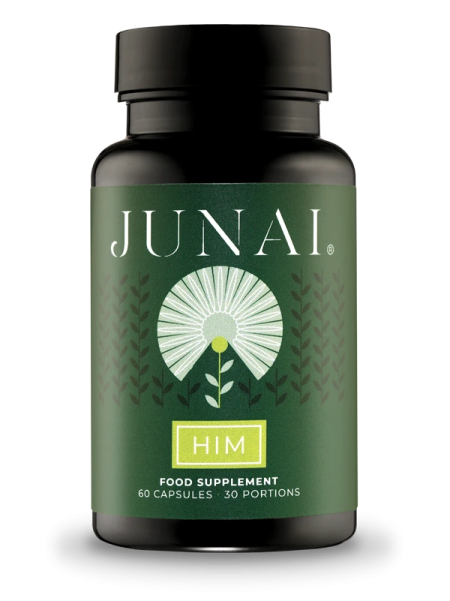
Junai Him
- Vodi bržoj regeneraciji tijela uz cink, ključan za diobu stanica, te vitamin B6 koji sudjeluje u stvaranju crvenih krvnih stanica.
- Piperin doprinosi povećanom protoku krvi, čime podržava snažnije i izdržljivije tijelo tijekom fizičkog napora.
- Povećava libido i podržava optimalno raspoloženje, produljenu izdržljivost te vitalnost zahvaljujući crvenoj maci.
Povezane objave

Vizualizacija kao meditativna tehnika: Vodič za početnike
Vizualizacija je meditativna tehnika koja ti pomaže poboljšati mentalno i tjelesno zdravlje.

Moć disanja: Vodič za početnike
Disanje ima velik utjecaj na zdravlje, smanjenje stresa i povećanje energije.

Vidjeti znači vjerovati
Kako povećati svoju usredotočenost i postići više uz pomoć vizualizacije.
