



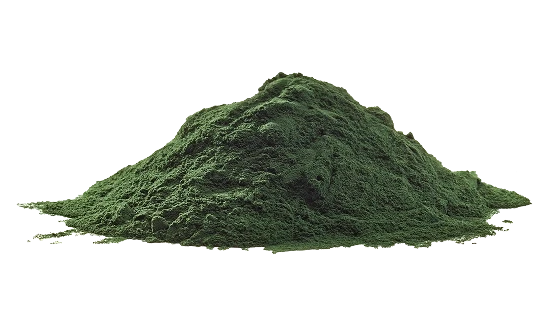
QU’EST-CE QUE LA CHLORELLA
Chlorella (Chlorella vulgaris Beijerinck) est une algue verte unicellulaire d’eau douce, de 2 à 10 microns de large environ, invisible à l’œil nu et d’un vert intense, presque agressif. Elle réalise la photosynthèse dans des étangs et des eaux douces à courant lent depuis des millions d’années, bien avant que quoi que ce soit ressemblant à une colonne vertébrale ne se développe sur cette planète. Sur le plan esthétique, elle n’a pas grand-chose à offrir et, à tous égards, elle est modeste.
À la fin des années 1940, cette modestie était perçue comme une vertu. Le monde venait de survivre à une guerre qui avait interrompu les chaînes d’approvisionnement alimentaire mondiales, et les chercheurs de la Carnegie Institution à Washington se sont trouvés face à une question sérieuse : les microalgues peuvent-elles nourrir une planète affamée ? Chlorella, avec son exceptionnelle densité en protéines et sa capacité, dans les bonnes conditions, à doubler sa biomasse en moins de 24 heures, paraissait être la solution. Finalement, elle n’a pas résolu la faim dans le monde. Mais les recherches menées par la suite ont placé la chlorella parmi les organismes unicellulaires les plus nutritionnellement complets jamais étudiés, un titre qu’elle porte discrètement depuis lors. Il convient de noter que le Japon avait découvert l’impressionnant profil nutritionnel de la chlorella 40 ans avant l’industrie des compléments alimentaires.
La chlorella contient plus de chlorophylle par gramme que toute autre source alimentaire connue. Elle offre un profil complet d’acides aminés avec une teneur en protéines sur poids sec comprise entre 51 et 58 %, ce qui la rapproche des sources animales. Elle délivre les vitamines B1, B2, B3, B6, B9 et B12 — cette dernière étant si rare dans les sources végétales qu’il convient de la souligner. Elle contient les vitamines C, D2, E et K, ainsi que du fer, zinc, magnésium, potassium, phosphore et calcium. L’algue produit également un complexe nucléotidique-peptidique, appelé Chlorella Growth Factor (CGF), que l’on ne trouve nulle part ailleurs dans la nature. Et elle se lie avec une efficacité remarquable aux métaux lourds.
POURQUOI LA CHLORELLA EXISTE POUR VOUS
La plupart des régimes modernes présentent des lacunes. Pas des lacunes catastrophiques de type scorbut, mais du type cumulatif, qui se manifestent par une faible énergie, une récupération lente, une peau qui paraît fatiguée, et ce sentiment diffus que votre organisme fonctionne légèrement en dessous de ses capacités. Ce sont des carences qu’aucun repas ne peut combler, et aucun complément n’a été conçu pour les résoudre, car elles ne résultent pas de la seule absence d’un élément précis. Elles résultent de milliers de petites déficiences qui s’accumulent au fil du temps.
Chlorella n’a pas été conçue pour résoudre cela. Elle précède le design. Chlorella est simplement un aliment complet, dense et ancien, renfermant la plupart de ce que le régime moderne omet discrètement : B12, dont les régimes végétaux sont chroniquement dépourvus, fer que les femmes perdent chaque mois et compensent insuffisamment, chlorophylle qui soutient le travail discret quotidien du foie dans le traitement de tout ce que le monde vous apporte, et protéines complètes dont le corps a besoin pour réparer et régénérer les tissus, mais qu’il obtient rarement en totalité d’une unique source végétale.
Chlorella accomplit aussi ce que l’industrie du complément a à la fois trop vendu et trop peu expliqué : la détoxication. Elle se lie aux métaux lourds dans l’intestin, réduit leur réabsorption et favorise leur élimination. Le mécanisme est réel et il existe des preuves cliniques, que nous aborderons ci-dessous.
Cet ingrédient n’entraîne pas des effets notables de façon aiguë ni une action spectaculaire. Chlorella n’a pas l’avantage mécanique tranchant de la berbérine ou des adaptogènes fournis par ashwagandha. Ce qu’elle présente, c’est l’étendue, la densité et une histoire plus longue et mieux documentée que la plupart des ingrédients de ce secteur. Parfois, le choix sobre est le bon.
QUE FAIT LA CHLORELLA
Densité nutritionnelle et soutien en micronutriments
Chlorella fournit des protéines complètes avec tous les acides aminés essentiels, tout le spectre des vitamines B, y compris un B12 d’origine végétale, rare, et un profil minéral qui corrige nombre de manques silencieux de la plupart des régimes : fer, zinc, magnésium, folate. Un organisme, un stock complet.
Protection antioxydante et gestion du stress oxydatif
L’organisme génère un stress oxydatif comme sous-produit de la vie, que la modernité ne fait qu’accentuer. Chlorella soutient les systèmes qui contrôlent ce fardeau, aidant à protéger les cellules contre les dommages lents mais destructeurs qui s’accumulent au fil du temps.
Régulation immunitaire
Chlorella ne fait pas que stimuler le système immunitaire. Elle le module, ce qui est nettement différent. Cette distinction est importante : un système immunitaire chroniquement surstimulé n’est pas protégé. Les composés de la chlorella semblent soutenir une réponse immunitaire équilibrée, activer l’activité des cellules tueuses naturelles tout en favorisant des réactions mesurées et proportionnées.
Liaison aux métaux lourds et soutien à l’excrétion
La chlorella accompagne les efforts de l’organisme pour éliminer les métaux lourds. Ce n’est pas une thérapie médicale de chélation, ce qu’il ne faut pas confondre. Pourtant, les preuves de sa capacité à lier le cadmium, le plomb et le méthylmercure et à réduire leur réabsorption sont suffisantes pour être prises au sérieux.
Soutien des lipides et du métabolisme
Une consommation régulière de chlorella est associée à une amélioration du cholestérol LDL et des profils lipidiques totaux dans les études humaines. Les mécanismes ne sont pas encore tous élucidés, mais la tendance est cohérente : la chlorella soutient le métabolisme sain, notamment dans la gestion des lipides par l’organisme.
Soutien à la digestion et à la santé intestinale
Chlorella fournit des fibres alimentaires et des composés qui favorisent la croissance des bactéries intestinales bénéfiques. Historiquement, elle a été utilisée pour le soutien digestif, et ses propriétés prébiotiques commencent à recevoir l’attention clinique méritée.
COMMENT FONCTIONNE LA CHLORELLA
Densité nutritionnelle et soutien en micronutriments
Le profil nutritionnel de la chlorella découle de ses processus biologiques. Dépendante de la photosynthèse, elle synthétise la chlorophylle à haute concentration et utilise ce processus pour produire un ensemble complet d’acides aminés, de vitamines B et de minéraux nécessaires à sa propre machinerie cellulaire. Les protéines représentent 51 à 58 % de son poids sec et elle contient les 9 acides aminés essentiels, ce qui en fait, avec notre moringa, l’une des rares sources végétales à y parvenir. Sa teneur en B12 est particulièrement importante : la forme trouvée dans la chlorella est majoritairement le méthylcobalamine, l’une des deux formes biologiquement actives de cobalamine utilisées directement par l’organisme, sans la conversion nécessaire du cyanocobalamine. Folate, fer, zinc et magnésium s’y trouvent à des concentrations favorables par rapport aux sources végétales terrestres.
Le Chlorella Growth Factor (CGF), complexe nucléotidique-peptidique synthétisé uniquement dans le noyau cellulaire de la chlorella, n’existe nulle part ailleurs dans la nature. Il inclut des acides nucléiques (ARN et ADN), des acides aminés, des vitamines et des polysaccharides. Certaines recherches suggèrent que le CGF peut soutenir la réparation et la régénération cellulaires, bien que le mécanisme précis chez l’homme reste à confirmer.
La conséquence pratique de cette densité, c’est une contribution réelle à l’apport en micronutriments des personnes dont le régime est à la limite de l’insuffisance.
Défense antioxydante et gestion du stress oxydatif
L’activité antioxydante de la chlorella s’exprime par différentes voies. Sa teneur en caroténoïdes, dont lutéine, bêta-carotène et astaxanthine, neutralise directement les espèces réactives de l’oxygène (ERO), molécules instables qui, avec le temps, endommagent les membranes cellulaires, les protéines et l’ADN. La chlorophylle, responsable de la coloration de l’algue, ajoute à cette capacité de piégeage des radicaux libres.
En plus de l’action directe, la chlorella active la voie Nrf2/ARE (nuclear factor erythroid 2–related factor 2/élément de réponse antioxydant), le principal interrupteur cellulaire pour la production d’enzymes antioxydantes endogènes, notamment la superoxyde dismutase (SOD) et la catalase. Il s’agit ici d’un effet secondaire : au lieu d’ajouter des antioxydants au système, la chlorella renforce la capacité de l’organisme à les produire. Les études cliniques menées chez des fumeurs, population dont le stress oxydatif est augmenté, ont montré une élévation de l’activité de la SOD et de la catalase après supplémentation en chlorella. La personne en bout de chaîne peut ainsi ressentir une meilleure récupération, une résistance accrue, un organisme qui gère mieux la charge quotidienne.
Régulation immunitaire
La chlorella module la fonction immunitaire principalement par sa teneur en polysaccharides, notamment ses bêta-glucanes, qui se lient à des récepteurs spécifiques sur les macrophages et cellules tueuses naturelles (NK), signalant au système immunitaire d’accroître la vigilance et la préparation à la réponse. Ce n’est pas une simple stimulation : les bêta-glucanes n’épuisent pas le système immunitaire, ils assurent sa calibration.
Dans les études cliniques, la prise de chlorella a été associée à une augmentation de l’activité des cellules NK et des concentrations accrues d’immunoglobuline A (IgA), le premier anticorps recouvrant les muqueuses du tube digestif, des poumons et des voies respiratoires. Le CGF pourrait aussi jouer ici : sa teneur en acides nucléiques pourrait soutenir la prolifération rapide des cellules immunitaires lors des périodes de réponse exigeant une production accrue sur le court terme.
Sur le plan pratique, cela se traduit par un système immunitaire réactif au besoin, ni suractivé ni en sous-régime chronique, à la différence de nombreux états inflammatoires modernes.
Liaison des métaux lourds et soutien de l’excrétion
La capacité de la chlorella à lier les métaux lourds s’explique par deux mécanismes se recouvrant. Le premier : haute teneur en chlorophylle : la structure moléculaire du chlorophylle ressemble à celle de l’hème du sang humain, ce qui semble lui permettre de former des complexes avec les ions métalliques lourds dans l’intestin, diminuant ainsi leur absorption à travers la paroi intestinale. Le second : ses composants de paroi cellulaire, en particulier les polysaccharides structuraux et polymères apparentés à la sporopollénine, agissent comme adsorbants physiques qui se lient aux métaux et les transportent vers une élimination fécale plutôt qu’une circulation systémique.
Les études cliniques et animales ont montré une diminution du cadmium, du plomb et du méthylmercure dans le sang et l’urine après supplémentation en chlorella. Une étude clinique menée en 2009 chez des femmes enceintes a mis en évidence une baisse significative du méthylmercure dans le lait maternel. L’effet est modéré mais cohérent : la chlorella est un chélateur doux et non une intervention médicale, et n’est pas adaptée pour une intoxication avérée. Ce qu’elle offre, c’est une participation à l’élimination naturelle de faible intensité, une stratégie raisonnable et utile de soutien.
Soutien des lipides et du métabolisme
Les effets hypolipidémiants de la chlorella sont attribués à plusieurs de ses composants. Sa teneur en fibres aide à réduire la réabsorption du cholestérol dans l’intestin en liant les acides biliaires et en favorisant leur élimination, selon un mécanisme similaire au bêta-glucane d’avoine. Ses acides gras polyinsaturés, dont l’acide gamma-linolénique (GLA) et l’acide alpha-linolénique (ALA), soutiennent également le métabolisme lipidique. Certaines études soulignent que sa teneur en niacine peut contribuer au HDL.
Des essais contrôlés randomisés ont observé une baisse du cholestérol total et du LDL chez les sujets présentant une hyperlipidémie modérée après supplémentation clinique en chlorella. Le mécanisme est multiple et non univoque, ce qui caractérise la chlorella en tant qu’ingrédient : elle agit sur de nombreux axes simultanément, aucun n’étant spectaculaire isolément, mais leur effet combiné prenant tout son intérêt.
Soutien à la digestion et à la santé intestinale
La chlorella fournit principalement des fibres insolubles qui soutiennent la régularité intestinale et servent de substrat aux bactéries de fermentation du côlon. Ses polysaccharides présentent une activité prébiotique, favorisant sélectivement la croissance des Lactobacillus et Bifidobacterium. Certaines études suggèrent aussi un soutien à l’intégrité de la barrière intestinale, potentiellement via ses effets antioxydants et anti-inflammatoires sur les tissus intestinaux.
Historiquement, la chlorella a été utilisée au Japon pour le soutien digestif et a été intégrée dans des programmes d’alimentation fonctionnelle en partie pour cette raison. L’évidence clinique pour les effets digestifs spécifiques est plus mince que pour les propriétés antioxydantes et immunitaires, mais la logique mécanistique est solide et l’usage traditionnel cohérent.
RECHERCHE SUR LA CHLORELLA
Allégations de l’EFSA
L’EFSA n’a pas encore autorisé de déclaration de santé pour la chlorella dans le cadre réglementaire actuel. L’ingrédient partage la condition de nombreuses plantes bien étudiées : littérature scientifique importante, reconnaissance officielle limitée.
En attente :
La chlorella contribue au bon fonctionnement du système immunitaire.
La chlorella est une source de nutriments importants, nécessaires au métabolisme énergétique du corps.
Peut contribuer au maintien de l’énergie normale de l’organisme
Antioxydant
Études internationales
Principaux résultats des études cliniques humaines
Article général sur le profil nutritionnel de la chlorella et ses applications potentielles dans l'industrie alimentaire.
Une étude randomisée publiée dans le Journal of Medicinal Food a montré qu’une prise de 5g/jour de chlorella sur 12 semaines a conduit à des baisses significatives du cholestérol total et du LDL chez des adultes souffrant d’hyperlipidémie modérée.
Nakano et al. (2005) ont démontré une réduction des concentrations de méthylmercure dans le lait maternel chez les femmes enceintes prenant 6g/jour de chlorella. Les études animales confirment constamment la réduction des niveaux de cadmium et de plomb dans le sang et les tissus.
Étude randomisée chez des fumeurs (Lee et al., 2010) montrant une augmentation des activités enzymatiques antioxydantes, en particulier SOD et catalase, avec réduction du malondialdéhyde plasmatique (MDA), marqueur de dommage oxydatif, après supplémentation en chlorella.
Hasegawa et al. (1997) ont observé une augmentation de l’activité des cellules NK après supplémentation en chlorella. Chez les sujets recevant une chimiothérapie, les études montrent une diminution de l’immunosuppression en cas de co-administration de chlorella.
L’étude d’Otsuki et al. (2011) a montré des améliorations de la consommation maximale d’oxygène et des marqueurs de stress oxydatif lié à l’exercice chez des hommes en bonne santé après supplémentation en chlorella.
L’ensemble des preuves est vaste, cohérent dans son orientation, et principalement établi à des doses de 3 à 6 grammes par jour. Cette littérature comporte aussi des études financées par l’industrie, comme c’est le cas pour la majorité des recherches sur les compléments. Les effets dans les essais indépendants sont suffisamment cohérents pour être significatifs.
COMMENT CONSOMMER LA CHLORELLA
Un rappel important avant que vous ne quittiez ce texte pour commander de la poudre de chlorella chez l’un de nos concurrents : la paroi cellulaire de la chlorella est faite de cellulose dure et indigeste, que l’intestin humain ne peut dégrader. À l’état naturel, les nutriments qu’elle renferme sont donc totalement inaccessibles. Tout complément de chlorella digne de confiance mentionnera un traitement de paroi cellulaire fracturée ou brisée – une étape mécanique ouvrant la cellule pour rendre tous les éléments ci-dessus réellement absorbables. Que vous achetiez votre chlorella chez nous ou ailleurs, retenez : si le produit ne mentionne pas le traitement de la paroi cellulaire, il vaut la peine de demander pourquoi.
Utilisation traditionnelle
Il est un peu plus difficile de parler de l’« utilisation traditionnelle » de la chlorella dans le même sens que pour d’autres ingrédients de notre sélection. La chlorella n’a pas été un élément clé de l’approvisionnement alimentaire communautaire comme la moringa, ni au cœur des pratiques médicinales comme l’ashwagandha ou le reishi, et elle n’a pas non plus été à la base d’empires comme la maca racinaire ou le curcuma.
Le cas le plus proche est celui du Japon, qui a sérieusement pris en compte la réflexion de l’OMS sur le potentiel nutritionnel de la chlorella. Cela a commencé dans les années 1960, lorsque les comprimés de chlorella sont entrés dans les goûters scolaires, remèdes familiaux et pharmacies du pays. Il ne s’agissait pas d’un complément au sens occidental du terme, avec mode et arguments marketing : on la prenait parce que c’était raisonnable, de la même façon qu’ailleurs on prend un multivitamine quotidien ou on mange des légumes fermentés au dîner. Pratique, sans glamour, fiable.
L’Occident s’est intéressé à la chlorella environ 40 ans plus tard et, comme souvent, en a modifié le prix. La poudre verte que mangeaient les écoliers japonais sans cérémonie est devenue une superfood premium. Ce qui était autrefois abordable, abondant et utilitaire devient désirable dès lors que certains y voient sa vraie valeur.
Utilisation moderne
Dans le contexte actuel du bien-être, la chlorella se présente généralement sous forme de poudre brute, comprimés, ou mélangée en gélules avec d’autres ingrédients synergiques. La poudre est la forme la plus polyvalente, adaptée aux usages culinaires. Les comprimés sont la forme traditionnelle japonaise. Les gélules sont plus pratiques pour ceux qui trouvent le goût difficile, ce qui est fréquent. Le goût est, disons-le, intensément vert.
Dosage
Les études cliniques ont utilisé des doses de 3 à 6 grammes par jour pour les effets documentés dans la littérature. C’est dans cette fourchette que l’on observe les effets sur la détoxification, les lipides et le système immunitaire lors des essais humains. Pour l’entretien et l’enrichissement nutritionnel, des doses inférieures peuvent convenir.
Moment de prise
La chlorella n’agit pas sur des axes hormonaux ou neurotransmetteurs rapides. Le moment de la prise par rapport aux repas compte moins que la régularité. Certains préfèrent la consommer avec les repas pour minimiser une légère adaptation digestive pouvant survenir au début. D’autres l’ajoutent dans leur routine matinale.
Usage culinaire
La poudre se dissout dans les smoothies, jus et yaourts. Elle colore tout d’un vert franc. Elle s’accorde relativement bien avec la spiruline, le citron, le gingembre et les saveurs fruitées puissantes capables d’équilibrer sa note terreuse. Surtout, pour l’amour de ce qui reste sacré dans ce monde, ne la mettez pas dans le café.
Combinaisons
La chlorella et la spiruline sont souvent associées, leurs profils nutritionnels se complétant : la chlorella est plus riche en chlorophylle et sa capacité en matière de métaux lourds est mieux documentée, tandis que la spiruline contient plus de phycocyanine et offre un autre profil antioxydant. Pour l'absorption des nutriments liposolubles, notamment les dérivés de la chlorophylle, prendre la chlorella avec un repas contenant des graisses améliore l’absorption. Le poivre noir n’a aucun effet avéré sur l’absorption de la chlorella, contrairement à la curcumine.
POURQUOI ET COMMENT JUNAI UTILISE LA CHLORELLA
La chlorella entre dans notre formule Junai HER sous la forme Chlorella vulgaris Beijerinck, paroi cellulaire fracassée, poudre d’algue entière, à raison de 100 mg par capsule, 200 mg par dose. Les données nutritionnelles provenant des programmes sociaux japonais liés à la chlorella, associées aux recherches modernes sur les effets impressionnants de la chlorella sur le métabolisme lipidique et le soutien immunitaire, en font un ingrédient convaincant qui mérite notre attention. Et puis, qui pourrait détourner le regard d’une couleur aussi verte et vive ?
À propos de la dose
Les preuves cliniques pour les effets les mieux démontrés de la chlorella, à savoir la chélation des métaux lourds, la modulation lipidique et l’activité immunitaire, reposent sur des doses de 3 à 6 grammes par jour. Les 200 mg par dose de HER sortent de cette fourchette, et nous n’affirmerons pas le contraire. Ce qu’apportent 200 mg d’une chlorella de bonne qualité, c’est surtout une densité élevée en micronutriments : B12, folate, fer, zinc, chlorophylle et profil complet en acides aminés dans une portion compacte. Dans une formule conçue pour le soutien nutritionnel global à travers les principaux mécanismes de HER, c’est une contribution honnête et réelle.
Pensez-y comme à un repas bien composé, qui contient des dizaines d’ingrédients, la plupart n’étant pas présents à dose pharmacologique. L’architecture nutritionnelle globale importe plus, et la chlorella y a pleinement sa place.
Dans HER
La chlorella se retrouve aux côtés de la bladderwrack (source importante d’iode), de la mélisse, du romarin, du poivre noir, et de la vitamine B6. Sa contribution principale dans ce contexte est nutritionnelle : B12 et fer sont particulièrement importants pour les femmes, chez qui ces deux micronutriments sont parmi les plus souvent déficitaires. Sa teneur en antioxydants et en chlorophylle complète le soutien général de la formule aux fonctions hépatiques et métaboliques.
QUI A BESOIN DE CHLORELLA
Personnes suivant un régime végétarien ou majoritairement végétal et souhaitant une source fiable de B12 et de protéines complètes d’origine non animale
Femmes ayant des pertes menstruelles de fer et cherchant un soutien nutritionnel supplémentaire en fer sans s’appuyer uniquement sur la viande rouge ou les compléments de fer isolés
Personnes consommant régulièrement du poisson et souhaitant soutenir les processus naturels d’excrétion du méthylmercure dans l’organisme
Toute personne souhaitant combler des carences nutritionnelles en multiples micronutriments avec un seul ingrédient alimentaire complet plutôt qu’avec des composés isolés
Individus exposés à un stress oxydatif accru : fumeurs, personnes vivant dans un environnement pollué, pratiquants d’exercices physiques intenses
Personnes soutenant leur système immunitaire en périodes de forte sollicitation, de convalescence, ou de vulnérabilité saisonnière
Toute personne ayant constaté une énergie, une récupération ou une résistance générale un peu en-deçà de la normale et suspectant une cause nutritionnelle plutôt que médicale
Individus avec une hyperlipidémie modérée recherchant à soutenir des taux de cholestérol sains par l’alimentation en complément du régime
À QUOI S’ATTENDRE AVEC LA CHLORELLA
La chlorella n’est pas un complément à effet immédiat. Elle ne provoque pas de sensation palpable dans les heures suivant la prise, et elle n’est pas conçue ainsi. Quiconque affirme le contraire vous promet un rêve vert et un positivisme toxique.
Une prise régulière de chlorella comble en général les déficits en micronutriments sous-jacents sur plusieurs semaines ou mois. À aucun moment votre corps ne se retrouve à court de ses éléments constitutifs, car la chlorella les met systématiquement à disposition. L’énergie devient un peu plus stable, la récupération un peu plus complète, et l’organisme gère mieux le poids du quotidien, sans accumuler de petites contrariétés dues à un déficit micro-nutritionnel trop longtemps ignoré.
Pour des doses nutritionnelles, le délai avant une différence ressentie est généralement de 4 à 8 semaines, avec des effets d’autant plus nets que votre alimentation était carencée en ce que la chlorella fournit. Si vos apports en B12 et fer étaient déjà optimaux, la contribution sera moins perceptible. Sinon, le bénéfice se ressent habituellement sur l’énergie, l’humeur, le sommeil et la récupération.
Pour les doses cliniques visant les lipides ou l'élimination des métaux lourds, les données suggèrent un minimum de 12 semaines pour un effet significatif, la plupart des études s’étalant sur cette durée ou plus.
Il se peut que le système digestif doive s’ajuster lors de l’introduction de la chlorella, notamment aux doses élevées. Ceci est normal et se résout généralement durant la première semaine ou peu après.
CONTRE-INDICATIONS
La chlorella possède l’un des plus longs et complets historiques de consommation humaine parmi tous les ingrédients de cette bibliothèque. Pour la plupart des adultes en bonne santé, il est facile d’en consommer sans danger à des doses cliniques de 6 grammes par prise ou plus. Les exceptions ci-dessous sont spécifiques et doivent être connues. En résumé, les principales contre-indications concernent les maladies auto-immunes ou les traitements anticoagulants.
Maladies auto-immunes
L’activité immunomodulatrice de la chlorella, notamment sa capacité à accroître l’activité des cellules NK et à renforcer la vigilance du système immunitaire, peut aggraver les symptômes des maladies auto-immunes telles que la polyarthrite rhumatoïde, le lupus systémique ou la sclérose en plaques. Les personnes diagnostiquées avec une maladie auto-immune doivent consulter un professionnel de santé avant d’envisager la supplémentation en chlorella.
Médicaments immunosuppresseurs
Par le même mécanisme, la chlorella peut réduire l’efficacité des immunosuppresseurs. C’est une interaction cliniquement pertinente. Les personnes sous ciclosporine, azathioprine ou médicaments similaires ne doivent pas consommer de chlorella sans l’avis formel d’un professionnel de santé.
Médicaments anticoagulants
La chlorella est riche en vitamine K, un facteur clé dans la coagulation. Les personnes sous warfarine (Coumadin) ou autres anticoagulants doivent tenir compte du fait qu’une augmentation de vitamine K peut diminuer l’efficacité du traitement. Une prise régulière et le suivi de l’INR sont essentiels en cas d’association.
Sensibilité à l’iode
La chlorella peut accumuler l’iode de son milieu de culture, en retenant les minéraux de l’eau où elle croît. Les personnes allergiques ou sensibles à l’iode doivent vérifier la teneur en iode du produit utilisé. Junai HER apporte 120 μg d’iode par dose, la chlorella en ajoutant une quantité négligeable.
Problèmes de thyroïde
La variabilité de la teneur en iode dans les produits à base de chlorella impose aux personnes présentant des troubles thyroïdiens, qu’il s’agisse d’hypo- ou d’hyperthyroïdie, de surveiller leur apport et de consulter leur médecin avant tout ajout de chlorella, particulièrement à forte dose.
Grossesse et allaitement
Certains éléments concernant la réduction du méthylmercure avec la chlorella sont favorables, mais la sécurité globale en grossesse n’est pas suffisamment documentée en clinique pour la recommander avec certitude. Les femmes enceintes ou allaitantes doivent demander conseil à un professionnel avant usage.
Allergie aux moisissures
Certains sujets sensibles aux moisissures ou aux algues peuvent présenter des réactions allergiques à la chlorella. En cas d’allergie connue, commencez par de faibles doses et soyez attentif à toute réaction.
En cas de symptômes inhabituels après prise de chlorella, arrêtez le complément et consultez un professionnel de santé.
APERÇU RAPIDE DE LA CHLORELLA
La chlorella (Chlorella vulgaris) est une algue verte unicellulaire d’eau douce présentant l’une des plus fortes concentrations en chlorophylle de toutes les sources alimentaires connues
La teneur en protéines atteint 51 à 58 % du poids sec, avec un profil complet en acides aminés essentiels
Parmi les rares sources végétales de B12 active (méthylcobalamine), incluant également folate, fer, zinc, magnésium, vitamines C, D2, E et K
Contient le Chlorella Growth Factor (CGF), un complexe nucléotidique-peptidique propre à la chlorella, impliqué dans la régénération cellulaire et le soutien immunitaire
Active la voie Nrf2/ARE, stimulant la production des enzymes antioxydantes endogènes (SOD, catalase)
Module la fonction immunitaire par l’activité bêta-glucane sur les cellules NK et macrophages, renforçant la vigilance du système sans surstimulation chronique
Lie les métaux lourds (cadmium, plomb, méthylmercure) via complexation chlorophyllienne et adsorption sur la paroi cellulaire, favorisant l’élimination au détriment de la réabsorption
Soutient les profils lipidiques sains chez l’humain à doses cliniques, par la liaison des acides biliaires et sa teneur en acides gras polyinsaturés
Fournit des fibres prébiotiques qui soutiennent les populations de Lactobacillus et Bifidobacterium
La paroi cellulaire doit être fracturée ou brisée pour devenir biodisponible ; une paroi cellulaire intacte n’est pas significativement absorbée
Contre-indiquée chez les personnes sous immunosuppresseurs, anticoagulants ou souffrant de maladies auto-immunes actives sans supervision médicale
Disponible dans Junai HER à hauteur de 200 mg par dose
Ingrédients similaires
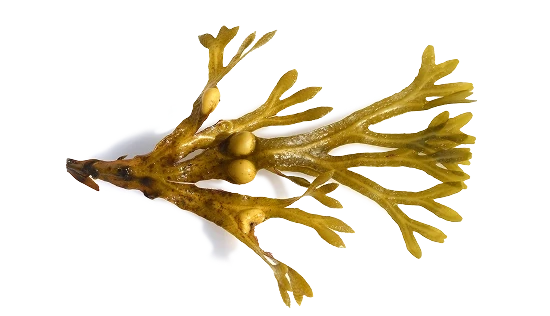
Varech vésiculeux
Le varech vésiculeux est une algue brune marine reconnue pour ses nombreux bienfaits sur la santé humaine. Il peut contribuer à équilibrer les niveaux hormonaux chez les femmes et ses composés favorisent la perte de poids.

Iode
L'iode est essentiel pour la santé de l'organisme, car il contribue au fonctionnement normal de la glande thyroïde, au métabolisme énergétique, aux fonctions cognitives ainsi qu'au fonctionnement du système nerveux.
Pogosta vprašanja o Chlorella
Kaj je Chlorella?
Kakšni so učinki Chlorella?
V katerih Junai izdelkih je Chlorella?

Junai Her
Quand le corps a besoin d’équilibre, pas d’un nouveau stimulant
Spoznaj izdelekNaroči se na nasvete
Mesečni vpogled v ingrediente, prehrano in energijo — naravnost v tvoj poštni nabiralnik.
Produits associés
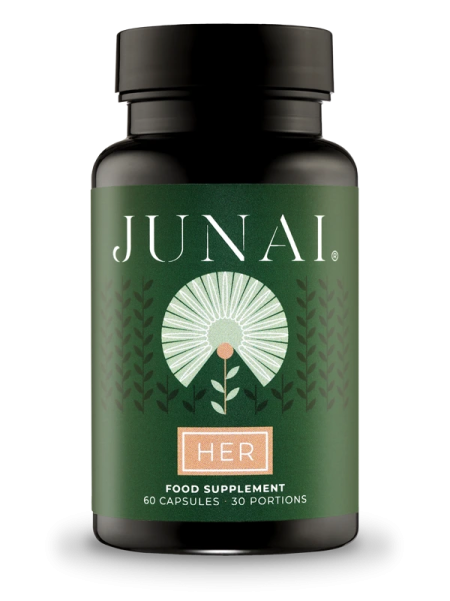
Junai Her
- L’iode issu des algues brunes soutient la thyroïde.
- 10⁹ cultures de L. rhamnosus soutiennent la flore naturelle équilibrée.
- Chlorelle, vitamine B6 et poivre noir aident à détoxifier le corps des radicaux libres.
- La vitamine B6 contribue à la régulation de l’activité hormonale, à la réduction de la fatigue et de l’épuisement.
Articles associés

Pourquoi la chlorelle est-elle importante pour renforcer le système immunitaire des femmes ?
Avez-vous récemment l'impression d'être particulièrement fatiguée et souvent malade ? Junai Her contient le super-aliment chlorelle pour renforcer le système immunitaire.
