




QU’EST-CE QUE LE MORINGA ?
Originaire d’Inde et cultivé à travers toute l’Asie, l’Afrique et les Caraïbes, le moringa (Moringa oleifera) est une plante extrêmement nutritive qui prospère dans presque tous les climats non gélifs. Il est riche en vitamines, minéraux, acides aminés et polyphénols, et il contient également une quantité significative de protéines.
Bien que Junai réfute ce type de surnoms, souvent perçus comme des surévaluations typiques de ce qui ne va pas dans l’industrie du bien-être, le moringa est pourtant bel et bien appelé dans de nombreux dialectes locaux « arbre miracle » ou « arbre de la vie » là où il pousse. Cela tient à sa croissance rapide, sa résistance à la sécheresse et aux conditions extrêmes, et au fait qu’il développe des feuilles pouvant être récoltées plusieurs fois par an. Presque toutes les parties de la plante sont comestibles : des graines et semences aux feuilles et racines.
Outre son rôle inestimable comme source alimentaire dans de nombreuses régions du monde, les composés bioactifs du moringa se sont révélés être de puissants antioxydants et des régulateurs du métabolisme. D’autres substances présentes dans le moringa ont été étudiées pour leurs propriétés adaptogènes, ce qui le rend intéressant en tant que complément et non seulement comme une ressource alimentaire de base.
Avec un spectre aussi large de nutriments, une teneur calorique, des protéines et des composés adaptogènes, le moringa peut être considéré comme toute une étagère de compléments alimentaires sous la forme d’un arbre.
POURQUOI LE MORINGA EXISTE POUR VOUS
Pour ceux dans certaines régions du monde qui dépendent de cette plante, le moringa fait la différence entre survivre et souffrir de famine, entre alimentation et carence nutritionnelle. Pour ceux d’entre vous qui lisez ceci dans le monde occidental, le moringa apparaît comme une super-aliment qui fournit à l'organisme des nutriments et un profil revitalisant.
Comme les autres poudres sèches proposées par Junai, le moringa n’est pas un ingrédient extrême ; il ne vous inonde pas d’une énergie surhumaine, mais participe à la constitution d’un système de soutien pour un équilibre à long terme, fournissant à votre corps de nombreux éléments nécessaires au maintien optimal de ses fonctions. Il sert également à aider à réguler vos processus métaboliques, ou plus simplement, à maintenir un apport énergétique stable, sans pics ni chutes. En résumé, le moringa existe comme :
Une super-aliment vert éclatant, facile à ajouter à des soupes ou des smoothies
Un adaptogène qui aide l’organisme à mieux répondre au stress en douceur
Une source verte de vitamines, minéraux et composés utiles pour protéger et rétablir l’équilibre
Un allié pour un soutien énergétique, métabolique et vitalité globale accrus
QUE FAIT LE MORINGA
Le moringa ne fait pas que nourrir l’organisme, il agit activement en synergie avec lui. Outre sa densité nutritionnelle, le moringa contient divers composés bioactifs qui ont une influence sur la façon dont votre organisme régule l’énergie et le métabolisme, gère l’inflammation et le stress oxydatif et, fait particulièrement intéressant, réagit au stress.
Ces composés ne sont pas de simples nutriments passifs attendant d’être absorbés. Ils fonctionnent comme des molécules signal, interagissant avec des systèmes biologiques clés impliqués dans le métabolisme, l’inflammation et la protection cellulaire. Nombre d’entre eux agissent sur plusieurs voies d’action, ce qui explique la présence de certains composés dans plusieurs rôles ci-dessous.
Soutient la réponse de l’organisme au stress et la résilience cellulaire
Le moringa contient des composés qui interagissent avec les systèmes impliqués dans la manière dont le corps répond au stress physique et physiologique. Cela comprend des processus liés à la défense cellulaire, à la récupération et au maintien d’un équilibre sous pression.
Au lieu de forcer la réponse, ces composés semblent aider le corps à s’autoréguler face aux stress, qu’ils proviennent d’une tension métabolique, de facteurs environnementaux ou d’un déséquilibre interne. C’est là que le moringa commence à dépasser la simple nutrition pour offrir un soutien fonctionnel à la résilience au niveau cellulaire.
Favorise l’équilibre métabolique et l’énergie stable
Le moringa contient plusieurs composés qui contribuent à l’équilibre métabolique, notamment dans la gestion et l’utilisation de l’énergie par l’organisme.
Certaines agissent sur la régulation de la glycémie, aidant à prévenir pics et chutes. D’autres sont impliquées dans l’amélioration de la sensibilité à l’insuline, permettant aux cellules de mieux utiliser le glucose en circulation. Il existe également des preuves selon lesquelles certains composés influencent l’absorption et le traitement du glucose, contribuant ainsi à une source d’énergie plus stable et prolongée.
Le moringa a aussi fait l’objet d’études pour son rôle dans le métabolisme des lipides, notamment dans le traitement des graisses et la régulation du cholestérol. Ces effets positionnent globalement le moringa comme un soutien à une énergie durable plutôt qu’une simple stimulation de courte durée.
Aide à maîtriser l’inflammation et le stress oxydatif
Le moringa joue également un rôle dans la gestion de l’inflammation et du stress oxydatif, deux processus souvent liés et susceptibles de s’amplifier mutuellement.
Ses composés contribuent à neutraliser les espèces réactives de l’oxygène, molécules instables pouvant endommager les cellules en période de stress ou d’intense activité métabolique. Parallèlement, ils modulent certaines voies de signalisation impliquées dans l’inflammation, permettant à l’organisme de maintenir une réponse équilibrée, sans tomber dans l’hyperactivité chronique.
Cette double fonction dans la défense antioxydante et la gestion de l’inflammation rend le moringa particulièrement important pour soutenir la santé cellulaire à long terme.
COMMENT FONCTIONNE LE MORINGA
Vous voilà prêt pour les détails : cette section s’avère un peu technique. Nous allons tenter de garder un langage accessible, mais la science, elle, n’est pas simplifiée. L’objectif n’est pas de submerger d’informations, mais d’expliquer comment les effets du moringa se manifestent réellement dans l’organisme.
L’action du moringa va au-delà de la nutrition de base grâce à sa forte concentration en composés bioactifs, comprenant :
Glucosinolates – composés soufrés, typiques des Brassicacées (responsables de l’odeur du chou, du brocoli, du chou-fleur), décomposés enzymatiquement en molécules biologiquement actives
Isothiocyanates (ITC) – produits actifs issus de la dégradation des glucosinolates, reconnus pour leur rôle antioxydant, dans la régulation de l’inflammation et du métabolisme ; ce groupe comprend le moringine, composé signature du moringa, comme son nom l’indique
Polyphénols – notamment les flavonoïdes comme la quercétine, qui neutralise les espèces réactives de l’oxygène, et l’acide chlorogénique qui contribue au métabolisme du glucose et à l’équilibre métabolique
Ces composés n’agissent pas isolément. Beaucoup agissent via diverses voies biologiques, une même molécule pouvant concourir à plusieurs effets décrits ci-après.
Soutien à la réponse au stress et résilience cellulaire
Le rôle potentiel du moringa dans la réponse au stress est étroitement lié à ses isothiocyanates, en particulier la moringine. Ce composé dérivé des glucosinolates du moringa a été étudié dans des voies impliquées dans l’inflammation, l’équilibre métabolique et la protection cellulaire.
Loin d’agir comme un stimulant ou un suppresseur, la moringine semble influencer les systèmes de signalisation liés à la réaction au stress de l’organisme. Cela inclut des voies telles que l’axe hypothalamo-hypophyso-surrénalien (HPA), qui contrôle la régulation des hormones du stress comme le cortisol.
Associés à d’autres polyphénols du moringa tels que la quercétine et le kaempferol, ces composés renforcent la capacité de l’organisme à maintenir son équilibre sous contrainte physique ou physiologique. Une partie de cet effet est imputable à leur rôle dans la gestion du stress oxydant et inflammatoire, qui pèsent sur les systèmes de régulation du corps.
De cette façon, le moringa aide non seulement à améliorer la récupération après le stress, mais aussi à renforcer la résilience cellulaire fondamentale qui détermine dès le départ comment l’organisme y fait face.
Favorise l’équilibre métabolique et une énergie stable
Le moringa module la régulation métabolique via plusieurs mécanismes complémentaires, notamment ceux impliqués dans la gestion du glucose et des lipides.
Les isothiocyanates jouent un rôle clé, ayant démontré une action sur la gluconéogenèse hépatique, processus par lequel le foie fabrique du glucose. En agissant sur des enzymes comme la glucose-6-phosphatase (G6P) et la PEPCK, ces substances freinent la production excessive de glucose et favorisent la stabilité de la glycémie. Elles ont également été étudiées pour leurs effets sur la sensibilité à l'insuline, permettant une meilleure utilisation du glucose par les cellules.
L’acide chlorogénique, autre composant majeur des feuilles de moringa, intervient via un mécanisme complémentaire : il a démontré sa capacité à ralentir l’absorption du glucose et à agir sur la transformation des sucres par le foie, assurant ainsi un meilleur équilibre énergétique sur la durée.
L’action métabolique du moringa va au-delà du glucose : la plante a aussi été étudiée pour son action sur le métabolisme lipidique, c’est-à-dire la manière dont l’organisme gère les graisses et le cholestérol. Certains composés activent la voie de signalisation AMPK, favorisant l’oxydation des acides gras et inhibant la synthèse des lipides. Ces mécanismes convergents positionnent le moringa non comme un stimulant à effet rapide, mais comme un régulateur de la stabilité énergétique.
Notons que de nombreuses voies métaboliques sont étroitement liées à la réponse globale de l’organisme au stress, d’où le lien fort entre la régulation de l’énergie et la résilience physiologique.
Fonction cardiovasculaire et circulation sanguine
Au-delà de son impact sur l’équilibre métabolique, le moringa soutient également la fonction cardiovasculaire. Plus précisément, les flavonoïdes du moringa, en particulier la quercétine et le kaempferol, stimulent l’endothélium, c’est-à-dire la paroi des vaisseaux sanguins, pour produire davantage de monoxyde d’azote (NO), responsable direct de la vasodilatation. D’autres composés, comme niacicine A/B et niazimine A/B, semblent fonctionner comme des inhibiteurs des canaux calciques, relâchant les muscles lisses et abaissant la pression artérielle. Enfin, le moringa est naturellement riche en L-arginine, un précurseur du NO lui-même, fournissant à l’organisme tout ce dont il a besoin pour garantir l’oxygénation du réseau sanguin.
Aide à maîtriser l’inflammation et le stress oxydatif
L’impact du moringa sur l’inflammation et le stress oxydatif dépend largement de ses polyphénols et isothiocyanates, qui agissent en synergie pour renforcer les défenses internes de l’organisme.
La quercétine, flavonoïde que l’on trouve dans les feuilles de moringa et dans des aliments comme l’oignon ou la pomme, joue ici un rôle de premier plan. Elle neutralise les espèces réactives de l’oxygène (ROS), molécules instables issues du métabolisme et du stress, susceptibles d’endommager les cellules quand elles sont en excès. En réduisant cette charge oxydative, la quercétine contribue à la protection cellulaire et à l’équilibre inflammatoire.
L’acide chlorogénique, outre ses effets métaboliques, favorise également l’activité antioxydante, renforçant la capacité du corps à gérer le stress oxydatif.
Plus en profondeur, ces composés agissent sur des voies de régulation clés. L’une des plus étudiées est la voie Nrf2, système cellulaire responsable de l’activation des réponses antioxydantes et détoxifiantes. En temps normal, Nrf2 est retenu par la protéine KEAP1. Certains composés végétaux, notamment les isothiocyanates du moringa, modifient cette interaction, libérant ainsi Nrf2 et permettant l’activation des défenses internes de l’organisme.
Ce système fonctionne comme véritable chef d’orchestre de la protection cellulaire, assurant la synergie entre activité antioxydante, contrôle de l’inflammation et réponse au stress.
RECHERCHE SUR LE MORINGA
La littérature scientifique sur le moringa est vaste. Connu depuis des décennies comme une source alimentaire riche en nutriments, les recherches actuelles portent notamment sur son potentiel :
Comme adaptogène
Pour la régulation de la glycémie et l’amélioration de la santé métabolique
Pour ses effets antioxydants et anti-inflammatoires
Allégations EFSA
L’Autorité européenne de sécurité des aliments n’a pas encore statué sur les conclusions issues des travaux de recherche sur le moringa, beaucoup ayant été soumises à évaluation dès 2010. De nombreuses études sur le Moringa oleifera figurent donc sur la liste d’attente des allégations EFSA. Cela signifie que les preuves sont suffisantes pour les employer dans les descriptifs de produits et communications, sans être contestées tant que la procédure d’approbation n’est pas achevée. À ce jour, une seule allégation EFSA en attente est inscrite au registre officiel européen.
Aide à maintenir une glycémie normale
Études internationales
Malgré la lenteur administrative de l’EFSA concernant l’évaluation botanique, des recherches à l’international ont confirmé nombre d’usages reconnus traditionnellement pour le moringa. Pour offrir une vue d’ensemble concrète de ses effets, voici quelques références accessibles, dont certaines déjà listées dans les précédentes notes :
Propriétés neuroprotectrices et adaptogènes
Neuroprotective Role of Moringa oleifera in Stress, Anxiety, and Neurodegenerative Disorders
Un article détaillant la contribution globale du moringa à la neuroprotection
Article sur le mode d’action du moringine sur les récepteurs de la douleur, limitant la nociception
Évaluation de l’activité adaptogène de Moringa oleifera Lam.
Vue d’ensemble des composés adaptogènes et des propriétés du moringa
Comparaison des propriétés adaptogènes du moringa avec deux autres adaptogènes connus.
Régulation de la glycémie
Détails sur les effets du moringa sur la glycémie
Explication des mécanismes derrière les effets du moringa sur la glycémie
Sur les effets du moringa chez les patients diabétiques.
Sur le rôle préventif potentiel du moringa dans le diabète.
Vasodilatation
Article décrivant les méchanismes qui sous-tendent l’effet vasodilatateur du moringa
Amélioration du profil lipidique
Étude sur les effets du moringa sur le cholestérol et les profils lipidiques des lapins
Effets antioxydants et anti-inflammatoires
Vue d’ensemble des différents composés anti-inflammatoires du moringa et de leur mode d’action dans l’organisme
Effet anti-inflammatoire
Un vaste potentiel, encore peu compris, des composés actifs du moringa pour la lutte contre le cancer.
Libido
Il a été difficile de ne pas inclure ceci : une étude sur l’effet du moringa sur la performance sexuelle sous stress. La science, parfois, adopte de multiples facettes.
L’extrait de Moringa oleifera améliore la performance sexuelle chez des rats soumis à un stress
L’article est explicitement sur ce sujet ; à consulter en connaissance de cause !
COMMENT UTILISER LE MORINGA
Le moringa est polyvalent. Il peut servir de base nutritionnelle quotidienne ou de complément ciblé, selon l’utilisation. Si vous consommez notre Vita Verde, prenez 1 à 2 cuillères à café une à deux fois par jour, pendant ou en accompagnement des repas.
Formes
En Occident, le moringa se présente le plus souvent sous les formes suivantes :
poudre
gélules
extraits concentrés
Chaque forme comporte ses avantages. Les poudres sont les plus polyvalentes et restent plus proches de l’aliment brut, tandis que les gélules et extraits offrent confort d’utilisation et précision du dosage.
Moment
Le moringa est préférable pendant les repas, en particulier pour soutenir le métabolisme. Nous recommandons en fait de l’introduire dans vos préparations. Cela permet à ses composés d’agir de façon plus directe sur les processus liés à la régulation du glucose et la digestion.
Puisque ses effets sont progressifs et régulateurs, la régularité prime sur l’intensité. Une utilisation quotidienne est plus efficace qu’une prise exceptionnelle à forte dose.
Utilisation traditionnelle
Dans les systèmes traditionnels tels que l’Ayurveda, le moringa a été utilisé depuis longtemps pour soutenir :
l’énergie
la digestion
la vitalité générale
Considéré comme une plante favorisant :
la force
la récupération
la résilience globale
Son usage n’était pas une intervention rapide, mais un apport régulier au fil du temps pour un équilibre durable. Côté consommation, les usages traditionnels rejoignent largement la pratique moderne : les feuilles sont consommées crues ou réduites en poudre, les gousses sont ajoutées dans soupes ou currys, les graines torréfiées, les racines également consommées.
Usages modernes
Aujourd’hui, le moringa s’utilise de diverses façons, notamment en :
aliments fonctionnels
routine visant la régulation de la glycémie
soutien journalier en micronutriments
Il s’affirme de plus en plus comme un ingrédient “de base” pour soutenir la santé, plutôt qu’un simple complément.
Comme ingrédient alimentaire
En Occident, on consomme majoritairement les feuilles :
sous forme de gélules
sous forme de poudre ajoutée à des smoothies
infusées dans de l’eau chaude (non bouillante) en tisane
Les cultures les plus familières de la plante l’utilisent sous plusieurs formes. D’abord, les feuilles, finement hachées puis rapidement poêlées, comme on le fait avec les épinards. En Inde, au Pakistan ou au Sri Lanka, elles sont parfois ajoutées aux œufs du matin, ainsi qu’aux sautés de légumes et lentilles (dal). En Asie du Sud-Est, les feuilles sont largement employées dans les soupes et bouillons, ainsi qu’en salades.
Les gousses jeunes et tendres (souvent appelées drumsticks pour leur forme longue), sont réputées rappeler les asperges en goût. On les incorpore couramment dans les currys indiens ou ragoûts africains. Les traditions africaines utilisent fréquemment la poudre de moringa pour enrichir les bouillies ou sauces.
Dans les Caraïbes, on fait également sauter les gousses jeunes en légume d’accompagnement. Les graines peuvent être grillées, moulues ou pressées en huile, tandis que les racines sont parfois utilisées pour leur arôme piquant, proche du raifort.
Usages topiques
Le moringa a également trouvé sa place dans les soins de la peau, notamment grâce à son profil nutritionnel et à des composés tels que la niacine (vitamine B3) participant à la santé cutanée.
Dans les formulations topiques, le moringa est associé à :
la barrière cutanée (pour aider à limiter la perte d’eau transépidermique)
des effets anti-âge favorisant la régénération et la texture de la peau
une régulation du sébum utile contre l’acné ou la rosacée
un ton uniforme pour corriger les troubles de pigmentation
Les propriétés antioxydantes du moringa contribuent aussi à limiter l’effet du stress environnemental sur la peau.
Purification de l’eau
Le moringa a attiré l’attention de l’Organisation mondiale de la santé pour plusieurs raisons. Sa densité en nutriments est évidente, mais il offre aussi une autre réponse à un besoin clé : l’eau.
Les graines de moringa contiennent des agents coagulants particuliers capables de lier les impuretés et de les éliminer efficacement. Encore plus remarquable : ils éliminent également les bactéries et autres microbes, en filtrant entre 90 et 99,9 % d’entre eux. Le moringa constitue donc un outil précieux pour les contextes d’urgence ou les environnements précaires, où l’accès à l’eau propre fait défaut.
Cela ne signifie pas que l’eau purifiée avec du moringa doive remplacer une vraie solution de traitement moderne. Il vaut mieux y voir une solution d’appoint, à utiliser dans certaines situations, et non une méthode principale pour de l’eau potable sûre.
En résumé
Le rôle du moringa n’est pas de sursolliciter l’organisme, mais d’apporter un soutien global : de la gestion du stress à l’équilibre métabolique. Il s’intègre le mieux dans des routines où la régularité prime, de petits apports répétés produisant un effet notable avec le temps.
Pour certains, l’effet est rapidement perceptible. Pour d’autres, il se manifeste de façon plus progressive. La question n’est pas de savoir si le moringa “fonctionne”, mais si votre organisme se trouve dans un contexte où un tel soutien est pertinent.
QUI A BESOIN DE MORINGA ?
Le moringa est un complément idéal à votre routine si :
Vous souhaitez explorer les effets des adaptogènes
Vous ressentez des chutes d’énergie au cours de la journée et cherchez du soutien pour les réguler
Vous constatez des envies fréquentes qui ne s’apparentent pas à de la vraie faim
Vous souhaitez tout simplement quelque chose qui soutient fermement sans surcharger
Vous oubliez régulièrement de consommer suffisamment de vitamines et minéraux essentiels
Vous désirez une source verte supplémentaire de fibres alimentaires
Le moringa convient à toute personne souhaitant une corde supplémentaire, naturelle, à son arc pour affronter les effets du stress moderne tout en soutenant sa santé métabolique.
COMMENT ET POURQUOI JUNAI UTILISE LE MORINGA
Junai utilise de la poudre de feuilles de moringa 100 % pure, issue de l’agriculture biologique en Inde. Nous avons choisi de travailler spécifiquement les feuilles car elles offrent le meilleur équilibre entre la densité nutritionnelle (voir biodisponibilité) et un minimum de transformation. Les feuilles sont simplement séchées et broyées, préservant ainsi leur profil naturel, tout en les rendant faciles à intégrer, transporter et ajouter à une routine quotidienne.
Cette forme offre également un maximum de polyvalence, que vous l’ajoutiez dans des smoothies, soupes ou autres plats, permettant un usage cohérent, à la fois pratique et durable.
Le moringa n’est pas positionné comme un héros solitaire, mais comme un élément fondamental de soutien, conçu pour :
soutenir la réponse de l’organisme au stress et renforcer la résilience cellulaire
participer à l’équilibre métabolique et au profil lipidique sain
contribuer à l’atténuation des variations d’énergie et soutenir une énergie plus stable tout au long de la journée
apporter un complément simple et riche en nutriments à votre quotidien
Nous sommes ravis de proposer le moringa : il trouve un rôle de support complémentaire aux 3 héros phares de notre gamme :
Junai HIM → soutient la fonction vasculaire et la circulation, agit en synergie avec L-arginine pour favoriser circulation, performance et transfert d’énergie
Junai HER → soutient le système nerveux et la réponse naturelle au stress, en complétant des actifs tels que mélisse pour promouvoir équilibre et résilience
Junai SLIM → agit avec berbérine et mûrier blanc pour soutenir le métabolisme du glucose et la régulation de l’énergie au fil de la journée
À QUOI S’ATTENDRE AVEC LE MORINGA
Le moringa n’est pas un stimulant : il n’induit pas de changement immédiat dans l’organisme, ses effets s’installant et se renforçant à l’usage régulier.
Son effet sur le stress et la résilience est le plus souvent subtil. Plutôt qu’une relaxation instantanée, il favorise un sentiment de stabilité accru sur la durée, en particulier durant les périodes de charge physique ou mentale.
Plutôt que de brusques pics d’énergie, l’expérience fréquemment rapportée lors de la prise de moringa est un niveau d’énergie plus stable et durable tout au long de la journée. Cela se traduit par moins de baisses soudaines, un recours moindre aux “solutions rapides” comme la caféine, et une impression d’endurance physique et mentale plus constante.
Grâce à son action sur l’équilibre métabolique, certains notent moins d’envies soudaines, notamment celles liées aux fluctuations de la glycémie. Cela s’apparente moins à une suppression qu’à un retour à un appétit plus régulé naturellement.
Comme pour tout ingrédient fondamental, les effets du moringa se mesurent plus en termes de rééquilibrage interne global, touchant différents systèmes, qu’en changement spectaculaire unique.
CONTRE-INDICATIONS
Le moringa est reconnu comme un pilier de la nutrition dans le monde entier, et sa sécurité en tant qu’ingrédient est bien établie.
Effets secondaires :
Troubles digestifs : en raison de sa teneur en fibres, le moringa peut provoquer de la diarrhée ou d’autres désagréments digestifs s’il est consommé à jeun
Allergies : rarement, certains peuvent développer une réaction allergique légère
Le moringa doit être évité dans les circonstances suivantes :
Grossesse et allaitement : le moringa peut entraîner des contractions utérines
Médicaments contre le diabète : il abaisse la glycémie et peut induire une hypoglycémie en association avec un traitement antidiabétique
Médicaments antihypertenseurs : il peut renforcer l’action des traitements contre l’hypertension et mener à une hypotension
Médicaments thyroïdiens : il peut interférer avec l’absorption des médicaments thyroïdiens, comme la lévothyroxine
Anticoagulants : il peut agir sur la coagulation, interagissant avec des médicaments tels que la warfarine ou l’aspirine
Interaction hépatique : le foie métabolisant le moringa, il peut affecter les médicaments dégradés via l’enzyme CYP3A4
APERÇU RAPIDE DU MORINGA
Le moringa est une plante très riche en nutriments, au-delà de la simple nutrition, grâce à son profil riche en composés bioactifs. Il agit sur l’organisme à plusieurs niveaux clés :
aide à réguler le métabolisme et stabiliser l’énergie
soutient la réponse au stress et favorise la résilience
contrôle l’inflammation et le stress oxydatif
Ses composés, dont les isothiocyanates, la moringine, la quercétine et l’acide chlorogénique, agissent sur des voies biologiques impliquées dans la neuroprotection, la réponse au stress, la régulation énergétique, la protection cellulaire et l’équilibre général.
Plutôt qu’une solution rapide, le moringa donne les meilleurs résultats en tant que complément cohérent et durable à l’hygiène de vie. Dans cette logique, il s’associe parfaitement co-produits Junai, mais aussi avec maca rouge ou L-arginine. Utilisé ainsi, il s’éloigne d’une logique d’effet immédiat pour soutenir la stabilité, la résilience et la santé sur le long terme.
Ingrédients similaires
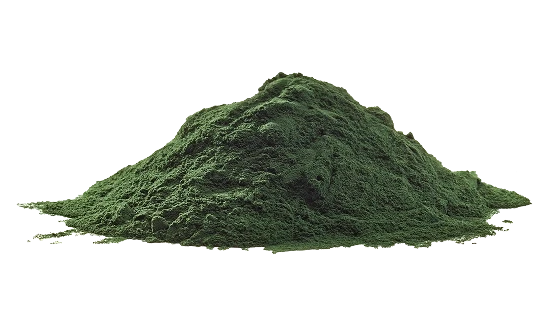
Chlorella
Chlorella est une algue verte unicellulaire souvent utilisée comme complément alimentaire en raison de sa grande richesse nutritionnelle. Elle contient des concentrations élevées de protéines, de vitamines, de minéraux et d'antioxydants qui peuvent contribuer à la santé générale et au bien-être.
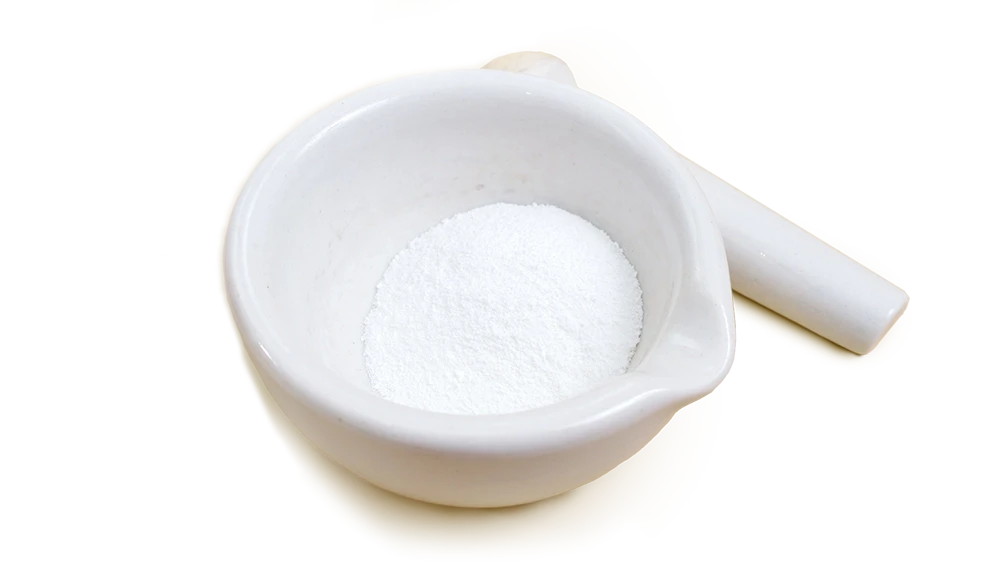
L-arginine
L'arginine est l'un des acides aminés de base qui participe à la synthèse des protéines dans l'organisme. Dans les processus métaboliques, elle joue un rôle clé en tant que précurseur de l’oxyde nitrique (NO), une molécule impliquée dans la vasodilatation, la régulation des parois vasculaires et divers mécanismes de signalisation dans le corps. Des vaisseaux fonctionnant de manière optimale sont une condition préalable à la performance et à la régénération.
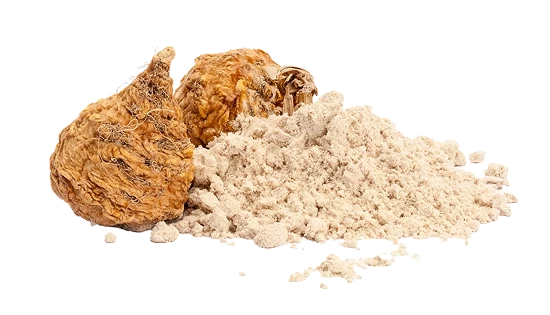
Maca rouge
Contribue au maintien d’une fonction sexuelle saine, stimule le désir sexuel et peut avoir un effet potentiellement bénéfique sur la fertilité. Elle peut également soutenir la santé du système reproducteur masculin et améliorer les performances physiques et mentales.
Pogosta vprašanja o Moringa
Kaj je Moringa?
Kakšni so učinki Moringa?
V katerih Junai izdelkih je Moringa?

Junai Her
Quand le corps a besoin d’équilibre, pas d’un nouveau stimulant
Spoznaj izdelekNaroči se na nasvete
Mesečni vpogled v ingrediente, prehrano in energijo — naravnost v tvoj poštni nabiralnik.
Produits associés
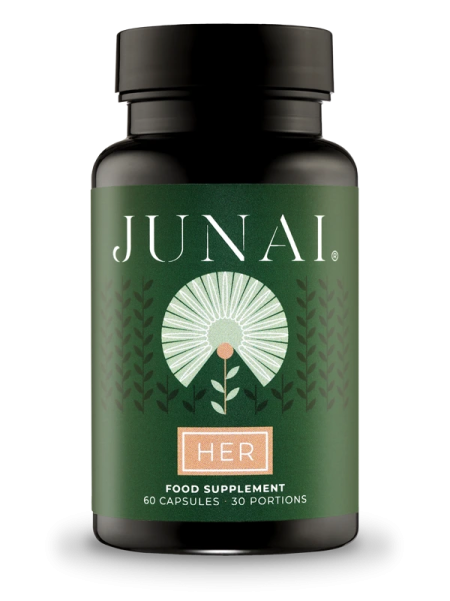
Junai Her
- L’iode issu des algues brunes soutient la thyroïde.
- 10⁹ cultures de L. rhamnosus soutiennent la flore naturelle équilibrée.
- Chlorelle, vitamine B6 et poivre noir aident à détoxifier le corps des radicaux libres.
- La vitamine B6 contribue à la régulation de l’activité hormonale, à la réduction de la fatigue et de l’épuisement.
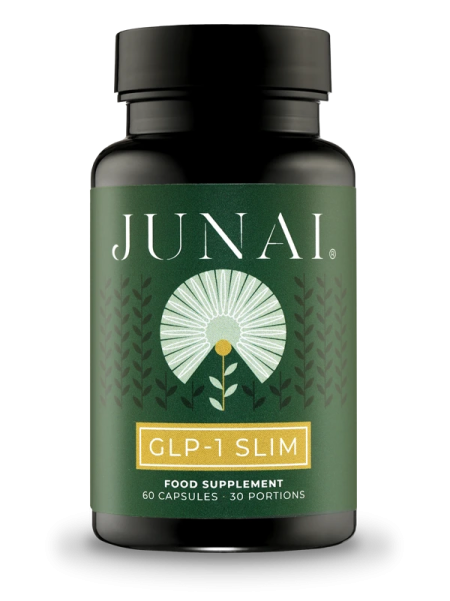
Junai GLP-1 Slim
- Aide à réguler la glycémie avec du chrome, ce qui contribue à la stabilité de l'énergie.
- La pipérine contribue au contrôle du poids corporel.
- Contribue au métabolisme des glucides grâce au mûrier blanc et au zinc.
- Le zinc contribue à un métabolisme normal des macronutriments.
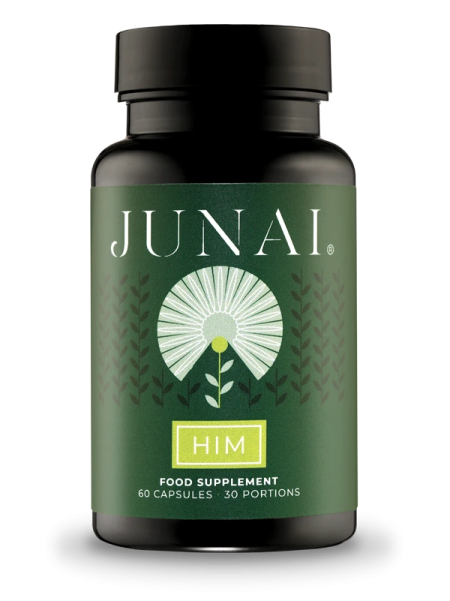
Junai Him
- Favorise une récupération corporelle plus rapide grâce au zinc, essentiel pour la division cellulaire, et à la vitamine B6, impliquée dans la formation des globules rouges.
- Le pipérine contribue à une meilleure circulation sanguine, ce qui favorise les capacités du corps lors d’un effort physique.
- Augmente la libido et favorise le bien-être, l’endurance prolongée et la vitalité grâce au maca rouge.
Articles associés

Les adaptogènes expliqués : qu'y a-t-il derrière ce mot à la mode ?
Tout sur les adaptogènes – de l’explication de ce « buzzword » à l’exploration de l’axe HPA, les pics de cortisol et comment ramener votre corps à l’équilibre.
