




WHAT IS MORINGA?
Native to India and cultivated all over Asia, Africa, and the Caribbean, moringa (Moringa oleifera) is a staggeringly nutrient-dense plant that thrives in nearly any climate that doesn’t freeze. It teems with vitamins, minerals, amino acids, and polyphenols, alongside a significant amount of protein.
Though Junai rejects such titles as the overblown hype so typical of everything wrong with the wellness industry, moringa is actually called the "miracle tree" or the "tree of life" in many local languages where it grows. This is due to its fast growth and its resistance to both drought and scorching conditions, sprouting leaves that can be harvested multiple times per year. Nearly all parts of the plant can be used as food, from seed pods and seeds themselves to the leaves and the roots.
In addition to its invaluable role as a food source in many parts of the world, moringa's bioactive compounds have also been shown to act as strong antioxidants and metabolic regulators. Other compounds in moringa have been explored for their adaptogenic properties, making it interesting as a supplement and not just a fundamental food source.
With such a broad spectrum of nutrients, caloric content, protein, and adaptogenic compounds, moringa is basically a whole shelf full of supplements disguised as a tree.
WHY MORINGA EXISTS FOR YOU
For those in the parts of the world that depend on the plant, moringa is the difference between sustenance and famine, and between nutrition and nutrient deficiency. For those of you reading this page from somewhere in the western world, moringa exists as a superfood, providing the body with both nourishment and a revitalizing nutrient profile.
Like the rest of the raw powders Junai provides, moringa is not an extreme ingredient; it doesn't flood you with superhuman energy, but it does help build a supportive system for long-term balance, providing your body with an abundance of the building blocks it needs to keep its systems running optimally. It also exists to give you a helping hand in regulating your metabolic processes, or put more simply, helping your body keep its energy supply steady, with no spikes or crashes. In short, moringa exists as:
A vibrantly green superfood that can be easily added to soups and smoothies
An adaptogen that gently leads your body to a better response to stress
A green source of vitamins, minerals, and compounds that help you protect and restore balance
A means of helping towards a better, lighter, more energetic, more metabolically active feeling
WHAT MORINGA DOES
Moringa doesn't just nourish the body, it actively interacts with it. Beyond its dense nutritional profile, moringa contains a range of bioactive compounds that influence how your body regulates energy and metabolism, manages inflammation and oxidative stress, and, most interestingly, responds to stress.
These compounds are not passive nutrients sitting on the sidelines. They act as signaling molecules, interacting with key biological systems involved in metabolism, inflammation, and cellular protection. Many of them operate across multiple pathways, which is why the same compounds will appear in more than one role below.
Supports the body's stress response and cellular resilience
Moringa contains compounds that interact with systems involved in how the body responds to physical and physiological stress. This includes processes tied to cellular defense, recovery, and maintaining balance under pressure.
Rather than forcing a response, these compounds appear to aid the body’s ability to regulate itself when exposed to stressors, whether those come from metabolic strain, environmental factors, or internal imbalance. This is where moringa begins to move beyond simple nutrition and into the realm of functional support for resilience at a cellular level.
Promotes metabolic balance and stable energy
Moringa has several compounds that contribute to metabolic balance, particularly in how the body manages and utilizes energy.
Some influence the regulation of blood sugar levels, helping to smooth out spikes and dips. Others are involved in improving insulin sensitivity, allowing cells to respond more effectively to circulating glucose. There is also evidence that certain compounds affect how glucose is absorbed and processed, contributing to a more stable and sustained energy supply.
In addition, moringa has been studied for its role in lipid metabolism, including how the body processes fats and manages cholesterol levels. Together, these effects position moringa as a supporter of steady energy rather than short-term stimulation.
Helps manage inflammation and oxidative damage
Moringa also plays a role in how the body handles inflammation and oxidative stress, two processes that are closely linked and often reinforce each other.
Its compounds contribute to the neutralization of reactive oxygen species, the unstable molecules that can damage cells during periods of stress or high metabolic activity. At the same time, they appear to influence signaling pathways involved in inflammation, helping the body maintain a more balanced response rather than tipping into chronic activation.
This dual role in antioxidant defense and inflammation balance makes moringa particularly relevant for supporting long-term cellular health.
HOW MORINGA WORKS
Forewarned is forearmed: this section gets a little bit sciency. We'll try to keep the language readable, but the science itself will not be watered down. The goal isn’t to overwhelm, but to show how moringa’s effects actually take place inside the body.
Moringa’s impact extends beyond basic nutrition thanks to its dense profile of bioactive compounds, including:
Glucosinolates – sulfur-containing compounds common in cruciferous vegetables (responsible for the characteristic aroma of cabbage, broccoli, and cauliflower), which are enzymatically broken down into biologically active molecules
Isothiocyanates (ITCs) – the active products of glucosinolate breakdown, known for their roles in antioxidant activity, inflammation balance, and metabolic regulation; this group includes moringin, which, as the name suggests, is moringa’s signature compound
Polyphenols – particularly flavonoids like quercetin, which helps neutralize reactive oxygen species, and chlorogenic acid, which contributes to glucose metabolism and metabolic balance
These compounds do not operate in isolation. Many of them act across multiple biological pathways, which means the same molecule may contribute to several of the effects described below.
Supports the body's stress response and cellular resilience
Moringa’s potential role in supporting the body’s response to stress is closely linked to its isothiocyanates, particularly moringin. This compound, derived from moringa’s glucosinolates, has been studied for its involvement in pathways related to inflammation, metabolic balance, and cellular protection.
Rather than acting as a direct stimulant or suppressor, moringin appears to influence signaling systems involved in how the body responds to stress. This includes interaction with pathways connected to the hypothalamic–pituitary–adrenal (HPA) axis, which plays a central role in regulating stress hormones like cortisol.
Alongside other polyphenols in moringa, such as quercetin and kaempferol, these compounds contribute to the body’s ability to maintain balance under physical and physiological stress. Part of this effect is tied to their role in managing oxidative stress and inflammation, both of which place additional strain on the body’s regulatory systems.
In this way, moringa helps you not just recover from stress, but fortifies underlying cellular resilience that determines how the body handles it in the first place.
Promotes metabolic balance and stable energy
Moringa influences metabolic regulation through several complementary mechanisms, particularly those involved in how the body manages glucose and fats.
A key role is played by isothiocyanates, which have been shown to affect hepatic gluconeogenesis, the process by which the liver produces glucose. By influencing enzymes such as glucose-6-phosphatase (G6P) and PEPCK, these compounds help reduce excessive glucose production and support more stable blood sugar levels. They have also been studied for their effects on insulin sensitivity, allowing cells to respond more effectively to circulating glucose.
Chlorogenic acid, another important compound in moringa leaves, contributes to this process through a different mechanism. It has been shown to slow glucose absorption and influence how the liver processes sugars, further supporting balanced energy levels over time.
Moringa's capacity for metabolic support extends beyond glucose; the plant has also been investigated for its role in lipid metabolism, including how the body processes fats and manages cholesterol. Some of its compounds activate the AMPK signaling pathway, which enhances fatty acid oxidation and inhibits fat synthesis. These overlapping mechanisms position moringa as a regulator of energy stability rather than a source of short-term stimulation.
Notably, many of these metabolic pathways are closely tied to the body’s broader stress response, reinforcing the connection between energy regulation and physiological resilience.
Cardiovascular function and blood flow
Further to moringa's credentials in facilitating metabolic balance, it also helps support cardiovascular function. Specifically, moringa's flavonoids quercetin and kaempferol stimulate the endothelium, or blood vessel lining, to produce more nitric oxide (NO), which is directly responsible for vasodilation. Other compounds, specifically niazicin A/B and niaziminin A/B, likely act as calcium channel blockers, relaxing smooth muscles and lowering blood pressure. Lastly, moringa is itself a rich source of L-arginine, itself a precursor to NO, giving your body ample supply of the molecules it needs to supply oxygen throughout the bloodstream.
Helps manage inflammation and oxidative damage
Moringa’s effects on inflammation and oxidative stress are driven largely by its polyphenols and isothiocyanates, which work together to bolsted the body’s internal defense systems.
Quercetin, a flavonoid found in moringa leaves as well as foods like onions and apples, plays a central role here. It helps neutralize reactive oxygen species (ROS), unstable molecules produced during metabolism and stress that can damage cells if left unchecked. By reducing this oxidative burden, quercetin contributes to both cellular protection and inflammation balance.
Chlorogenic acid, in addition to its metabolic effects, also contributes to antioxidant activity, further supporting the body’s ability to manage oxidative stress.
At a deeper level, these compounds influence key regulatory pathways. One of the most studied is the Nrf2 pathway, a cellular system responsible for activating antioxidant and detoxification responses. Under normal conditions, Nrf2 is held in check by a protein called KEAP1. Certain plant compounds, including moringa’s isothiocyanates, can modify this interaction, effectively releasing Nrf2 and allowing it to activate the body’s internal defense mechanisms.
This system acts as a kind of master regulator of cellular protection, linking antioxidant activity, inflammation control, and stress response into a single coordinated network.
RESEARCH ON MORINGA
Research on moringa is robust. Known for decades as a nutrient-dense nutritional powerhouse, current research is investigating its potential:
As an adaptogen
For regulating blood sugar and improving metabolic health
Its antioxidant and anti-inflammatory effects
EFSA Claims
The European Food Safety Authority has not yet issued its decision regarding the findings resulting from research on moringa, many of which were submitted for evaluation all the way back in 2010. Many research findings regarding Moringa oleifera thus remain on EFSA's list of on-hold claims. This means that sufficient evidence exists for them to be used in product descriptions and advertising without refuting them before the full process of approval is finished. There is just one official on-hold claim in the EU's register.
Helps maintain a normal glucose level
International Studies
Despite EFSA's slow approach to reviewing botanical claims, research from around the world has confirmed many of the effects that traditional cultures have found moringa to possess. To give you a clearer picture of how moringa works in real-world contexts, here are a few key studies for your reading pleasure, some of which are already linked in the footnotes of the previous section above:
Neuroprotective and adaptogenic properties
Neuroprotective Role of Moringa oleifera in Stress, Anxiety, and Neurodegenerative Disorders
An article detailing how moringa generally contributes to protecting the nervous system
An article about how moringin can interact with pain receptors to inhibit nociception, or the perception of pain
Evaluation of Adaptogenic Activity of Moringa oleifera Lam.
A general overview of moringa's adaptogenic compounds and properties
A comparison of moringa's adaptogenic properties against 2 other known adaptogens.
Blood glucose control
Effects of Moringa oleifera on Glycaemia and Insulin Levels: A Review of Animal and Human Studies
Detailing the effects moringa has on blood sugar
Explaining the mechanisms behind moringa's effects on glycaemia
On moringa's effects on diabetic patients.
On moringa's potential to play a preventive role in diabetes.
Vasodilation
An article outlying the mechanisms by which moringa's compounds lead to vasodilation
Lipid profile improvement
A study investigating moringa's effects on cholesterol and lipid profiles in general in rabbits
Effect of Moringa oleifera on lipid profile, blood pressure and body mass index in human
Antioxidant and anti-inflammatory effects
A general review of the various anti-inflammatory compounds moringa produces and how they act within the body
Anti-cancer
There is much, still poorly understood potential within moringa's active compounds in the fight against cancer.
Sex drive
We couldn’t resist including this one: a study exploring moringa’s effects on sexual performance in stressed rats. Science, ahem, takes many forms.
Moringa oleifera extract enhances sexual performance in stressed rats
This article is literally about exactly what its title says it is, so don't blame us if you click on it and ruin your algorithm.
HOW TO USE MORINGA
Moringa is versatile. It works as both a daily nutritional foundation and a targeted supplement, depending on how it’s used. If taking our Vita Verde, use 1 to 2 teaspons 1 or 2 times per day, with or as part of meals.
Forms
Moringa is most commonly available in western countries as:
powder
capsules
concentrated extracts
Each form offers slightly different advantages. Powders are the most flexible and closest to whole-food use, while capsules and extracts provide convenience and consistency in dosing.
Timing
Moringa is best taken with meals, particularly when used for metabolic support. In fact, we recommend making it a part of your meal. This allows its compounds to interact more directly with processes involved in glucose regulation and digestion.
Because its effects are gradual and regulatory rather than immediate, consistency matters more than intensity. Regular daily use is more effective than the occasional heaping spoonful.
Traditional Usage
In traditional systems like Ayurveda, moringa has long been used to support:
energy
digestion
overall vitality
It has been valued as a plant that promotes:
strength
recovery
general resilience
Its role was not as a quick intervention, but as a consistent contributor to long-term balance. As for consumption itself, traditional usage largely mirrors modern usage: leaves were consumed either raw or ground into powder, seed pods were added to soups and curries, seeds themselves were roasted, and roots were consumed as well.
Modern Usage
Today, moringa is used in a variety of ways, including:
functional foods
blood sugar–aware routines
daily micronutrient support
It is increasingly positioned as a “foundation” ingredient, promoting baseline health as a sine qua non rather than acting as a single-purpose supplement.
As an edible ingredient
Westerners tend to consume only the leaves, using them:
In capsule form
As powder added to smoothies
Steeped in hot (not boiling) water as tea
Cultures more familiar with the plant, meanwhile, consume it in a number of ways. First come its leaves, which can be chopped a bit and then lightly tossed in a pan the same way as spinach. In India, Pakistan, and Sri Lanka even add them to eggs in the morning, as well as in stir-fry and lentils (dal). Southeast Asia liberally uses the leaves in soups and broths, as well as in salads.
The young, still-soft pods, often called drumsticks due to their long, stick-like appearance, are said to have a taste similar to asparagus. They are regularly included in Indian curries and African stews. African traditions also regularly use moringa in powder form, fortifying porridges and sauces.
Caribbean traditions also happily sauté the pods as a vegetable side. The seeds themselves may be roasted, ground, or pressed into oil, while the roots are sometimes used for their sharp, horseradish-like flavor.
Topical Use
Moringa has also found its way into skincare, largely due to its nutrient profile, including compounds like niacin (vitamin B3), which plays a role in skin health.
In topical formulations, moringa is associated with:
the skin barrier, helping reduce transepidermal water loss
anti-aging effects, supporting cellular renewal and improving skin texture
oil regulation, which may help with acne and rosacea
tone balancing, contributing to a more even appearance of pigmentation
Moringa's antioxidant properties also help limit the effects of environmental stress on the skin.
Water Purification
Moringa has attracted the attention of the World Health Organization for more than one reason. Its nutrient-dense composition makes it clear one of the reasons, but the other concerns the other necessary thing we consume alongside food: water.
Moringa seeds contain interesting coagulants, which bind to impurities in water and effectively remove them. [**] Even more fascinating is that they do the same for bacteria and other microbes, filtering between 90 and 99.9% of them. [*] This makes moringa a valuable tool in emergency or low-resource settings, where access to clean water is limited.
That said, moringa-treated water should not be considered a replacement for modern purification systems. It is best understood as a supportive, situational solution, not a primary method for safe drinking water.
To sum up
Moringa’s role is not to overwhelm the system, but to give it assistance it across multiple systems and pathways, from stress response to metabolic balance. It fits best into routines built on consistency, where small, steady inputs create meaningful change over time.
For some, that makes an immediate difference. For others, it becomes noticeable more gradually. The question is not whether moringa does something, but whether your body is in a place where that kind of support is needed.
WHO NEEDS MORINGA?
Moringa is the perfect addition to your routine if you:
Are interested in starting to explore the effects of adaptogens
Feel energy dips during the day and want help to level that out
Notice regular cravings that don’t feel like real hunger
Just want something that firmly supports but doesn't overwhelm
Regularly forget to consume enough essential vitamins and minerals
Want a green source of additional dietary fiber
Moringa is for anyone who would like another, natural arrow in their quiver for combatting the stressful effects of modern life while supporting their metabolic health.
HOW AND WHY JUNAI USES MORINGA
Junai uses 100% pure moringa leaf powder, organically grown in India. We chose to work specifically with the leaves, as they offer the best balance between nutrient density (read bioavailability) and minimal processing. The leaves are simply dried and ground, preserving their natural profile while making them easy to use, transport, and incorporate into a daily routine.
This form also allows for greater versatility, whether added to smoothies, soups, or other meals, making consistent use both practical and sustainable.
Moringa is not positioned as a standalone hero ingredient, but as a foundational support element designed to:
support the body’s response to stress and promote cellular resilience
contribute to metabolic balance and a healthy lipid profile
help smooth energy fluctuations and support more stable energy throughout the day
provide a simple, nutrient-dense addition to your daily routine
We are thrilled to offer moringa, as it finds a support role to complement all 3 of our hero products:
Junai HIM → supports vascular function and blood flow, working alongside L-arginine to contribute to circulation, performance, and energy delivery
Junai HER → supports the nervous system and the body’s natural response to stress, complementing ingredients like lemon balm to promote balance and resilience
Junai SLIM → works alongside berberine and white mulberry to support healthy glucose metabolism and help manage energy balance throughout the day
WHAT TO EXPECT WITH MORINGA
Moringa is not a stimulant, and it does not force rapid changes in the body, with effects that build over time with consistent use.
Its impact on stress and resilience is usually subtle. Instead of an immediate calming effect, it may support a greater sense of steadiness over time, especially during periods of higher physical or mental load.
Rather than previous sharp spikes in energy, those taking moringa often notice a more stable and sustained level of energy throughout the day. This can show up as fewer crashes, less reliance on quick fixes like caffeine, and a more even sense of physical and mental output.
Because of its role in metabolic balance, some people also experience fewer sudden cravings, particularly those tied to fluctuations in blood sugar. This tends to feel less like suppression and more like a return to a more natural rhythm of appetite.
As with most foundational ingredients, the effects of moringa are best understood not as a single noticeable change, but as a shift toward greater internal balance across multiple systems.
CONTRAINDICATIONS
Moringa is well-known as a pillar of nutrition worldwide, meaning its safety as an ingredient is well-established.
Side effects:
Digestive issues: due to its high fiber content, moringa can cause diarrhea or other digestive issues when eaten on an empty stomach
Allergies: while rare, some people experience a mild allergic reaction
Moringa is to be avoided in the following circumstances:
Pregnancy and breastfeeding: moringa has been linked to causing uterine contractions
Diabetes medications: Moringa lowers blood sugar and can cause hypoglycemia if taken alongside diabetes drugs
Blood pressure medications: It can enhance the effects of medication used for high blood pressure, leading to hypotension
Thyroid medication: It may interfere with the absorption of thyroid medication, such as Levothyroxine
Anticoagulants: It may affect blood clotting, causing interaction with drugs like warfarin or aspirin
Liver interaction: Because it is metabolized by the liver, it may interact with medications broken down by the CYP3A4 enzyme
QUICK RECAP OF MORINGA
Moringa is a nutrient-dense plant that goes beyond basic nutrition through its rich profile of bioactive compounds. It supports the body across several key systems:
helping regulate metabolism and stabilize energy
supporting the body’s response to stress and promoting resilience
managing inflammation and oxidative stress
Its compounds, including isothiocyanates, moringin, quercetin, and chlorogenic acid, interact with biological pathways involved in neuroprotection, stress response, energy regulation, cellular protection, and overall balance.
Rather than acting as a quick fix, moringa works best as a consistent, foundational addition to a daily routine. In that sense, it pairs well with all three of Junai's hero products, as well as with red maca and L-arginine. Used this way, it becomes less about immediate effects and more about supporting the body in maintaining stability, resilience, and long-term health.
Related ingredients
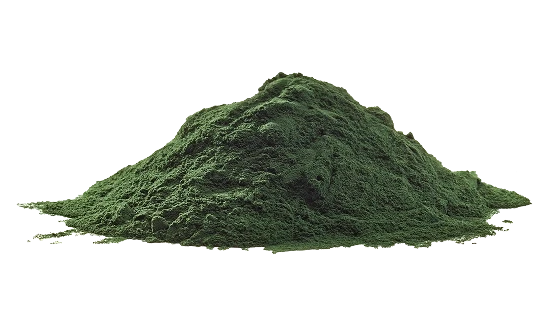
Chlorella
Chlorella is a single-celled green alga that’s often used as a dietary supplement because of its rich nutritional value. It contains high concentrations of proteins, vitamins, minerals, and antioxidants, which can contribute to overall health and wellbeing.
L-arginine
L-arginine is one of the essential amino acids that plays a role in protein synthesis in the body. In metabolic processes, it has a key role as a precursor of nitric oxide (NO), a molecule involved in vasodilation and the regulation of blood vessel walls as well as various signaling pathways in the organism. Properly functioning blood vessels are a prerequisite for performance and recovery.
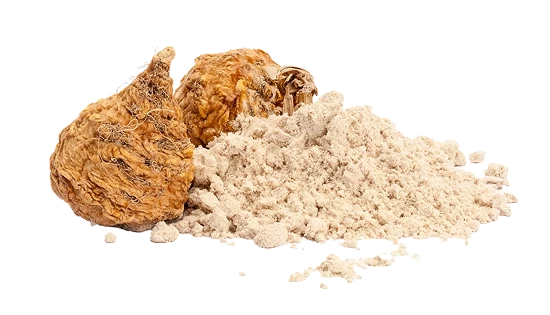
Red maca
Contributes to maintaining healthy sexual function, boosts libido, and has a potentially beneficial effect on fertility. It can also support men's reproductive health and improve physical and mental performance.
Related products
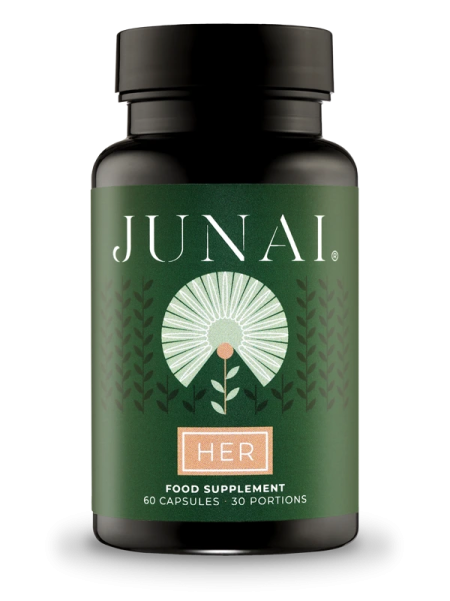
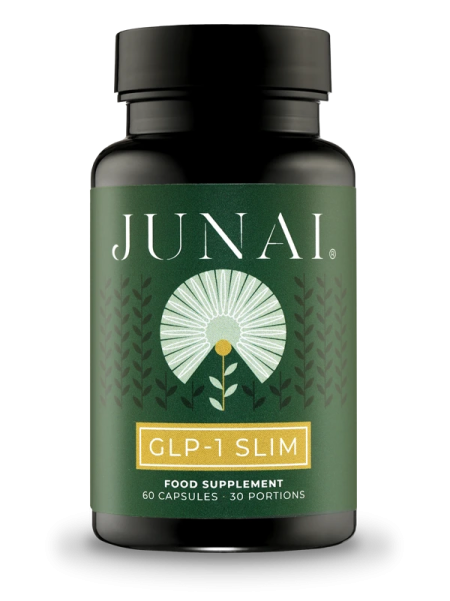
Junai GLP-1 Slim
- A powerful natural tool to help you meet and maintain your target weight
- Stimulated metabolism, improved digestion, and stabilized energy stores
- Natural appetite suppressant that curbs cravings and makes you feel full longer
Related posts

Adaptogens Explained: Breaking Down the Buzzword
All about adaptogens, from breaking down the buzzword to an exploration of the HPA, cortisol spikes, and how to bring the body back into balance.
