




Spis treści
- CO ROBI MEHURJASTI BRAČIČ
- JAK DZIAŁA MEHURJASTI BRAČIČ
- BADANIA NAD MORSZCZYNEM PĘCHERZYKOWATYM
- JAK STOSOWAĆ MORSZCZYN PĘCHERZYKOWATY
- JAK I DLACZEGO JUNAI UŻYWA MORSZCZYN PĘCHERZYKOWATY
- KTO POTRZEBUJE MORSZCZYN PĘCHERZYKOWATY
- CHEGO MOŻESZ OCZEKIWAĆ PRZY STOSOWANIU MORSZCZYNU PĘCHERZYKOWATEGO
- PRZECIWWSKAZANIA
W skrócie
SZYBKIE PODSUMOWANIE O MORSZCZYNIE PĘCHERZYKOWATYM
- Morszczyn pęcherzykowaty (Fucus vesiculosus L.) jest brunatną makroalgą z północnego Atlantyku i Morza Bałtyckiego, jedną z komercyjnie najbardziej rozpowszechnionych i farmakologicznie najlepiej zbadanych roślin morskich w umiarkowanej strefie klimatycznej północnej
- Jego profil fitochemiczny obejmuje organicznie związany jod, fukoidan (sulfowany polisacharyd charakterystyczny tylko dla alg brunatnych), florotaniny (morskie, specyficzne polifenole), fukoksantynę (ksantofilowy karotenoid), kwas alginowy (rozpuszczalny błonnik o działaniu prebiotycznym) oraz szeroki kompleks minerałów, w tym wapń, magnez, potas, cynk i selen
- Jod z morszczynu pęcherzykowatego jest surowcem do syntezy hormonów tarczycy (T3 i T4), które regulują tempo metabolizmu, temperaturę ciała, wytwarzanie energii i funkcje poznawcze
- Fukoidan hamuje sygnalizację NF-κB i adhezję komórek układu odpornościowego zależną od selektyn oraz w modelach przedklinicznych zmniejsza produkcję prozapalnych cytokin; florotaniny dodatkowo hamują COX-2 i iNOS; dowody kliniczne u ludzi są wciąż rozwijane
- Kwas alginowy w przewodzie pokarmowym tworzy lepki żel, który spowalnia opróżnianie żołądka, może zapewniać ochronną barierę przeciw refluksowi kwasu i jako rozpuszczalny błonnik prebiotyczny wspiera różnorodność mikrobiomu jelitowego; fukoidan oddzielnie we wczesnych badaniach sprzyja wzrostowi rodzajów Lactobacillus i Bifidobacterium
- Fukoksantyna i florotaniny to dwie najsilniejsze klasy przeciwutleniaczy wśród składników roślinnych, ze szczególnym działaniem przeciw reaktywnym formom tlenu i rodnikom tlenku azotu
- Wczesne badania sugerują, że fukoidan może hamować działanie kolagenazy i wspierać utrzymanie kolagenu skórnego, choć dowody kliniczne są tu nadal wstępne
- Morszczyn pęcherzykowaty ma wyraźne i specyficzne przeciwwskazania: skonsultuj się z lekarzem, jeśli masz stany nadczynności tarczycy, przyjmujesz leki przeciwkrzepliwe lub antyarytmiczne albo leki tarczycowe
- Standaryzowane ekstrakty zapewniają przewidywalne dawki jodu i znacząco niższe ryzyko narażenia na metale ciężkie w porównaniu z nieskontrolowanym proszkiem całej rośliny
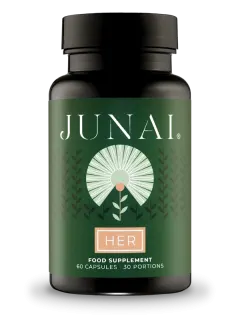
- Morszczyn pęcherzykowaty jest źródłem jodu w produkcie Junai HER, gdzie wraz z melisą, chlorellą, rozmarynem, witaminą B6, czarnym pieprzem i L. rhamnosus wspiera równowagę hormonalną, regulację metabolizmu, energię i zdrowie jelit
Produkty z tym składnikiem
Morszczyn pęcherzykowaty znajdziesz w tych produktach Junai.
Chrzęstnica (Fucus vesiculosus, po słoweńsku Mehurjasti bračič) to brązowa alga morska znana z licznych korzystnych właściwości dla zdrowia człowieka. Może pomóc w redukcji poziomów hormonów żeńskich.
Hormony żeńskie
Dzięki wysokiej zawartości jodu, który pozytywnie wpływa na funkcję tarczycy, może pomóc w regulacji poziomów hormonów żeńskich. To kluczowe dla optymalnego funkcjonowania różnych procesów fizjologicznych.
Pomaga w metabolizmie
Ta brązowa alga morska może wspierać odchudzanie. Poprzez przyspieszenie metabolizmu i dostarczanie niezbędnych składników odżywczych, może być pomocna w dietach i zarządzaniu wagą.
Wspiera zdrowie układu pokarmowego
Dzięki swoim naturalnym właściwościom może pomóc w wspieraniu prawidłowego funkcjonowania jelit i układu pokarmowego, przyczyniając się do lepszego trawienia i ogólnego samopoczucia. Zdrowie układu pokarmowego jest kluczowe dla optymalnego wchłaniania składników odżywczych i utrzymania ogólnego zdrowia, a brązowa alga jest korzystnym dodatkiem do Twojej diety, aby pomóc w utrzymaniu tej równowagi.
CO ROBI MEHURJASTI BRAČIČ
Wsparcie tarczycy i hormonów
Tarczyca to mały gruczoł w gardle o nieproporcjonalnie dużym wpływie na to, jak się czujesz z dnia na dzień. Reguluje tempo metabolizmu, temperaturę ciała, poziom energii i nastrój, a u kobiet jej funkcjonowanie jest splecione z hormonami reprodukcyjnymi w sposób, przez który niewłaściwe działanie tarczycy może objawiać się na wiele sposobów: zmęczenie, mgła mózgowa, waga, która nie chce się ruszyć, oraz cykle, które nie chcą się ustabilizować. Mehurjasti bračič dostarcza jod w postaci związanej organicznie, którą tarczyca łatwo przyswaja, dając jej surowiec potrzebny do produkcji hormonów napędzających twoje systemy.
Działanie antyoksydacyjne
Każda komórka w ciele wytwarza metaboliczne produkty uboczne, wśród których niektóre to reaktywne związki mogące uszkadzać otaczające tkanki, jeśli pozostaną poza kontrolą. Mehurjasti bračič zawiera florotaniny i fukoksantynę, dwie klasy antyoksydantów występujące niemal wyłącznie w algach morskich, które usuwają te reaktywne związki, zanim zdążą się zgromadzić. To nie jest działalność marginalna. To stała, systemowa praca konserwacyjna, którą ciało wykonuje nieustannie, a mehurjasti bračič dostarcza mu dodatkowych narzędzi.
Regulacja procesów zapalnych
Przewlekłe niskostopniowe zapalenie leży u podstaw szerokiego spektrum stanów, które stały się niemal codziennością współczesnego życia: uporczywe zmęczenie, dyskomfort stawów, nieregularne trawienie, wysypki skórne. Zawartość fukoidanu w mehurjastem bračiču i w mniejszym stopniu jego florotaniny wpływają na szlaki sygnałowe regulujące odpowiedź zapalną. Badania omawiane poniżej są wciąż w toku, ale mechanizmy są konkretne, a wstępne dowody obiecujące.
Wsparcie trawienia i jelit
Kwas alginowy, polimer strukturalny stanowiący dużą część suchej masy mehurjastego bračiča, zachowuje się w przewodzie pokarmowym jak rozpuszczalne włókno pokarmowe. Wchłania wodę, tworzy żelową konsystencję i ma kilka dalszych efektów: spowalnia opróżnianie żołądka, może tworzyć ochronną powłokę na powierzchni żołądka (dlatego stosuje się go w preparatach dostępnych bez recepty przeciw zgadze) oraz odżywia korzystne bakterie jelitowe. Fukoidan w wczesnych badaniach wykazał oddzielne działanie prebiotyczne i wspiera wzrost rodzajów Lactobacillus i Bifidobacterium.
Zdrowie skóry (wstępne)
Niektóre badania sugerują, że fukoidan może wspierać syntezę kolagenu w skórze. Również miejscowe stosowanie ekstraktów bogatych we florotaniny w niewielkich badaniach wykazało działanie przeciwzapalne na skórę. Dowody kliniczne tutaj są, choć interesujące, wstępne.
JAK DZIAŁA MEHURJASTI BRAČIČ
Mehurjasti bračič to fitochemicznie bogata roślina, której korzyści dla zdrowia człowieka działają na kilku płaszczyznach.
Jak mehurjasti bračič wspiera tarczycę i równowagę hormonalną
Jod w mehurjastem bračiču występuje przeważnie w postaci związanej organicznie, co oznacza, że jest chemicznie związany z łańcuchami węglowymi budującymi tkankę algi i nie występuje jako wolny, mineralny jodk. Dzięki temu jest znacznie bardziej biologicznie użyteczny niż jod pochodzący wyłącznie z nieorganicznych soli mineralnych.
Gdy jod zostaje wchłonięty, jest aktywnie transportowany do tarczycy wbrew gradientowi stężeń – tarczyca koncentratuje jod na poziomach wielokrotnie wyższych niż we krwi – przez dedykowane białko transportowe na komórkach pęcherzykowych tarczycy, zwane simporterem sodowo-jodkowym. W obrębie tarczycy enzym peroksydaza tarczycowa wiąże ten jod z tyrozyną, jednym z aminokwasów w białkowym szkielecie używanym przez tarczycę do syntezy swoich hormonów. Powstają w ten sposób dwie pośrednie cząsteczki, które łączą się, tworząc trijodotyroninę (T3) i tyroksynę (T4), główne hormony tarczycy regulujące twoją przemianę materii, temperaturę ciała i produkcję energii.
T3 to forma aktywna, T4 zaś jest w tkankach obwodowych przekształcana w T3. Gdy brakuje jodu, oś podwzgórze-przysadka-tarczyca reaguje zwiększeniem wydzielania TSH (hormonu tyreotropowego), aby pobudzić tarczycę, co jest mechanizmem prowadzącym do powiększenia tarczycy przy niedoborze jodu. Wystarczające spożycie jodu żywieniowego usuwa ten nacisk.
U kobiet poziomy hormonów tarczycy istotnie oddziałują na estrogen i progesteron. Estrogen podnosi poziomy globuliny wiążącej tyroksynę (TBG), białka transportującego T4 we krwi, co może wpływać na dostępność wolnych hormonów w różnych fazach cyklu, w ciąży i wokół menopauzy. To jeden z mechanistycznych powodów, dla których zaburzenia funkcji tarczycy są częstsze u kobiet niż u mężczyzn.
Mehurjasti bračič zawiera także selen, pierwiastek śladowy będący niezbędnym kofaktorem dla dejodynaz przekształcających T4 w aktywną formę T3. Stężenie selenu w mehurjastem bračiču jest umiarkowane, ale warto je uwzględnić jako część profilu rośliny.
Jak mehurjasti bračič zmniejsza stres oksydacyjny
Fukoksantyna to ksantofilowy karotenoid, który gasi tlen singletowy i usuwa reaktywne formy tlenu (ROS) zarówno przez bezpośrednią neutralizację, jak i przez zwiększenie wewnątrzkomórkowych systemów antyoksydacyjnych, w tym szlaku Nrf2, który reguluje ekspresję szeregu ochronnych enzymów. Ponieważ fukoksantyna jest rozpuszczalna w tłuszczach, jej wchłanianie znacząco poprawia się, gdy jest spożywana razem z tłuszczem pokarmowym.
Florotaniny to klasa polifenoli syntetyzowanych wyłącznie przez algi brązowe. Strukturalnie są to polimery floroglucinolu i różnią się od polifenoli roślin lądowych w sposób nadający im szczególnie silną zdolność usuwania rodników, zwłaszcza rodników tlenku azotu (NO•). Badania florotanin z F. vesiculosus wykazały szczególnie silne usuwanie rodników tlenku azotu, z możliwością neutralizacji DPPH w niektórych testach porównywalną z kwasem askorbinowym.
Jak mehurjasti bračič reguluje procesy zapalne
Fukoidan, polisacharyd siarczanowy obecny w ścianach komórkowych alg brązowych, wykazał działanie przeciwzapalne poprzez kilka zbliżających się mechanizmów. Jego grupy siarczanowe wpływają na selektyny, molekuły adhezyjne komórek, które rekrutują komórki odpornościowe do miejsc zapalenia, zmniejszając efektywność ich przylegania. Fukoidan także hamuje szlak sygnałowy NF-κB, jedno z głównych przełączników transkrypcyjnych regulujących ekspresję prozapalnych cytokin, w tym TNF-α, IL-1β i IL-6. Hamowanie na poziomie NF-κB to szeroki mechanizm wyżej w łańcuchu, który jednocześnie oddziałuje na liczne procesy zapalne niżej w łańcuchu.
Warto zauważyć, że hamowanie NF-κB w formulacji Junai HER nie jest cechą wyłącznie mehurjastego bračiča. Również rozmaryn i melisa, oba obecne w formule, regulują ten sam szlak przez kwas rozmarynowy, polifenol, który zawierają. Związki te są strukturalnie różne i do tej samej mety dochodzą z różnych perspektyw, co właśnie sprawia, że to nakładanie się działań jest korzystne, a nie zbędne. Inne składniki w ofercie Junai, takie jak kurkuma i ashwagandha, również celują w ten szlak; kluczowy związek kurkumy, kurkumina, jest jednym z najsilniejszych i najlepiej przebadanych roślinnych inhibitorów NF-κB, jakie znamy.
Oddzielnie florotaniny hamują cyklooksygenazę-2 (COX-2) i indukowalną syntazę tlenku azotu (iNOS), dwa enzymy wzmacniające odpowiedź zapalną niżej w łańcuchu. Oznacza to, że działanie przeciwzapalne mehurjastego bračiča pochodzi z kilku klas molekularnych działających w różnych punktach tego samego ogólnego procesu. Należy jednak podkreślić, że większość tych badań przeprowadzono in vitro lub na modelach zwierzęcych. Dane kliniczne dotyczące przeciwzapalnych efektów mehurjastego bračiča u ludzi są nieliczne.
Jak mehurjasti bračič wspiera jelita i trawienie
Kwas alginowy to łańcuch polisacharydowy złożony z reszt kwasu mannuronowego i guluronowego. W obecności płynów żołądkowych tworzy lepki żel, który spowalnia przesuwanie się pokarmu przez żołądek, tym samym łagodząc tempo wchłaniania glukozy i tłuszczów (porównaj to mechaniczne spowolnienie opróżniania żołądka z chemicznym rozwiązaniem tego samego problemu przy białej morwie). Na przejściu między przełykiem a żołądkiem kwas alginowy może tworzyć barierę fizyczną ograniczającą refluks kwasu do przełyku, dlatego stosowany jest w lekach przeciwkwasowych.
Jako włókno prebiotyczne kwas alginowy w znacznej mierze nieulegający trawieniu dociera do okrężnicy, gdzie jest fermentowany przez tamtejsze bakterie, wspierając różnorodność mikrobiologiczną. Fukoidan oddzielnie wykazał wstępnie zdolność selektywnego wspierania wzrostu gatunków Lactobacillus i Bifidobacterium. Zarówno L. rhamnosus, jak i inne gatunki Lactobacillus korzystają z takiego rodzaju wsparcia prebiotycznego.
Jak mehurjasti bračič pomaga skórze
Wciąż wstępne badania laboratoryjne wykazały, że fukoidan hamuje kolagenazę, enzym rozkładający kolagen w tkance skórnej. Proponowany mechanizm obejmuje konkurencyjne hamowanie miejsca aktywnego enzymu. Oddzielnie, miejscowo stosowane ekstrakty bogate we florotaniny w małych kontrolowanych badaniach wykazały zmniejszenie zaczerwienienia wywołanego UV, co przypisuje się ich działaniu antyoksydacyjnemu w tkance skórnej. Obie obserwacje są wstępne, a baza dowodowa klinicznych badań u ludzi jest skąpa.
BADANIA NAD MORSZCZYNEM PĘCHERZYKOWATYM
Jako środowiskowo najbardziej rozpowszechniony i komercyjnie najprzydatniejszy spośród makroalg, morszczyn pęcherzykowaty ma bogatą historię badań sięgającą czasów wojen napoleońskich. Badano go pod kątem zastosowań od składnika kulinarnego po antyoksydacyjną potęgę, od stymulatora kolagenu po prebiotyk.
Stanowiska EFSA
EFSA nie zatwierdziła oświadczeń zdrowotnych dla morszczynu pęcherzykowatego jako rośliny ani dla fukoidanu, florotanów czy fukoksantyny. Twierdzenia o działaniu przeciwzapalnym, pobudzającym kolagen i prebiotycznym mieszczą się poza obecnymi ramami UE dotyczącymi dozwolonych oświadczeń zdrowotnych, niezależnie od składnika. W rejestrze EFSA obecnie można znaleźć następujące zastrzeżone (on-hold) oświadczenia:
- Wspiera zdrowie przewodu pokarmowego
- Wspomaga trawienie
- Pomaga utrzymać prawidłowe funkcjonowanie jelit
- Wspomaga lepsze funkcjonowanie jelit i regularne wypróżnianie
- Pomaga utrzymać optymalny komfort trawienia
- Ma działanie antyestrogenowe u kobiet przed menopauzą
Jeśli chodzi o jedną z najpowszechniejszych składowych morszczynu pęcherzykowatego, EFSA uznaje, że jod przyczynia się do prawidłowego funkcjonowania tarczycy, prawidłowego metabolizmu umożliwiającego uwalnianie energii, prawidłowych funkcji poznawczych, prawidłowego funkcjonowania układu nerwowego oraz prawidłowego tworzenia hormonów tarczycy. Dzięki standaryzowanej zawartości jodu w morszczynie pęcherzykowatym Junai HER obejmuje wszystkie 5 tych zatwierdzonych oświadczeń.
Międzynarodowe badania
- Biodostępność jodu z alg morskich u ludzi. Biodostępność jodu z alg morskich, w tym Fucus vesiculosus, została potwierdzona w badaniach na ludziach, przy czym stopnie absorpcji dla organicznie związanych form jodu oceniono w zakresie 80–95 %, co klasyfikuje go jako jedno z lepiej biologicznie dostępnych źródeł jodu w diecie.
- Fukoidan z Fucus vesiculosus hamuje odpowiedź zapalną zarówno in vitro, jak i in vivo. Liczne badania in vitro i na modelach zwierzęcych wykazały zdolność fukoidanu do zmniejszania wytwarzania TNF-α, IL-1β i IL-6 oraz zahamowania sygnalizacji NF-κB. Dane kliniczne u ludzi wciąż są ograniczone.
- Florotaniny z Fucus vesiculosus: regulacja odpowiedzi zapalnej przez hamowanie szlaku sygnałowego NF-κB. Badania in vitro potwierdzają istotne usuwanie rodników przez florotaniny, szczególnie wobec tlenku azotu, poprzez hamowanie szlaku NF-κB.
- Stosowanie ekstraktu z Fucus vesiculosus na skórę ludzką zmienia jej grubość i właściwości mechaniczne. Istnieją obiecujące badania in vitro dotyczące hamowania kolagenazy. Miejscowe stosowanie florotanów w małych badaniach dermatologicznych wykazało efekty ochronne przed UV. Brakuje dużych randomizowanych badań kontrolowanych.
- Wpływ alginatu na uczucie sytości, apetyt, funkcję żołądka i wybrane jelitowe hormony sytości u osób z nadwagą i otyłością. Rola kwasu alginowego jako fizycznej bariery przeciwko refluksowi kwasu jest dobrze ugruntowana i stanowi podstawę zastosowań farmaceutycznych. Jego właściwości prebiotyczne w okrężnicy wspierane są przez badania in vitro i na zwierzętach.
Warto również wspomnieć o jednym pojawiającym się obszarze badań, chociaż dowody są zbyt wstępne, by wyciągać wnioski. Fukoidan w badaniach in vitro wykazał działanie przeciwnowotworowe i antitumorowe, w tym wpływ na angiogenezę nowotworową i regulację układu odpornościowego. Dane z badań na ludziach nie są jeszcze na etapie, który pozwalałby na uwzględnienie tego w sekcjach o tym, co robi morszczyn pęcherzykowaty lub jak działa, ale warto śledzić wstępne ustalenia:
- Fukoidan i rak: wielofunkcyjna cząsteczka o potencjale przeciwnowotworowym
JAK STOSOWAĆ MORSZCZYN PĘCHERZYKOWATY
Tradycyjne zastosowanie
Społeczności przybrzeżne wokół Wysp Brytyjskich, Skandynawii, Ameryki Północnej i części Japonii od dawna gotują z morszczynem pęcherzykowatym. Jeśli masz wystarczającą ciekawość, by wypróbować go w domu, wysiłek się opłaci. W Nowej Anglii tradycyjnie wykłada się doły w tzw. clambake, gdzie całe danie gotuje się na parze wewnątrz warstwy liści morszczynu pęcherzykowatego pod przykryciem. Na Wyspach Normandzkich suszą ryby i boczek dymem palącego się morszczynu pęcherzykowatego. Na Hebrydach suszące się sery są nacierane jego słonym popiołem. W kuchni nordyckiej historycznie wykorzystywano go w bazach zup rybnych i zup warzywnych wraz z innymi morskimi roślinami.
Nowoczesne zastosowanie
Kultury, które nadal używają morszczynu w kulinariach, robią to przeważnie tak jak zawsze. Ludzie w białych kitlach w laboratoriach udostępnili jednak morszczyn w wielu innych formach, których hebrydzcy serowarzy nie rozpoznaliby, takich jak suszone proszki, standaryzowane ekstrakty i kapsułki, choć zastosowania kulinarne przeważnie pozostały.
W kuchni
Suszony proszek z morszczynu można dodać do zup i wywarów, gdzie wnosi słonawy, subtelnie morski umami. Drobno zmielony działa jak przyprawa bogata w minerały, posypywany sałatki, pieczone ziemniaki lub pieczone warzywa. Proces suszenia zagęszcza jego naturalną pikantność, którą niektórzy opisują jako delikatną nutę małży, dzięki czemu jest zaskakująco użyteczny jako wzmacniacz smaku, a nie tylko jako suplement diety.
Świeży lub rehydratowany morszczyn można gotować na parze z daniami z owoców morza lub dusić w zupach. Na herbatę suszony morszczyn moczyć w gorącej (nie wrzącej) wodzie 5–10 minut. Odcedź i wypij. Ma mineralny, słonawy smak, który trzeba polubić, ale wcale nie jest nieprzyjemny.
Jeśli używasz go kulinarnie i jednocześnie zażywasz suplement, zwróć uwagę na łączną ilość jodu, szczególnie jeśli twoja dieta już zawiera znaczące ilości innych alg, soli jodowanej lub owoców morza.
Jako suplement
Dla wsparcia tarczycy i ogólnej wystarczalności jodu, klinicznie stosowane dawki proszku lub standaryzowanego ekstraktu morszczynu zwykle mieszczą się w przedziale 200–600 mg na dzień. Junai HER zawiera 30 mg 10:1 wodnego ekstraktu, standaryzowanego na ≥0,2 % jodu, co zapewnia 60 μg jodu na porcję. To mieści się w zalecanym europejskim dziennym spożyciu jodu (150 μg/dzień dla dorosłych), gdy jest łączone z dietetycznym jodem z żywności.
Ponieważ ekstrakt jest standaryzowany, dawka jodu jest spójna i przewidywalna, co jest bardzo ważne w przypadku składnika, którego okno terapeutyczne i toksyczne są bezpośrednio związane z dawką. To istotna przewaga nad proszkiem z całej rośliny, gdzie stężenie jodu znacznie zmienia się w zależności od miejsca zbioru, pory roku i przetwarzania.
Brak dowodów, żeby morszczyn zachowywał się jako adaptogen w technicznym znaczeniu tego słowa; nie reguluje osi HPA i logika czasowej elastyczności dla niego nie obowiązuje. Codzienna konsekwencja ma znaczenie dla utrzymania odpowiedniego poziomu jodu, ale nie ma szczególnego wymogu, by przyjmować go o określonej porze dnia.
Połączenia
Morszczyn logicznie łączy się z czarnym pieprzem (piperin wspiera wchłanianie związków rozpuszczalnych w tłuszczach, w tym fukoksantyny), z witaminą B6 (która bierze udział w szlakach metabolicznych pośrednich wobec działania hormonów tarczycy) i z L. rhamnosus (gdzie prebiotyczne włókno morszczynu tworzy korzystne warunki dla rozwoju probiotyka). Wszystkie cztery składniki są obecne w Junai HER.
JAK I DLACZEGO JUNAI UŻYWA MORSZCZYN PĘCHERZYKOWATY
Historia tego, jak morszczyn trafił do HER, odpowiednio zaczyna się na francuskim wybrzeżu na początku XIX wieku. Chemik, który czyścił spalnię, przypadkowo odkrył jod elementarny, gdy próbował oczyścić przypalone Fucus kwasem siarkowym, a szwajcarski lekarz powiązał to odkrycie ze swoimi klinicznymi obserwacjami, że ludność przybrzeżna, której dieta i środowisko naturalnie dostarczały morskiego jodu, prawie nigdy nie chorowała na wole. Potrzeba było jeszcze całego wieku, by w pełni zrozumieć, dlaczego: tarczyca potrzebuje jodu do syntezy swoich hormonów, a morszczyn pęcherzykowaty dostarczał go przez cały czas.
Całą historię opisaliśmy tutaj, i jeśli jeszcze jej nie czytałeś, warto poświęcić na to pięć minut. To doskonała opowieść o pochodzeniu, która łączy chemię, historię, medycynę, intrygi i filozofię odkryć naukowych. W końcu to wartości, które tworzą filary Junai, dlatego chętnie ją opowiadamy.
Junai używa wodnego ekstraktu 10:1 talusa Fucus vesiculosus, standaryzowanego na co najmniej 0,2 % jodu, co zapewnia 60 μg biologicznie przyswajalnego jodu na porcję. Metoda ekstrakcji wodnej jest ważna: koncentruje związki roślinne rozpuszczalne w wodzie, w tym jod i fukoidan, bez użycia rozpuszczalników, co jest czystym i rozważnym podejściem do rośliny, która przy wyższych dawkach ma poważne aspekty przeciwwskazań. Standaryzacja oznacza, że zawartość jodu jest spójna między partiami. Nośnik maltodekstryny ułatwia stabilność kapsułkowania.
Nasz morszczyn pochodzi z chłodnych, czystych wód północnego Atlantyku europejskiego, regionu z udokumentowanymi tradycjami zbioru morszczynu i ugruntowanymi standardami jakości dla produkcji składników morskich.
Morszczyn pęcherzykowaty jest jodową kotwicą produktu Junai HER. W połączeniu z melisą, chlorellą, rozmarynem, witaminą B6, czarnym pieprzem i L. rhamnosus przyczynia się do jedynego w UE zatwierdzonego oświadczenia zdrowotnego w formule, które jest specyficznie związane z wytwarzaniem hormonów tarczycy. Wszystko inne w HER wspiera ten sam ogólny obszar – regulację metaboliczną, równowagę hormonalną, energię, zdrowie jelit – poprzez różne, ale uzupełniające się mechanizmy. Morszczyn pęcherzykowaty zajmuje jodowe miejsce w tej konstelacji — miejsce, na które zasłużył, jak potwierdzają 200 lat tradycji i nauki.
KTO POTRZEBUJE MORSZCZYN PĘCHERZYKOWATY
- Osoby, które chcą zapewnić wystarczające dzienne spożycie jodu, zwłaszcza te unikające soli jodowanej, stosujące dietę roślinną lub spożywające mało albo wcale owoców morza
- Kobiety z objawami związanymi z nieoptymalnym funkcjonowaniem tarczycy: uporczywe zmęczenie, trudności z utrzymaniem masy ciała, mgła umysłowa, nieregularne cykle lub uczucie ciągłego zimna
- Osoby zainteresowane biologicznie dostępnym źródłem jodu pochodzenia pokarmowego jako alternatywą dla syntetycznych suplementów jodu
- Osoby, które chcą wspierać zdrowie tarczycy w okresach zwiększonych wahań hormonalnych, w tym w okresie okołomenopauzalnym i w okresie rozrodczym
- Osoby zainteresowane właściwościami przeciwutleniającymi morskich polifenoli, szczególnie fukoksantyny i florotanów, jako uzupełnienie lądowych antyoksydantów roślinnych
- Osoby z wolnym trawieniem lub nieregularną motoryką jelit, które mogą odnieść korzyść z rozpuszczalnego prebiotycznego błonnika
- Mieszkańcy obszarów lądowych z ograniczonym dostępem do świeżych owoców morza i niskim spożyciem alg w diecie
- Osoby, które po prostu są ciekawe alg morskich, czują się nad oceanem jak u siebie i chcą przenieść trochę tego na brzeg
CHEGO MOŻESZ OCZEKIWAĆ PRZY STOSOWANIU MORSZCZYNU PĘCHERZYKOWATEGO
Suplementacja jodu może, jeśli rzeczywiście występował niedobór, w ciągu tygodni do miesięcy spowodować zauważalne zmiany w funkcjonowaniu tarczycy: bardziej stabilne poziomy energii, lepsza jasność metaboliczna, łatwiejsze utrzymywanie masy ciała, poprawa nastroju wyjściowego. Te zmiany są istotne, ale nie są dramatyczne ani natychmiastowe. Tarczyca działa wolno i jej hormony mają powolne czasy reakcji. Nie oczekuj, że poczujesz cokolwiek w pierwszych kilku dniach.
Porównaj to z efektami dobrze znanych leków na niedoczynność tarczycy, takich jak syntetyczny tyroksyna (Euthyrox), które mogą zmieniać objawy u pacjentów w skali godzin raczej niż tygodni. Suplementacja jodu dostarcza tarczycy materiału potrzebnego do syntezy hormonów, jak dostarczenie cegły murarzowi: dom nadal wymaga czasu, żeby powstać. Syntetyczny tyroksyna jest z kolei jak dostawa gotowego domu modułowego, omijająca potrzebę, by tarczyca sama wytwarzała swoje związki.
Jeżeli Twoje zasoby jodu były już wystarczające, korzyść specyficzna dla tarczycy ze stosowania morszczynu pęcherzykowatego będzie mniej wyraźna. W takim przypadku większe znaczenie mają towarzyszące działania: antyoksydacyjne i przeciwzapalne działanie fukoidanu i florotaniny oraz wkład błonnika jelitowego z alginianu.
Dla związków morszczynu pęcherzykowatego, które nie są jodem, nie istnieje ustandaryzowane, odczuwalne doświadczenie w takim samym stopniu, jak mogłoby to mieć miejsce w przypadku czegoś takiego jak ashwagandha czy L. rhamnosus. Działanie fukoidanu i florotaniny jest w dużej mierze systemowe i działa w tle. Bardziej prawdopodobne jest, że ich nie zauważysz, niż że z czasem zauważysz ich brak.
W formule Junai HER morszczyn pęcherzykowaty działa razem z 6 innymi składnikami. Część tego, co poczujesz po HER, szczególnie regulację energii i zmniejszenie zmęczenia, będzie wynikiem wielu składników działających jednocześnie i nie zawsze będzie oczywiste, który zasługuje na uznanie. To w porządku: celem jest, aby twoje ciało działało lepiej. Morszczyn pęcherzykowaty jest częścią tego procesu.
PRZECIWWSKAZANIA
- Choroby tarczycy. Morszczyn pęcherzykowaty nie jest odpowiedni dla osób z nadczynnością tarczycy lub chorobą Gravesa-Basedowa, gdzie nadmiar jodu może pogorszyć stan. Osoby z chorobą Hashimoto powinny stosować go ostrożnie, ponieważ związek między podażą jodu a aktywnością choroby jest złożony i indywidualny. Osoby, które już przyjmują leki na tarczycę (lewotyroksyna, metimazol, propylotiouracyl), powinny skonsultować się z lekarzem przed wprowadzeniem morszczynu pęcherzykowatego, ponieważ może on wpływać na poziomy hormonów tarczycy.
- Nadwrażliwość na jod. Niewielka liczba osób rozwija reakcje nadwrażliwości na jod. Przerwij stosowanie, jeśli zauważysz nietypowe zmiany skórne, kołatanie serca lub znaczące problemy żołądkowo-jelitowe.
- Leki przeciwzakrzepowe i przeciwpłytkowe. Fukoidan wykazał w warunkach laboratoryjnych działanie przeciwzakrzepowe, dlatego morszczyn pęcherzykowaty powinny stosować ostrożnie osoby przyjmujące leki przeciwkrzepliwe, takie jak warfaryna, heparyna lub podobne preparaty. Warto skonsultować się z lekarzem.
- Leki antyarytmiczne. Amiodaron, często stosowany lek antyarytmiczny, sam zawiera znaczne ilości jodu. Łączenie go ze źródłem jodu z diety, takim jak morszczyn pęcherzykowaty, może prowadzić do nieprzewidywalnego obciążenia jodem i wymaga konsultacji z kardiologiem.
- Interakcje z ziołami. Ostrożność jest wskazana przy jednoczesnym stosowaniu dziurawca i miłorzębu (ginkgo biloba), które z morszczynem pęcherzykowatym działają przez nakładające się mechanizmy, oraz waleriany, której wpływ na CYP450 może zmieniać sposób, w jaki związki z morszczynu są absorbowane.
- Ciąża i karmienie piersią. Zapotrzebowanie na jod wzrasta w ciąży, ale optymalna dawka najlepiej powinna być ustalana pod kontrolą lekarza i nie zaleca się samodzielnej suplementacji. Morszczyn pęcherzykowaty nie jest zalecany do niekontrolowanego stosowania w ciąży lub podczas karmienia piersią.
Standaryzacja jako czynnik zmniejszający ryzyko
Junai stosuje standaryzowany ekstrakt o określonej zawartości jodu (60 μg na dawkę). Proszek całej rośliny morszczynu pęcherzykowatego może mieć bardzo zmienną zawartość jodu w zależności od miejsca i pory zbioru, co tworzy nieprzewidywalne narażenie na dawkę. Format standaryzowanego ekstraktu znacząco zmniejsza ryzyko przypadkowego przeciążenia jodem w porównaniu z nieskontrolowanymi produktami z proszku całej rośliny.
Jeśli po rozpoczęciu stosowania morszczynu pęcherzykowatego poczujesz nietypowe objawy, przerwij stosowanie i skonsultuj się z pracownikiem służby zdrowia.
Powiązane składniki

Chlorella

Jod
Najczęstsze pytania: Morszczyn pęcherzykowaty
Czym jest Morszczyn pęcherzykowaty?
Utrzymywanie równowagi hormonalnej
Jakie jest działanie składnika Morszczyn pęcherzykowaty?
- Pozytywnie wpływa na funkcję tarczycy, co pomaga w regulacji hormonów
- Wspiera procesy, które pomagają w utracie wagi i jest stosowany w programach dietetycznych
- Wspiera zdrowie jelit i układu pokarmowego
Które produkty Junai zawierają Morszczyn pęcherzykowaty?
Morszczyn pęcherzykowaty znajdziesz w tych produktach Junai: Junai Her.
Produkty z tym składnikiem
Morszczyn pęcherzykowaty znajdziesz w tych produktach Junai.
Zapisz się na porady
Comiesięczny przegląd składników, odżywiania i energii – prosto do Twojej skrzynki.
Powiązane wpisy

Bladderwrack, błękitny węgiel i równowaga: dlaczego Junai spogląda w stronę wybrzeża
Bałtycka morszczyn jest ważnym elementem równowagi morskiej, a pośrednio również światowego klimatu. Bogaty w witaminy i minerały, stanowi także źródło zaskakującego odkrycia naukowego, które znacząco poprawiło ludzkie zdrowie.

Dlaczego chlorella jest tak ważna dla wzmocnienia kobiecego układu odpornościowego
Czy ostatnio czujesz się nienaturalnie zmęczona? A może ostatnio częściej łapiesz różne infekcje? Junai Her jest pełen chlorelli, która wzmacnia twój układ odpornościowy.