



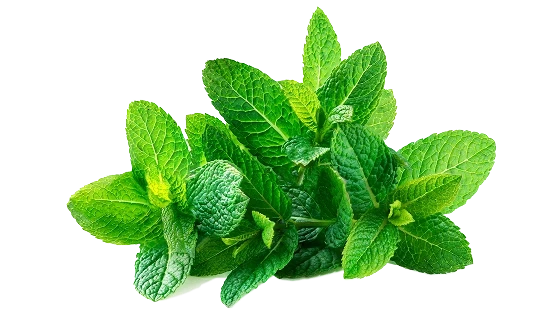
Lemon balm or Melissa (Melissa officinalis) is a delightfully fragrant herb in the mint family. It has been used for centuries in traditional medicine for its calming nature, its soothing effect on digestion, and its capacity as an antioxidant and anti-inflammatory.
Modern science studies its bioactive compounds, which have been shown to support mental well-being, improve cognitive functions, and aid in digestion.
WHAT IS LEMON BALM?
Lemon balm or melissa is a perennial herb in the mint family Lamiaceae, a large botanical family that also contains another of Junai's ingredients, rosemary. At a quick glance, it can often be mistaken for mint itself.
Its scientific name Melissa officinalis contains two telling parts: melissa is the Ancient Greek name for honeybee, while the Latin officinalis tells us that the herb was used traditionally in apothecaries, or medieval pharmacies. The Greek term hints at the plant's melliferous nature, strongly attracting bees and other pollinators who feast on the nectar of its small, white to pale yellow flowers in the spring and summer.
In English, lemon balm was named for the plant's fragrantly potent, intoxicatingly sweet smell of lemony citrus.
Melliferous

WHY LEMON BALM EXISTS FOR YOU
Sometimes, the problem you have isn't just the result of one thing being out of whack. Sometimes, it's the combination of feeling mentally overloaded, physically tense, bloated after meals, and somehow both tired and overstimulated at the same time (think of that feeling after the 4th cup of coffee...).
Lemon balm is one of those rare herbs whose effects are not confined to a single system. It interacts with the nervous system, digestion, inflammation, and stress pathways all at once. Each of these systems informs one another, with the link between gut and brain playing a huge role on the body's stress levels and, of course, vice versa!.
That's why lemon balm has remained popular for centuries: it helps create a calmer, more comfortable baseline without making you feel dulled or sedated. While it's doing so, it's also helping your digestive tract operate smoothly, ensuring that you feel good in your own body, so your confidence can come radiating up to the surface. And even if you don't have any of the problems it addresses, you'll still want melissa for that delicious citrusy taste and intoxicatingly fragrant aroma.
WHAT LEMON BALM DOES
First we'll give a list of what lemon balm does here in simple, understandable terms. In the following section, we'll describe in scientific terms the mechanisms behind each function.
Helps maintain a positive mood and good cognitive function
Melissa helps reduce symptoms of stress, anxiety, and depression and promote a sense of relaxation through its effect on the body's nervous system. It also contributes to the improvement of cognitive functions, including synaptic plasticity, which improves attention and capacity for learning.
Aids in digestion and reduces bloating and flatulence
Melissa has long been used to relieve digestive issues. It can help alleviate bloating, pain, and digestive cramps, and also works to reduce flatulence.
Contributes to the body's natural hormonal balance
Melissa contains compounds that can affect hormonal balance. It does not explicitly boost hormone levels, but it can help create conditions in which the endocrine system can function normally.
Serves as an antioxidant and anti-inflammatory
Melissa contains numerous natural antioxidants that can help protect cells from the harmful effects of free radicals. Antioxidants are important in the fight against oxidative stress, which is associated with many diseases and aging.
Read the next section to find out how:
HOW LEMON BALM WORKS
Forewarned is forearmed: this section gets a little bit sciency. We'll try to keep the language readable, but the science itself will not be watered down.
The main active constituents of Melissa officinalis are volatile compounds (geranial, neral, citronellal, and geraniol), triterpenes (ursolic acid and oleanolic acid), phenolic acids (rosmarinic acid, caffeic acid, and chlorogenic acid), and flavonoids (quercetin, rhamnocitrin, and luteolin). [1]
Mood and capacity for calm
One of lemon balm's best-known compounds is rosmarinic acid. This appears to inhibit GABA transaminase, the enzyme responsible for breaking down GABA. GABA, or gamma-aminobutyric acid, is the neurotransmitter responsible for reducing neuronal excitability throughout mammalian nervous systems. In understandable terms: it's the chemical that tells your brain to stop revving its engine to 6,000 rpm for no reason. More GABA hanging around = more nervous system capacity for self-regulation. Lemon balm compounds may also interact directly with GABA-A receptors, a part of your signalling apparatus for sleep, calming, and relaxation.
There is also emerging evidence that lemon balm may influence the HPA axis, the hypothalamic-pituitary-adrenal system involved in the stress response (we discussed this at length in our blog on adaptogens). That means its effects may not just stay at the neurotransmitter level, but potentially ripple into cortisol regulation and the broader chemistry of feeling wound up. [2]
Brain fog and cognitive function
Then there’s the cholinergic side. Rosmarinic acid and certain terpenes in lemon balm may inhibit acetylcholinesterase, the enzyme that breaks down acetylcholine. Acetylcholine helps determine what your brain pays attention to, what it stores, and what it ignores, and thus is crucial for attention, learning, memory, and mental sharpness. When acetylcholine levels rise in brain regions like the prefrontal cortex and hippocampus, neurons become more responsive to incoming stimuli.
Acetylcholine has also been shown to act upon synaptic plasticity, the brain’s way of strengthening connections between neurons over time. More acetylcholine signaling can make certain neural pathways more likely to fire together again later, which is basically how learning happens in the first place. [3]
So while one side of lemon balm is quietly lowering the volume on nervous tension, another side may help preserve mental clarity. That duality is part of why lemon balm often feels less like sedation and more like “my nervous system finally unclenched".
Digestive and carminative benefits
Lemon balm has been used to treat digestive complaints for millennia, especially the kind that sit in the grey zone between “my stomach hurts” and “my nervous or immune system is clearly involved here, too”.
Certain compounds in lemon balm, particularly rosmarinic acid and volatile terpenes like citral and citronellal, appear to influence intestinal motility and help calm overactive contractions. Part of that may come down to their spasmolytic (or antispasmodic) effects, meaning their ability to reduce muscle contractions in the digestive tract. When those contractions become too strong or too chaotic, you can end up with cramping, bloating, discomfort, or that charming sensation that your intestines are trying to tie themselves into balloon animals.
This is what makes lemon balm “carminative", the herbal term for helping reduce gas, bloating, and digestive tension. [4]
Hormonal balance
Lemon balm is not an explicit hormone ingredient in the same way things like ashwagandha, maca, or vitex might be. Its effects appear more indirect and regulatory than overtly endocrine.
One possible pathway is through the HPA axis (covered extensively in our blog on adaptogens. When the HPA axis is overactive for long periods, cortisol levels can stay too high, which can spill over into other systems, including sleep, appetite, cycle regularity, libido, and overall hormonal resilience.
By helping calm parts of the stress response, lemon balm may indirectly support a more stable hormonal environment. In practice, this makes lemon balm less of a “hormone booster” and more of a nervous-system moderator. It may help create the conditions in which the rest of the endocrine system can stop acting like it’s being chased through the woods by wolves. [5]
Antioxidant and anti-inflammatory effects
Lemon balm's rich contents of polyphenols and flavonoids, especially rosmarinic acid, quercetin, luteolin, caffeic acid, and chlorogenic acid, play an incredible role in neutralizing reactive oxygen species, also known as free radicals. Free radicals are unstable molecules that can damage cells, proteins, lipids, and even DNA if they build up faster than the body can clear them. That clearing process is called oxidative stress, and it is one of the biochemical background characters in inflammation, ageing, cardiovascular disease, metabolic dysfunction, and a whole parade of other uninvited guests.
Rosmarinic acid appears particularly interesting because it may reduce inflammatory signaling molecules like TNF-α, IL-1β, and NF-κB. NF-κB is basically one of the body’s master inflammatory switches. When activated, it turns on genes involved in producing inflammatory cytokines, immune signaling molecules, and stress-response compounds. Certain flavonoids in lemon balm may also inhibit COX and LOX enzymes, which are involved in producing prostaglandins and leukotrienes, two classes of compounds that help drive inflammation.
So while lemon balm is mostly known for its effects on calmness and cognition, there is a lot happening in the background too. It's quietly doing its regular maintenance work on oxidative stress, inflammatory signaling, and cellular wear and tear. [6]
RESEARCH ON LEMON BALM
Lemon balm is one of those herbs used for so long, by so many people, over so many areas that scientists just needed to get their lab equipment on it to see what was behind the identical set of characteristics reported by so many different sources.
EFSA claims
The European Food Safety Authority has not yet issued its decision regarding the findings resulting from research on lemon balm. Many research findings regarding Melissa officinalis thus remain on EFSA's list of on-hold claims. That means researchers have made claims based on their findings and enough evidence exists so as to allow these claims to be used in product descriptions and advertising without refuting them before the full process of approval is finished. Among these claims for melissa are:
helps to eliminate respiratory tract discomfort
supports the good function of digestive system and help eliminate digestive discomfort
helps maintaining comfort during menstruation
helps to maintain a good mental condition and emotional comfort
helps you cope calmly with the stress
contributes to optimal mental and physical relaxation
supports healthy circulatory system and normal blood pressure
helps maintain healthy sleep
maintains the natural hormonal balance of the human body
Meanwhile, EFSA has absolutely approved findings describing melissa's antioxidant properties.
International studies
Despite EFSA's slow approach to reviewing botanical claims, research from around the world has confirmed many of the effects that traditional cultures have found lemon balm to have. We'll include a few studies here for your reading pleasure, most of which are already linked in the footnotes of the previous section above.
Melissa officinalis: Composition, Pharmacological Effects and Derived Release Systems—A Review
A good general article reviewing the active compounds in melissa and broadly describing their effects on the body.
An article describing melissa's capacity for mood regulation and stress response.
Acetylcholinesterase inhibitory guided fractionation of Melissa officinalis L
An article on melissa's capacity to improve synaptic plasticity and remove brain fog.
An article describing melissa's effects on digestion and the intestinal tract.
Medicinal plants in the management of depression: A comprehensive review
An article laying out the evidence that melissa interacts with the HPA axis and thus has a role in hormone regulation.
Anti-inflammatory and Antioxidant Effects of Melissa officinalis Extracts: A Comparative Study
An exhaustive article on melissa's antioxidant and anti-inflammatory properties.
An article describing the bioavailibility of melissa, explaining why we use leaf extract in Junai Her.
Tea

HOW TO USE LEMON BALM
From fresh in salads and lemonade-style drinks, to dried teas and leaf extracts, there are a wide range of ways lemon balm has been and still is used today.
Traditional Uses of Lemon Balm
Lemon balm has millennia of history as a traditional medicinal herb, particularly across Europe, which valued it for its calming, digestive, and mood-supporting properties. Greek and Roman physicians and naturalists recommended it for its calming properties. Pliny the Elder suggested that it could be used to treat the bites and stings of spiders and scorpions.
Later, in Medieval Europe, it became a treasured part of the monastic tradition, with monks planting it abundantly in their herb gardens and experimenting with its effects. One well-known preparation, Carmelite water, used lemon balm as a key ingredient for managing nervous tension.
While the format has evolved, the core idea hasn’t: supporting a more balanced, settled state.
Modern Use of Lemon Balm
Today, lemon balm remains a popular ingredient as a regular, edible plant, and in modern formulations designed for stress support. Its oils are also extracted and used for various applications.
Both dried and fresh, lemon balm is used in teas. It is also a staple in cold summertime drinks like lemonade, where it plays the same role as mint, adding freshness and lightness to the drink.
It can be chiffonaded or sliced into salads for a fresh lift. Savory applications include use as an aromatic when cooking fish and poultry. It is also lovely in desserts, especially sorbets and custards.
Many people use it for aromatherapy, letting its oils rise into the air. The scent has also been shown to repel mosquitoes.
Increasingly, it is being used as an ingredient in supplement formulations.
Carmelite water

HOW AND WHY JUNAI USES LEMON BALM
Junai uses lemon balm in its formulation for Junai HER. The part of the plant used is the leaf.
Each capsule contains 175 mg of leaf extract, whose solvent is water, extracted at a ratio of 3-4 to 1. By volume, this extract is ≥2.5% rosmarinic acid, a powerful antioxidant.
Lemon balm is included in the Junai Her formulation to provide users with a soothing, calming effect without any sedation. This means your baseline feels calmer and less jittery without robbing you of the energy you need to get through the day feeling great.
It is also included in Junai Her as a carminative, therefore to help reduce and relieve bloating and flatulence.
WHO NEEDS LEMON BALM?
Lemon balm may be just the herb for you if you:
feel mentally “turned on” even when you want to switch off
deal with stress that manifests physically, especially in digestion
feel bloated, cramped, or otherwise unpleasant after meals
would like a calmer, less jittery baseline without feeling sedated
feel like your brain is overstimulated but still slow and foggy
want something that supports both a calm nervous system and cognitive clarity
prefer plant-based ingredients with a long traditional history of use
Lemon balm isn't about radical swings but more about smoothing out the edges. It is the ingredient for people whose nervous system, digestion, and general sense of balance all seem to be pulling on each other in unhelpful ways.
CONTRINDICATIONS
Generally speaking, lemon balm is one of the safest, least contraindicated ingredient in Junai's entire product line. Nonetheless, it is contraindicated for people with:
hypothyroidism, as lemon balm can inhibit TSH receptor binding
Lemon balm should be avoided 2 weeks before surgery, due to the potential for excessive sedation.
Lemon balm is also not recommended for women who are pregnant or breastfeeding. This is not due to any research demonstrating an actual risk, but because of a lack of robust science on the subject. When pregnant and in doubt, always err on the safe side.
WHAT TO EXPECT WITH LEMON BALM
Lemon balm's effects can be extremely rapid or take weeks to notice, depending on the purpose used for.
For digestive issues, melissa's effects can be felt rapidly, providing relief as quickly as within 15 minutes.
For acute stress, it similarly works quickly, with people noting improved mood within 30 minutes to an hour.
But it's not just used for acute stress; long-term studies showed consistent use led to a significantly improved baseline, a calmer starting point.
QUICK RECAP OF LEMON BALM
More than just a wonderfully fragrant base for teas, lemon balm or Melissa officinalis is:
A perennial herb in the mint family Lamiaceae with an aroma like lemony citrus
An ingredient used traditionally and today all over the world in teas, lemonade-type drinks, salads, dressings, and desserts, both for medicinal and culinary benefits
Full of active compounds that have a calming, soothing effect on body and mind, aid in relieving oxidative stress, and help the body fight inflammation
Full of essential oils that help relieve conditions related to indigestion, like reducing bloating and alleviating flatulence
Used in Junai HER to help provide a relaxing effect at the systemic level without inducing anything like sedation
Related ingredients
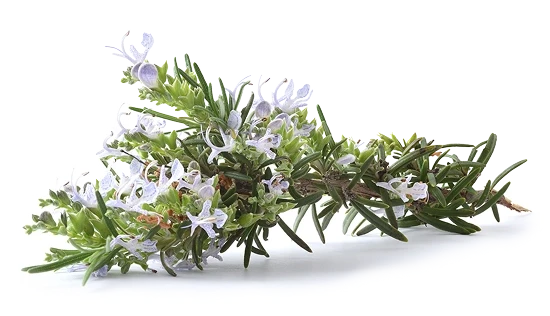
Rosemary
Rosemary is an aromatic Mediterranean herb that has been used in traditional medicine for millennia. Modern science has shown its potential for battling oxidative stress and aiding in bodily detoxification processes.
Related products
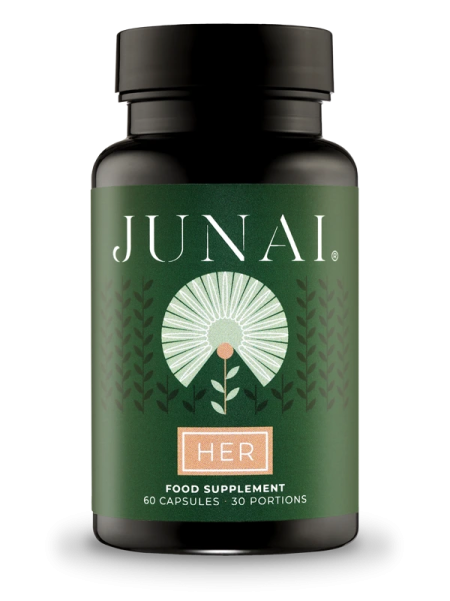
Junai Her
- Iodine from brown algae supports the thyroid.
- 10⁹ cultures of L. rhamnosus that support a healthy natural flora.
- Chlorella, vitamin B6 and black pepper help support the body’s defense against free radicals.
- Vitamin B6 contributes to the regulation of hormonal activity and helps reduce tiredness and fatigue.
Related posts

Biological availability: why nutrient absorption plays such a key role in dietary supplements
Biological availability describes the amount of an ingested substance taken that passes into the bloodstream after digestion and is thus available for the body to use.

Adaptogens Explained: Breaking Down the Buzzword
All about adaptogens, from breaking down the buzzword to an exploration of the HPA, cortisol spikes, and how to bring the body back into balance.
