



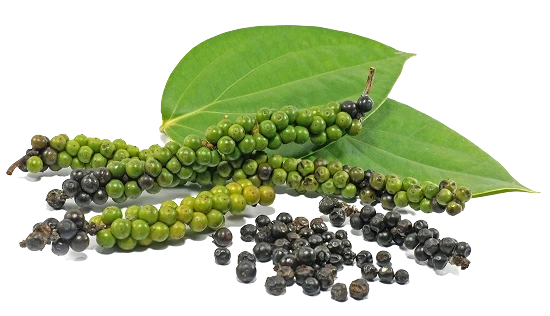
WHAT IS BLACK PEPPER
Black pepper is the dried, unripe fruit of Piper nigrum, a flowering vine native to the Malabar Coast of southwestern India. It is one of the most traded spices in human history, present in every major cuisine on earth, and is the primary reason Portuguese navigators spent a century trying to find a sea route to Asia that didn't involve paying middlemen.
The fruit, called a drupe, is harvested while still green and sun-dried until the outer skin shrivels into the wrinkled black shell most people associate with the word "pepper". White pepper is the same fruit, stripped of its skin. Green pepper is still the same fruit, just not yet dried. They all come from the same plant; the flavor profile shifts, but the underlying chemistry is recognizable across all 3.
The sharp, pungent heat of black pepper comes almost entirely from a single alkaloid: piperine. Found mainly in the fruit's outer layer, piperine is the compound that makes you sneeze when you grind a little too enthusiastically, and it is the same compound that has made black pepper one of the most studied spices in modern nutritional science.
Black pepper is something of an outlier among all the other ingredients in the Junai pantry: it wasn't selected for its flavor or its culinary history, it wasn't included because of its amazing antioxidant profile, and it wasn't picked due to some long-standing historical ties to Ayurveda or some other traditional practice. Black pepper was included in the formulas for all our hero products because piperine's benefits have much less to do with how they affect YOU and entirely to do with how they affect other ingredients in a formulation.
WHY BLACK PEPPER EXISTS FOR YOU
Most spices have an obvious pitch: Turmeric is the golden root, a staple of Asian cooking, with its long-standing, inviolable reputation as the king of anti-inflammation. Ashwagandha, at the root of Ayurvedic medicine, is the adaptogen that helps you handle stress. Moringa has fed entire nations and provided some adaptogen-adjacent benefits for the body on top of its dense nutritional profile. These are ingredients people can picture taking as a supplement for a reason.
Black pepper is harder to explain, although the explanation is also far more interesting.
People have been using it enthusiastically for thousands of years, across cultures with no scientific contact with each other, and across culinary traditions that differ in almost every other way. Southeast Asian kitchens threw it into dishes by the cluster, Roman kitchens ran through it by the amphora, and Medieval Europe built entire global trade routes to procure it. As wonderfully as it elevates the flavors of the dishes to which its added, few people stop to consider what it's been doing inside your body every time you ate it. Because it turns out that piperine is far from just a flavor compound; it is, among other things, a significant modulator of how your digestive system processes and absorbs the other bioactive compounds that arrive alongside it.
Black pepper exists in Junai's formulas because absorption is not a given. A compound on a label and a compound doing its job inside your cells are two different things, and the distance between them is the definition of bioavailability. Piperine shortens that distance and helps you absorb more of the nutrients your body needs. For the other ingredients in the formula, that matters more than anything piperine could claim to do on its own.
WHAT BLACK PEPPER DOES
Since the point of black pepper in Junai's formulas is to serve as an absorption enhancer, the focus of our discussion will center there. Nonetheless, black pepper as a standalone ingredient does have a few other claims to fame in the literature.
Raises the ceiling on what your other ingredients can do
This is the whole point: the most important thing piperine does is make other things work better. Your body doesn't know when certain useful bioactive compounds are about to enter the system and so it applies the same treatment as it would to anything else digestible, tending to break compounds down quickly and clearing them out before they can accumulate in meaningful concentrations. Piperine interrupts this process. It slows the clearance and extends the window of time within which your body absorbs nutrients instead of flushing them, and allows more of what you took to actually reach your bloodstream in a usable form.
For compounds with notoriously poor bioavailability, this difference is not marginal. It is substantial enough to be the difference between a medicinal outcome or benefit and a few more grams of waste matter added to your bowel movement.
Warms digestion and supports GI motility
Before modern science was able to quantify piperine's absorption effects, traditional schools of medicine were using black pepper for something they described in experiential terms: it warms the gut and gets things moving. That observation held up. Piperine indeed stimulates digestive enzyme activity in the pancreas, increases gastric acid secretion, and accelerates the movement of food through the gastrointestinal tract. This is a real and measurable effect, even if the traditional framing for it predated the mechanistic vocabulary that describes why.
Provides antioxidant and neuroprotective support
Piperine has demonstrated meaningful antioxidant activity and shown promising effects on dopamine and serotonin pathways in research models, leading to effects that help prevent or slow the progression of nerve cell damage. This one comes with an honest caveat: piperine's very real antioxidant and neuroprotective effects as described in the literature come at doses orders of magnitude higher than where its benefits on bioabsorption start. Although it's interesting science, it just isn't the reason piperine is included in Junai's formulas. Besides, we offer plenty of other much more effective antioxidants, for instance in our turmeric.
HOW BLACK PEPPER WORKS
How black pepper increases the bioavailability of other ingredients
Piperine acts on bioavailability through 3 distinct and well-characterized mechanisms, and understanding them requires a brief introduction to how your body handles substances it encounters.
The first mechanism involves CYP3A4, a cytochrome P450 enzyme responsible for metabolizing a large proportion of the bioactive compounds your body encounters, including many pharmaceutical drugs and phytochemicals (plant-derived bioactive molecules). CYP3A4 operates in the intestinal wall and liver as part of what is called first-pass metabolism, the process by which a compound is broken down between ingestion and systemic circulation, often dramatically reducing how much of it actually enters the bloodstream. Piperine is a documented inhibitor of CYP3A4. By binding to and temporarily suppressing this enzyme, piperine reduces the rate at which certain compounds are cleared before they can reach circulation.
The second mechanism involves P-glycoprotein (P-gp), a transporter protein located in the epithelial cells lining the small intestine. P-gp functions as an efflux pump: it recognizes compounds that have been absorbed through the intestinal wall and actively pumps them back into the intestinal lumen for excretion. This is your body being cautious. It is also your body discarding things it did not need to discard. Similar to its effects on CYP3A4, piperine inhibits P-gp activity, reducing the amount of absorbed compound that gets pumped back out and allowing more of it to proceed into systemic circulation.
The combined effect of CYP3A4 and P-gp inhibition is a longer residence time for co-administered bioactive compounds in the absorptive zone of the small intestine, higher peak serum concentrations, and a meaningfully extended elimination half-life. The landmark Shoba et al. (1998) study quantified this for curcumin: piperine co-administration increased curcumin bioavailability by 2000% in human volunteers. That number is not a typo: piperine can multiply absorption rates a whopping 20x, which is the reason piperine has become a standard component of bioavailability-focused formulations.
A third, structurally simpler mechanism involves the intestinal brush border, the microscopic, finger-like projections (microvilli) lining the small intestine through which nutrients are absorbed. Piperine has been shown to influence the morphology of the brush border in ways that increase the absorptive surface area available to co-administered compounds, adding a physical dimension to what is otherwise a primarily enzymatic story.
For the other ingredients in Junai's formulas, particularly those with documented bioavailability challenges, what piperine does at the enzyme and transporter level is the difference between a compound that arrives and a compound that actually gets to work.
How black pepper warms digestion and supports GI motility
Piperine stimulates the secretion of digestive enzymes from the pancreas, including lipase, amylase, and protease, the enzymes responsible for breaking down fats, carbohydrates, and proteins respectively. It also promotes gastric acid secretion and has been shown to accelerate gastrointestinal transit time, the speed at which food and its associated compounds move through the digestive tract.
The mechanism behind the digestive stimulation is partly attributed to piperine's interaction with transient receptor potential vanilloid 1 (TRPV1), the same receptor activated by capsaicin in chilli peppers. TRPV1 activation in the gastrointestinal tract triggers a cascade of secretory responses that prime the digestive environment. The warmth associated with black pepper in traditional medicine is, in a very real physiological sense, your TRPV1 receptors doing their job. TRPV1 is also the receptor at the center of the thermogenesis in the fat burner literature. We wrote extensively about thermogenesis and how various supplement substances do and mostly don't increase body temperature to induce lipolysis. It's worth a read: What Are Fat Burners, and (How) Do They Work?
The net effect is a more active digestive environment, one that is better equipped to process and absorb what you have consumed alongside your pepper.
How black pepper provides antioxidant and neuroprotective support
Piperine scavenges reactive oxygen species (ROS) and inhibits lipid peroxidation, the oxidative degradation of lipid membranes that contributes to cellular damage under conditions of oxidative stress. These effects have been demonstrated consistently both in vitro and in animal studies, with the inhibition of hepatic and intestinal aryl hydrocarbon hydroxylase and UDP-glucuronyl transferase contributing to a reduced oxidative burden at the tissue level.
The neuroprotective literature is more preliminary but worth noting. Piperine has been shown in animal models to modulate monoamine oxidase B (MAO-B) activity, the enzyme responsible for breaking down dopamine and other catecholamines, as well as to influence serotonin receptor density in the hippocampus. This basis has led some researchers to explore piperine in the context of cognitive function and mood regulation. The evidence is not at a stage that supports strong clinical claims, but the mechanistic plausibility is real and the research is ongoing.
The caveat from the WHAT IT DOES section is worth repeating: at the doses included in supplements, piperine's neuroprotective effects are secondary to what it does at the absorption level.
RESEARCH ON BLACK PEPPER
As the single most important spice in the history of the world, there is more research on black pepper than there are peppercorns in your grinder. Plenty of it is interesting, but we will focus in this section on its relevance for supplements.
EFSA Claims
EFSA has not issued an authorized health claim for piperine or black pepper extract. The bioavailability-enhancing effects of piperine are well-documented in the scientific literature but fall outside the current EFSA-approved claim framework, which does not yet have a mechanism for approving claims related to the pharmacokinetic modulation of co-administered substances.
There are, however, a wide range of on-hold claims. Some of them are, frankly, unhinged. The claim about :::checks notes::: cleansing reproductive organs through capillary circulation is doing things we cannot explain, though we aren't necessarily opposed to the idea. We just hope the mechanism described in the application was internal and not topical. But the EFSA claim process rewards volume as much as precision, so here we are:
Supports appetite, digestion and absorption of nutrients
Helps to digest toxins
Helps in body weight control
(In small quantities in a polyherbal formula) increases the effectiveness of other herbal ingredients. Helps to keep the airways open
Supports the health of the whole respiratory system
Vitalizes the nervous system
Supports the health of the female reproductive system
Helps to cleanse the reproductive organs by promoting blood circulation through the fine blood vessels and capillaries
Helps to cleanse the liver and support its function by promoting blood circulation through the fine blood vessels and capillaries
Helps to cleanse the skin by promoting blood circulation through the fine blood vessels and capillaries
Has significant antioxidant properties
Helps to maintain the integrity of the body by its antimicrobial and anti-parasitic effects and support for the immune system
Helps to maintain natural digestive functions
International Studies
Key findings in the literature:
Influence of piperine on the pharmacokinetics of curcumin in animals and human volunteers
Shoba G. et al. (1998) demonstrated that 20 mg piperine co-administered with 2 g of curcumin in healthy human volunteers increased curcumin bioavailability by 2000%, with significant increases in serum concentration at 0.25, 0.5, and 1 hour post-administration and a significant reduction in elimination rate.
Piperine, a major constituent of black pepper, inhibits human P-glycoprotein and CYP3A4
Bhardwaj R.K. et al. (2002) demonstrated piperine's inhibitory effect on P-glycoprotein and CYP3A4 specifically, establishing the mechanistic basis for its interaction with co-administered pharmaceutical compounds.
Black pepper and its pungent principle-piperine: a review of diverse physiological effects
Srinivasan K. (2007) reviewed the diverse physiological effects of black pepper and piperine, documenting CYP450 inhibition, UDP-glucuronyl transferase inhibition, brush border morphology effects, digestive enzyme stimulation, and antioxidant activity across multiple experimental models.
Yan et al. (2017) demonstrated that piperine co-administration significantly increased rosmarinic acid bioavailability in a dose-dependent manner via inhibition of glucuronidation in gut and hepatic metabolism enzymes, establishing a mechanistic basis for piperine's relevance to rosemary and lemon balm supplementation specifically.
Black pepper and health claims: a comprehensive treatise
Meghwal M. & Goswami T.K. (2013) provided an updated review of Piper nigrum and piperine's biological activities, including thermogenic, antimicrobial, and neuroprotective effects, alongside the absorption-modulation mechanisms.
As a note, clinical trials have used a wide range of piperine doses, from 5 mg to 20 mg per day in humans, and have found that meaningful bioavailability effects can be observed at the lower end of that range. The threshold for effect is lower than most of the early literature assumed.
HOW TO USE BLACK PEPPER
We're assuming you know how to wield a pepper grinder to season your meal, so we'll focus mostly on how to use black pepper medicinally.
Traditional Use
Black pepper has been a fixture in Ayurvedic and traditional Chinese medicine formulations for centuries, often deliberately combined with other botanicals to improve their efficacy. Trikatu, the classic Ayurvedic blend of black pepper, long pepper, and ginger, is essentially a bioavailability formula that predates the modern concept by about 2 thousand years. Critically, trikatu was not just used as a vehicle for other herbs, but was prescribed as a digestive formula in its own right, valued for its ability to stimulate agni, the Ayurvedic concept of digestive fire, which maps surprisingly well onto what we now know about TRPV1 activation and pancreatic enzyme secretion.
In traditional Chinese medicine, black pepper appears in several classical formulas in the role of what TCM practitioners call a "guide herb", an ingredient included specifically to direct other compounds toward particular organ systems. The vocabulary is eerily similar to how we describe pepper today, and the intuition is precisely the same.
Perhaps the most quietly remarkable example comes from near eastern and South Asian cooking, where turmeric has been combined with black pepper and healthy fats in recipes for centuries, across cultures with no scientific contact with each other. Nobody knew about CYP3A4 and nobody had heard of P-glycoprotein. They just knew the combination worked, so they kept making it. Science eventually caught up and confirmed what the kitchen had been serving all along.
Modern Use
In the context of dietary supplements, black pepper is used exclusively in its extracted, standardized form. The whole spice, of course, has abundant quantities of piperine, but it's nearly impossible to gauge exactly how much you're getting just by grinding alone. There's also the question of how much piperine actually survives the cooking process intact, another variable that is nearly impossible for the home cook to control for. Standardized extracts avoid this uncertainty and ensure that piperine arrives in the intestines ready to do its job.
Standardized extract at ≥95% piperine is the relevant form. At this concentration, very small amounts of extract deliver very precise amounts of active compound. The 50-60:1 plant-to-extract ratio means that a few milligrams of extract represent a significant concentration of what the whole fruit contains.
Dosage in supplement formulas typically ranges from 2.5 to 10 mg of piperine per day. Clinical bioavailability studies have used up to 20 mg, but the research suggests that meaningful effects on absorption are present well below the higher end of that range. Small amounts, it turns out, go a long way. That the effect scales non-linearly with dose is one of piperine's more interesting pharmacological properties.
Timing matters in one specific sense: piperine must be co-administered with the compounds it is meant to support. Taking it separately, at a different time, eliminates the absorption window it creates. In a combined formula, this is handled automatically.
HOW AND WHY JUNAI USES BLACK PEPPER
Hero Products
In its 3 hero products, Junai uses a black pepper fruit extract (Piper nigrum L.) standardized to ≥95% piperine, with a plant-to-extract ratio of 50-60:1. The extraction solvent is ethyl acetate, chosen for its selectivity in isolating the alkaloid content from the fruit matrix. Maltodextrin serves as a carrier to stabilize the extract and ensure consistent dosing across batches.
The standardization to ≥95% piperine is significant: it means the extract is almost entirely the active molecule, with minimal botanical background noise, and that each milligram of extract delivers a predictable and consistent amount of piperine. At Junai's dosing levels, this precision matters more than it would at higher doses where variability would be proportionally less consequential.
Black pepper extract is present in all 3 of Junai's hero formulas: HIM, HER, and SLIM.
In HIM, piperine works alongside red maca, L-arginine, L-citrulline, zinc, and vitamin B6. Piperine's bioavailability story is most relevant for zinc in particular, which has documented absorption variability depending on dietary context and co-factors. The amino acids are well absorbed in general, as is vitamin B6, just leaving red maca to address: sadly, piperine is not known as a potentiator of red maca's macamides, but, as a lipophilic compound, fat does increase maca's bioavailability.
In HER, piperine is paired with lemon balm, chlorella, rosemary, bladderwrack, vitamin B6, and Lactobacillus rhamnosus. The piperine case in HER is anchored in the botanical fraction. Rosmarinic acid, the primary bioactive shared by both rosemary and lemon balm, is a documented piperine target: co-administration has been shown to significantly increase rosmarinic acid bioavailability via inhibition of its glucuronidation in the gut and liver. Vitamin B6 absorption is also enhanced by piperine, a finding that goes back to the foundational piperine research literature. Chlorella is the one ingredient in HER where piperine's contribution is limited, since chlorella's bioavailability is primarily a matter of physical and not chemical limitations. Across the rest of the formula, piperine earns its place.
In SLIM, piperine travels with berberine, white mulberry (Reducose), zinc, and chromium. Berberine has well-documented bioavailability challenges and the case for piperine co-administration alongside berberine is among the more mechanistically coherent pairings in the supplement literature.
Single Ingredients
Here is the piperine story for Junai's standalone ingredients:
Turmeric: This is the peas and carrots, Dick and Jane, Batman and Robin, ketchup and fries, the most iconic dynamic duo of supplement pairings. Piperine increases curcumin's bioavailability by 2000%, a truly staggering number in supplement science. If anything on earth needs to be taken with pepper, it's turmeric.
Ashwagandha: This is an interesting one. Its active compounds, the withanolides, are steroidal lactones, lipophilic, and genuinely poorly absorbed from raw powder. There's a plausible mechanistic case for piperine helping here via CYP3A4 inhibition, and a handful of studies have looked at this combination specifically.
Reishi: The bioactives here are primarily beta-glucans (water soluble, reasonably bioavailable on their own) and triterpenes (lipophilic, poorly absorbed). Piperine's case is decent for the triterpene content via the CYP3A4/P-gp route.
Moringa: The bioactives are isothiocyanates and flavonoids. There's some research suggesting piperine enhances isothiocyanate absorption, but the literature is thin. It can't hurt to take moringa alongside pepper, but the outcome won't be drastically different.
Note that our standalone products do not come with piperine already added, so if you have any of them, take them alongside one of the hero products, which all do contain piperine, to boost absorption.
WHO NEEDS BLACK PEPPER
Anyone taking a supplement formula that includes compounds with documented bioavailability constraints, particularly berberine and curcumin, and certain fat-soluble vitamins
Anyone who wants confidence that what the effects promised on a supplement label have a reasonable chance of reaching the right spot in the body
Anyone taking turmeric in any form, as here piperine's cosign isn't a recommendation but a precondition for meaningful effect
Anyone interested in how formulation quality affects supplement outcomes, for whom the bioavailability blog is worth the read
Anyone who has been eating black pepper their entire life without knowing it was doing something useful but unsung, which is most people
WHAT TO EXPECT WITH BLACK PEPPER
"Gesundheit", mostly.
Jokes aside, don't expect much actually tangible with black pepper. There's no timeline to describe, no gradual changes to your body's inflammatory responses like with curcumin, no approach towards a cortisol baseline like with adaptogens, and no immediate and pronounced effect on dietary glucose like with berberine and white mulberry. Unless you accidentally get piperine on your lips, you probably won't notice it at all.
What you can expect is that most compounds you take alongside black pepper will have a far greater chance of doing their job. The distance between a compound's demonstrated in vitro mechanisms and its actual effects within the body is usually a question of bioavailability. Piperine shortens that distance.
CONTRAINDICATIONS
At the doses used in supplement formulas, black pepper extract is well tolerated in healthy adults and has a strong safety record across both traditional use and modern clinical research.
There are nonetheless a few interactions worth knowing about.
CYP3A4-metabolized medications
Because piperine inhibits CYP3A4, it can increase the serum concentration of drugs that are metabolized through this pathway. Phenytoin (an anticonvulsant), propranolol (a beta-blocker), and theophylline (used in respiratory conditions) have all been documented in the literature. The broader category includes a significant proportion of pharmaceutical drugs. If you are on any prescription medication, particularly one where dosing precision matters, it is worth checking with a healthcare provider whether CYP3A4 inhibition is a relevant concern.
P-glycoprotein substrates
The same logic applies to drugs that are P-gp substrates. Piperine's inhibition of the efflux pump can increase absorption of co-administered compounds in ways that are not always predictable at the individual level.
Pregnancy and breastfeeding
Safety data for piperine supplementation during pregnancy and lactation is insufficient. Culinary use of black pepper presents no documented risk, but supplemental concentrations are a different matter. Avoid supplemental piperine during pregnancy and breastfeeding unless advised otherwise by a healthcare provider.
Gastrointestinal sensitivity
In some individuals, piperine's stimulation of gastric acid secretion can aggravate pre-existing gastrointestinal conditions, including acid reflux and peptic ulcer disease. This is dose-dependent and unlikely to be significant at low supplemental doses, but worth noting for those with a sensitive digestive history.
If unusual symptoms arise after beginning use, discontinue and consult a healthcare professional.
QUICK RECAP OF BLACK PEPPER
Black pepper (Piper nigrum L.) is one of the most widely used spices in history, cultivated originally on the Malabar Coast of India and traded globally for millennia
Its primary bioactive compound is piperine, an alkaloid responsible for the spice's characteristic pungency and, more relevantly, its significant effects on nutrient absorption
Piperine inhibits CYP3A4, a cytochrome P450 enzyme responsible for first-pass metabolism of many bioactive compounds in the intestinal wall and liver
Piperine also inhibits P-glycoprotein (P-gp), an efflux transporter that pumps absorbed compounds back out of intestinal epithelial cells before they reach systemic circulation
Together, these two mechanisms significantly extend the absorption window and increase peak serum concentrations of co-administered compounds
The landmark Shoba et al. (1998) study demonstrated a 2000% increase in curcumin bioavailability in humans with piperine co-administration
Piperine additionally stimulates pancreatic digestive enzyme secretion and gastric acid production via TRPV1 receptor activation, improving overall digestive efficiency
Antioxidant activity, inhibition of lipid peroxidation, and preliminary neuroprotective effects in animal models round out a research profile that is deeper than its supporting-ingredient status might suggest
In Junai formulas, black pepper is used as a fruit extract standardized to ≥95% piperine, with a 50-60:1 plant-to-extract ratio and ethyl acetate extraction
Present in HIM, HER, and SLIM, where it supports the absorption of the primary bioactive compounds in each formula
Clinical evidence supports meaningful bioavailability effects at modest piperine doses; the threshold for effect is lower than early research assumed
CYP3A4 inhibition means drug interactions are possible for those on relevant medications; check with a healthcare provider if in doubt
No standalone black pepper Junai product exists. Black pepper extract is a formulation ingredient in all three hero products
Related ingredients

Turmeric
Turmeric is most often seen as a simple spice, dye, or seasoning. Hiding within its vivid color is a range of bioactive compounds that could revolutionize your recovery and regeneration.
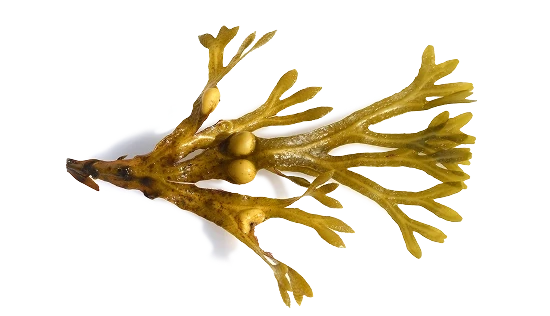
Bladderwrack
Bldderwrack is a brown marine macroalga known for its numerous health benefits. Phytochemically rich, it helps regulate thyroid hormones, boosts the immune system, and provides a rich antioxidant profile.
Related products
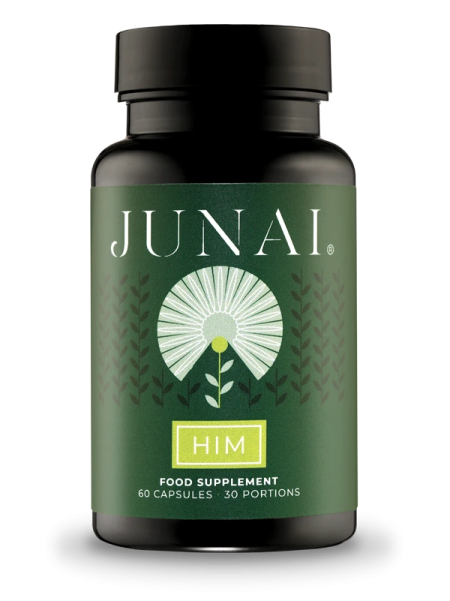
Junai Him
- Support faster body regeneration with zinc, which is essential for cell division, and vitamin B6, which helps in the formation of red blood cells.
- Piperine contributes to increased blood flow, and with that, to a more capable body during physical exertion.
- It increases libido and supports optimal well-being, extended endurance, and vitality through red maca.
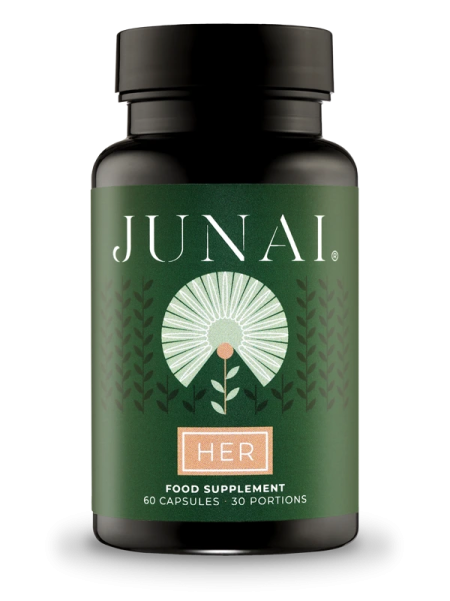
Junai Her
- Iodine from brown algae supports the thyroid.
- 10⁹ cultures of L. rhamnosus that support a healthy natural flora.
- Chlorella, vitamin B6 and black pepper help support the body’s defense against free radicals.
- Vitamin B6 contributes to the regulation of hormonal activity and helps reduce tiredness and fatigue.
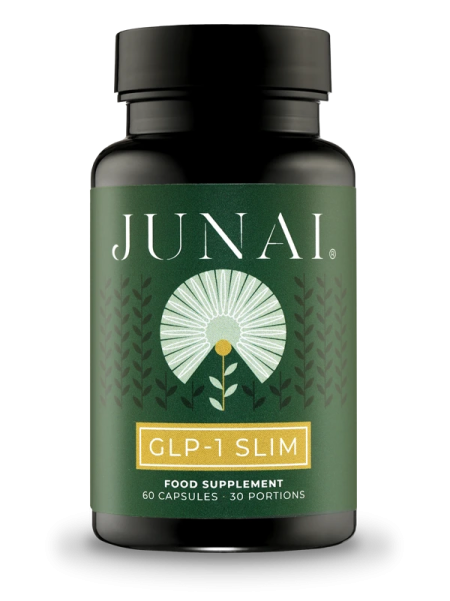
Junai GLP-1 Slim
- Helps balance blood sugar levels with chromium, which supports stable energy reserves.
- Piperine helps with body weight management.
- Contributes to carbohydrate metabolism with white mulberry and zinc.
- Zinc contributes to normal macronutrient metabolism.
Related posts

Piperine: What Makes It So Important in Dietary Supplements
Piperine, a bioactive compound found in many dietary supplements, plays a key role in the absorption of other compounds.

Biological availability: why nutrient absorption plays such a key role in dietary supplements
Biological availability describes the amount of an ingested substance taken that passes into the bloodstream after digestion and is thus available for the body to use.
Turmeric: The Golden Ritual of Balance and Recovery
All about Turmeric's Benefits: A Potent Antioxidant and Anti-Inflammatory for Recovery & Daily Health
