





Bladderwrack holding tightly to the rocky coast
Despite having a name that sooner reminds you of a witch’s cauldron or a troublesome UTI rather than a scenic shoreline, bladderwrack is a vital part of tidal ecosystems and the global climate. It is also a nutrient-dense ingredient that has cemented its historic place as an integral part of human health, even before we had any idea how and why. This blog piggybacks on March 1st as World Seagrass Day, arguing that brown algae like bladderwrack should receive just as much – if not even more – love and attention as seagrasses.
World Seagrass Day
Some of the UN’s formally recognized international days get a lot of publicity by nature. International Mother Language Day, for instance, tends to gather robust responses and publicity, with polyglots worldwide paying homage to their native tongue, and International Sustainable Transport Day sees schools taking their kids for walks, bike rides, or bus trips. Other landmarks, though less pleasant sounding, are nonetheless crucial, such as the International Day for the Elimination of Violence against Women or International Day of Zero Tolerance to Female Genital Mutilation, whose importance is clear to anyone unfortunate enough to know anything about how the world works. Alongside such powerfully poignant topics, one could be excused for wondering just why, then, do seagrasses get their own day? Let’s quote the people who voted for the designation: [1]
In short, seagrasses get their own day because they provide marine life with an ecosystem, they help purify our seas, help protect our shores, and they can pull tons of carbon out of the water and ultimately out of the atmosphere. They are an essential part of the ocean’s self-regulatory mechanism, working tirelessly to keep things in balance. And yeah, they’re doing that even if they give you the heebie jeebies as their blades slip between your toes when you’re out for a swim and kick too low. Such valiant but unsung heroes get a pass for grossing us out.
Bladderwrack underwater

Green and Blue Carbon Systems
Modern conversations abound with discussions of carbon, carbon footprints, carbon sinks, carbon offset credits, and the like. The planet has two primary systems for reducing or regulating the presence of atmospheric carbon: green carbon and blue carbon. While green carbon refers to all the carbon stored in terrestrial ecosystems, in the form of trunks, roots, leaves, branches, and the soil they grow in, blue carbon labels the similar processes occurring underwater. So far, so bland. What's shocking is how much better aquatic ecosystems are at sequestering carbon.
Marine vegetation can grow at impressive speeds, with some algae species topping the pack at 50 centimeters a day in peak condition and some kelps clocking in at a head-spinning 2 meters a day. This amazing growth rate allows blue systems to capture carbon orders of magnitude faster than comparable surface areas in terrestrial ecosystems. As if this weren’t impressive enough as is, they are further capable of locking that carbon in for far longer: marine systems are not susceptible to the wildfires that re-release carbon back into the atmosphere, as they store carbon in waterlogged, anaerobic soils. As a result, the carbon they sequester ends up locked away for up to thousands of years, a lifespan that carbon sinks in aerobic environments just can’t match. And just as these systems quietly regulate planetary chemistry, certain marine plants have long regulated human chemistry, too, which we’ll read more about below.
Bladderwrack the Plant
Bladderwrack, the most commercially useful of the brown algae, has adapted to survive its habitat’s endless rhythm of ebb and flow, of high and low tide, of being exposed to the sun one day and completely submerged the next. One of its evolutionary tricks is its abundant air sacks, the feature by which this seaweed gets the “bladder” part of its name. Their function is to hold the fronds upright underwater, ensuring the organism gets as much sunlight as possible, instead of just collapsing into a pile on the seafloor. The second part of its name, “wrack”, is related to the second half of “shipwreck”, as detached specimens often wash ashore. And, curious animals as we are, if it washes ashore, chances are some human walking along the coast will eventually try and find some use for it.
Bladderwrack frond

Bladderwrack, Human Health, and the Discovery of Iodine
What do bladderwrack and dental caries have in common? Both led to some of the most successful and easiest-to-implement global government health campaigns in human history. Around the turn of the 1900s, an American dentist in Colorado Springs noticed that the community there had unusually strong teeth that resisted decay. Too curious to let the issue alone, within a few years he had amassed enough evidence to prove that local populations with naturally high levels of fluoride in their water in turn naturally developed stronger, caries-resistant teeth. The communities with fluoridated water had up to 60% fewer instances of dental cavities among children, a number so significant that it got the government’s attention. Within a few decades, fluoridated water had become the national standard in America, with nearly 70% of its citizens now getting their fluoride from the tap.
A similar thing happened with bladderwrack, though this time it was fire and not water that proved the presence of the game-changing element. As Napoleon’s forces marched across Europe in search of continental clout, their demand for gunpowder was insatiable. Having exhausted wood ash as the source of one of its primary ingredients, namely potassium nitrate or saltpeter, saltpeter factories turned to burning the seaweed growing in abundance on France’s Atlantic coast. French chemist Bernard Courtois was trying to clean one of these seaweed incinerators and he turned to sulfuric acid to do the trick. Little did he know that bladderwrack is teeming with iodide, which the sulfuric acid oxidized into iodine. All of a sudden, his chamber was filled with purple vapors that eventually crystallized onto surfaces. He had serendipitously discovered elemental iodine, which he named after the Greek word for purple.
Elemental iodine

Word traveled fast in scientific circles and news of the discovery soon reached the ears of Swiss doctor Jean Coindet, who had seen success in using sea sponges to treat goiter, though he had no idea why or what the sea sponges were providing the body to counteract the condition. He also knew, crucially, that people living near the coast rarely experienced goiter, but it was a common condition far inland. When he heard of Courtois’s isolation of iodine, he surmised that perhaps it was the element itself that was curing goiter and that coastal populations consumed enough of it through their daily diet, which indeed often included bladderwrack and other brown algae as a proper ingredient. Later research showed that marine iodine also made it into coastal foodchains even without consuming bladderwrack proper.
Still unaware of the exact mechanism, Coindet went on to treat goiter patients with isolated iodine. It was nearly a century later, in Germany in 1896, that chemist Eugene Baumann proved iodine concentrated in the thyroid; the enlarged neck typical of goiter was basically the thyroid’s desperate attempt to find enough iodine to produce its hormones, so crucial to the body’s regulation and metabolism. 150 years of understanding iodine and thyroid health later, and goiter is almost unheard of, as today iodized salt is the standard in most countries worldwide. Just like with fluoride above, the simple addition of iodine to table salt more or less cured the whole world of a relatively common problem.
What happens with insufficient iodine?

A Mineral-Rich Foundation
It makes plenty of sense that coastal populations figured out that bladderwrack was a useful ingredient. We realize that de gustibus non disputandum est, so we won’t be trying to convince the skeptical land-loving reader about the taste and texture of eating seaweed. Anyone who has tried sushi has obviously sampled a taste of seaweed, but we can understand that Westerners are not lining up to sink their forks into a bladderwrack salad. If you’re on the fence, though, a look at its nutrition profile might tip you in the right direction.
Without overloading you on some of the finer points of organic chemistry, most of bladderwrack’s weight (excluding water) is made up of alginic acids, primarily calcium alginate. This natural polymer has a structure that makes it efficient at binding other minerals from the water as bladderwrack grows. This packs it with the most essential minerals, namely iodine (as discussed above), calcium, magnesium, potassium, iron, sodium, zinc, silicon, and sulfur, along with vitamins A, C, and B complex. It is further rich in soluble fiber (the calcium alginate from the previous paragraph), as well as key antioxidants. In addition to its dietary benefits, preliminary lab studies have also shown that bladderwrack is promising at stimulating the production of dermal collagen, and other research indicates it has powerful anti-inflammatory properties. All of this adds up to a plant with an impressive and expansive nutrient profile, and a wide range of potential health applications.
Just a note: bladderwrack may be contraindicated if you are taking other medications, as it can interfere with blood thinners, antiarrhythmic medications (e.g., amiodarone), and thyroid medications, as well as St. John’s Wort, ginkgo biloba, and valerian root. Also keep in mind that bladderwrack is such a good source of iodine that people who experience iodine toxicity should limit their intake.
Drying out

Why We Love This Story
Stories about ingredients like bladderwrack are more than just historical oddities. They reveal the exact pattern that gave birth to Junai in the first place: the vivid, unmistakable confluence of tradition and science. Just as bladderwrack makes its home where the sea and land meet, it is exactly at that confluence that Junai chooses to make its stand: traditions are invaluable and science is fantastic, but when science can come in and explain the mechanisms powering local customs, we know we’ve found an ingredient that feels like home. And when that ingredient does so much for our planet when it's not working wonders for our bodies, it's not just home but a home run.
Though certainly intellectually curious in his own way, Coindet didn’t care practically about the mechanism behind the sea sponges used to treat goiter. He just cared that they worked. Even once he found out it was the iodine doing the job, he still carried on unperturbed without understanding how the thyroid utilizes it. This resonates deeply with the very core of the Junai philosophy, namely respecting cultures that have been working with local ingredients for centuries. If a significant number of cultures make the same claims or use the same ingredient towards similar ends, it should be enough to spark scientific curiosity. And scientific curiosity should lead to rigorous exploration of active ingredients, applications, precautions, and revelations.
And Coindet’s story also reminds us that science is never static. An ingredient can serve a clear purpose for generations, long before science fully understands its mechanisms. When research eventually confirms what local traditions had been practicing for centuries, it validates them and turns them from remedy to medicine. The shoreline and the laboratory are not so different, after all. They are simply two vantage points on the same truth.
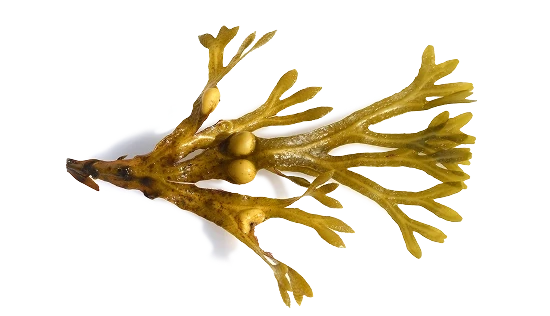
Bladderwrack
Bladderwrack is a brown seaweed teeming with antioxidants like fucoidans and polyphenols, renowned for their potential anti-inflammatory effects, iodine, and other compounds that balance hormones.
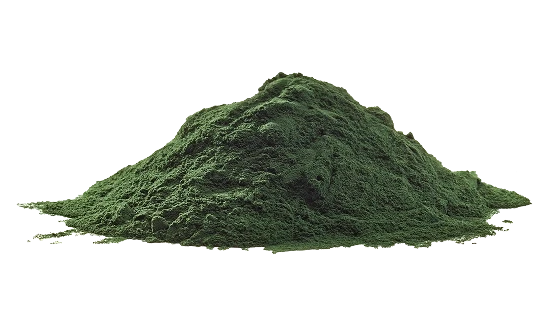
Chlorella
Chlorella is a single-celled green alga, usually found in freshwater, that has long been treasured for its impressively wide-ranging nutritional profile and effects on health and well-being.
Related products
Related posts

Why chlorella is so important for boosting the female immune system
Have you been feeling unusually tired lately? Perhaps you’ve been falling ill more frequently lately? Junai Her is chock full of chlorella to boost your immune system.

Micronutrients: Why Your Body Loves Those Essential Vitamins and Minerals
Micronutrients fuel energy, immunity, and your overall feel-good flow.
