




WHAT IS TURMERIC?
Turmeric (Curcuma longa) is a deep-orange root from the ginger family. Native to India and cultivated all over southeast Asia, the turmeric plant thrives in warm, humid climates, where monsoons help shape its growth cycle. It’s a perennial that sends up broad green leaves in alternating rows, with flowers that range from white to yellow.
Though all of it is edible, the part of turmeric we traditionally consume is its rhizome, similar to ginger or galangal. Rhizomes are underground stems, which slowly expand either completely or partially underground, while sending out both roots and shoots. Slice open a turmeric rhizome and it looks like sunlight got trapped underground and fermented into pigment.
Over the course of 8 to 10 months, this subterranean jewel develops its characteristic deep golden-orange color, the natural hue of the plant's signature compound curcumin, a flavonoid polyphenol with intense antioxidant and anti-inflammatory properties. It is not a fast-growing crop, just as the support curcumin provides the body itself is gradual and methodic. And yet, the cumulative effect of long-term turmeric use helps bring your body back to baseline, earning turmeric a place in the hall of adaptogens.
WHY TURMERIC EXISTS FOR YOU
Your body is constantly responding to stress. Work deadlines. Social comparison. The low-grade tension of living in late-stage capitalism, of watching the world order collapse in real time. And then the physical stress you choose on top of it all, pushing hard during training just to clear your head for an hour. It feels utterly unfair that recovery still feels slow, that your body struggles to regenerate quickly enough for another session. Why are you in pain when you’re doing something that’s supposed to help? Because stress doesn’t cancel itself out. It accumulates, fed by all its various forms.
Turmeric exists as a safe, familiar regulator. Its signature compound, curcumin, is a powerful antioxidant and anti-inflammatory, with downstream effects that support recovery, regeneration, and overall balance.
Turmeric is for you if you:
Want a natural way to address local inflammation that’s safe and healthy for long-term use
Need support for systemic inflammation, often experienced as fatigue, persistent discomfort, or digestive issues
Are curious about the effects of adaptogens and want to start with something well-known and well-researched
WHAT TURMERIC DOES
As with many adaptogens or adaptogen-adjacent ingredients, most of turmeric's effects arise from its rich antioxidant profile. When taken consistently in bioavailable forms, turmeric's effects are felt at the systemic level: expect less inflammation, faster and easier recovery after workouts, and pleasant benefits on your metabolism and digestive health.
Inflammation regulation
Inflammation is a poorly understood concept. Most people just think of it as the visual and temporary swelling after a sprained ankle or a hard bump. But inflammation is much broader than that. It's the body's built-in response to stress, illness, or injury. Under normal circumstances, it's a welcome phenomenon that both heals and protects.
Inflammation becomes problematic when the body doesn't switch it off, even after the illness or injury has been healed. Under constant stress and with certain illnesses, inflammation can remain stubbornly active in the background. Over time, this low-grade, systemic inflammation can affect everything from joint comfort to energy levels and metabolic health.
Turmeric is there on the spice rack, waiting to help you. Its active compound, curcumin, helps regulate inflammatory signaling, giving the body the conditions it needs to rein those background processes under control. The result isn't flashy or dramatic, it just feels like a gradual return to a state that feels more like you.
Oxidative stress and recovery
That familiar feeling of post-workout soreness (or DOMS for delayed onset muscle soreness) isn’t just about muscles being “worked”. And it definitely isn't caused by lactic acid buildup, a myth that refuses to retire no matter how many times its been debunked. Instead, it's the result of two overlapping processes:
Localized inflammation from physical stress
Oxidative stress within muscle tissue
When you train hard, you’re creating controlled damage. Tiny tears form in muscle fibers, accompanied by a surge in what are called reactive oxygen species (explained in the following section). The body needs to work to repair those tears, which, together with the presence of ROS in the muscles, is felt as burning pain. Curcumin steps up on both fronts, lending its power to engineer a body more capable of regeneration.
You shouldn’t expect a spoonful of turmeric to prevent DOMS and erase your soreness overnight. What you get instead is something far more useful: a body that handles physical stress better, recovers more efficiently, and shows up ready for more.
Metabolic and digestive support
Metabolism and digestion form a sprawling network of processes involving how you convert food to energy, how you manage blood sugar, how your liver filters and processes what you eat, and how efficiently your gut moves things along. When any part of that network is laboring through the added pressures of chronic inflammation, the whole system suffers as a result.
Turmeric offers a natural way of getting your metabolism back on track. Consistent curcumin intake has been shown to improve how the body responds to sugars and their lipid conversion, while providing meaningful support for the liver – the organ that, more than almost any other, determines how cleanly your metabolic machinery runs. For digestion specifically, turmeric stimulates bile production, which is less glamorous than it sounds but genuinely important for breaking down dietary fats and keeping things moving.
None of this is dramatic. You won't actually feel your cholesterol improving from day to day. But over months of consistent use, people notice that their digestion feels easier, their energy is more stable, and their body feels like it's running a little cleaner and lighter than before.
HOW TURMERIC WORKS
This is the part most supplement brands skip – and honestly, we get why. The science is dense. But you're here, so let's get into it. We'll keep it readable, but the science stays intact.
Inflammation regulation
Curcumin's primary mechanism in regulating inflammation is its ability to inhibit NF-κB – a transcription factor (a protein that controls the rate at which DNA is transcribed to messenger RNA) that functions as a master regulator of inflammatory gene expression. Under normal conditions, NF-κB remains inactive in the cytoplasm, bound to an inhibitory protein called IκB. When the body detects a threat, whether infection, injury, or metabolic stress, IκB is phosphorylated (a process by which an organic compound gains a phosphate group that acts like an activation or deactivation switch) and degraded, freeing NF-κB to enter the nucleus and switch on genes responsible for producing pro-inflammatory cytokines like TNF-α, IL-1β, and IL-6. This is all great, so far, just the system working as intended, deploying cytokines promptly, resolving the threat, and then receding. Things become problematic when that system doesn't switch off.
Curcumin lends its services at several points in this response. First, it inhibits IκB kinase (IKK), the enzyme responsible for triggering IκB degradation, effectively repressing cellular capacity for producing cytokines. It also directly suppresses NF-κB's ability to bind to DNA even when it does make it to the nucleus. The result is a meaningful reduction in chronic inflammatory signaling – actually preventing the body from overreacting – without blocking the acute response the body needs to actually heal.
Further to its impressive capacity as an anti-inflammatory, curcumin inhibits COX-2 and LOX, two enzymes involved in the synthesis of prostaglandins and leukotrienes – the signaling molecules responsible for the heat, swelling, and pain associated with acute inflammation. This puts curcumin's effects in the same general territory as, e.g. ibuprofen, operating through a related but distinct mechanism. Most importantly, curcumin accomplishes a similar thing without the gastrointestinal side effects (especially buildup in the kidneys) associated with long-term NSAID (nonsteroidal anti-inflammatory drug) use.
What this means in practice is that the body regains control over its response to inflammation: inflammation doesn't disappear, your body just gets a lot better at reacting to it.
Oxidative stress and recovery
The oxidative stress that accumulates during intense physical activity is driven largely by reactive oxygen species (ROS), unstable oxygen-containing molecules produced as a byproduct of the elevated metabolic activity that accompanies hard training. ROS are not inherently villainous; in fact, at controlled levels, they serve as necessary signaling molecules that trigger adaptive responses. The problem is one of volume: when ROS build up faster than the body can neutralize them, the resulting oxidative burden damages muscle cell membranes, proteins, and even DNA itself, compounding the micro-trauma of training rather than allowing it to resolve comfortably.
Curcumin addresses this through two complementary mechanisms. It acts as a direct ROS scavenger, neutralizing free radicals (the most damaging type of ROS, acting immediately to damage DNA, lipids, and proteins) before they can cause cellular damage. More importantly, curcumin activates the Nrf2 pathway (the same master regulator of cellular defense discussed in our page on moringa), which upregulates the body's own antioxidant enzymes, including superoxide dismutase (SOD) and glutathione peroxidase. Rather than simply adding antioxidant capacity from the outside, curcumin essentially instructs the body to produce more of its own.
On the inflammation side of recovery, curcumin's inhibition of NF-κB and COX-2 – described in detail in the section immediately above – directly reduces the inflammatory signaling that drives post-exercise soreness and tissue swelling. The two mechanisms, antioxidant and anti-inflammatory, work in parallel, addressing both sources of the recovery burden simultaneously.
What this means in practice is a body that processes the damage of training more efficiently by directing – and not exaggerating – its response.
Metabolic and digestive support
Curcumin's influence on your digestion and metabolism operates primarily through two interconnected pathways: insulin signaling, the body's reaction to changes in blood sugar or glucose levels, and the AMPK pathway, the body's primary cellular energy sensor.
As regards glucose, curcumin has been shown to improve insulin sensitivity by upregulating the expression of GLUT4 transporters. These are proteins responsible for moving glucose from the bloodstream into muscle and fat cells in response to increased insulin. This increased activity allows cells to use the energy in glucose more efficiently, with the result of stabilized energy throughout the day and easier weight management.
Curcumin also suppresses hepatic gluconeogenesis, the liver's production of glucose from non-carbohydrate sources, through mechanisms that overlap with those of its isothiocyanate cousins in moringa. The combined effect is a more stable blood sugar response and reduced metabolic strain on the pancreas over time.
Through AMPK (5' adenosine monophosphate-activated protein kinase) activation, curcumin promotes fatty acid oxidation – the process by which the body breaks down stored fat for energy – while simultaneously inhibiting lipogenesis, the synthesis of new fat. As such, curcumin plays a strong role in lipid metabolism, with beneficial downstream effects on cholesterol profiles and cardiovascular health.
Lastly, for digestion specifically, curcumin stimulates bile production in the gallbladder and increases bile flow through the bile ducts – a process called choleresis. Bile is essential for the emulsification and absorption of dietary fats, so improved bile flow means better fat digestion and, conveniently, better curcumin absorption itself, given its fat-soluble nature.
The metabolic and digestive effects of curcumin are less stark than its anti-inflammatory credentials, and slower to make themselves felt. But they operate on the same underlying logic: a system running with less inflammatory interference functions more cleanly across the board.
RESEARCH ON TURMERIC
EFSA claims
There are currently a laughably large amount of on-hold claims in EFSA's database.
Helps to keep the skin healthy
Helps to maintain the efficacy of the immune system
Helps to maintain resistance to allergies
Has significant antioxidant properties
Supports production and quality of blood
Supports heart function
Supports blood circulation
Helps maintain the health of the lungs and upper respiratory tract
Helps maintain the health of the liver
Supports the function of the nervous system
Contributes to the stimulation of the production of the digestive body fluids
Supports the liver and biliary function
Helps to manage anti-inflammatory responses in the body/helps to reduce inflammation in joints and muscles
Used to stimulate the appetite and promote appetite in cases of loss of appetite
Helps to protect joints
Helps to maintain joints flexibility
Contributes to joints health
Prevents the accumulation of fats and facilitates their destockage by the liver
Helps to manage anti-inflammatory responses in the body/helps to reduce inflammation in joints and muscles
The number of claims submitted to EFSA is an indication of the tremendous amount of research and literature published on the subject. Though not all of the claims above (looking at you, "health of the lungs and upper respiratory tract"...) are backed by rigorous research, the majority of them are.
International studies
Clinical trials across India, Europe, and the US consistently highlight:
Reduced CRP (C-reactive protein)
Improved joint mobility scores
Better glycemic control markers
Reduced muscle soreness post-exercise
The pattern is clear: turmeric works best when used consistently, not sporadically.
HOW TO USE TURMERIC
Consistently, with fat, and with a crack of black pepper. Turmeric's active compound, curcumin, is fat-soluble and is poorly absorbed on its own. Furthermore, piperine, the active ingredient in black pepper, has an astounding effect on how the epithelium, or intestinal wall, literally opens itself up to extract more nutrients from bioactive components. With the addition of fat and black pepper, curcumin's absorption increases dramatically. Put even more starkly: without them, you're basically just going to be adding yellow powder to your poop and passing it straight through without absorbing nearly anything. This is not a footnote – it is the single most important thing to know about taking turmeric.
If taking our Golden Ritual turmeric powder, use 1 teaspoon once or twice daily, always as or alongside a meal that contains healthy fats and with a crack of black pepper.
Traditional usage
Turmeric has been used in Ayurvedic and traditional Chinese medicine for over 4,000 years, appearing in texts that predate any understanding of curcumin, bioavailability, or NF-κB by roughly four millennia. It was used to support digestion, reduce inflammation, and promote recovery – nearly identical to science's modern understanding of the ingredient – and it was almost always prepared in ways that, entirely without an inkling of understanding solubility, maximized its absorption.
Golden milk, the traditional Indian preparation of turmeric simmered in whole milk or ghee with black pepper and warming spices, is a truly elegant example of empirical nutritional wisdom in the culinary canon. The fat in the milk or ghee and the piperine in the pepper are both present, both doing exactly what modern science has proven them to do. The Silk Road moved turmeric across continents, and kitchen wisdom traveled with it.
Modern usage
The traditional uses of turmeric have held up remarkably well under scientific scrutiny. Today, turmeric's signature molecule curcumin is one of the most widely studied and most highly touted anti-inflammatory compounds in nutritional science. It is used across a broad range of contexts, from the average Joanne's daily anti-inflammatory support to targeted recovery protocols for athletes.
Its effects are gradual and regulatory rather than immediate, and consistency matters far more than timing.
Dosage and forms
Turmeric is available in several forms, each with its own characteristics of convenience and bioavailability.
Whole rhizome powder, like the organic formulation we offer, retains the full spectrum of the plant's compounds. It is the closest to whole-food use and the most versatile form, but it must be combined with fat and pepper to reach meaningful absorption levels. Capsules and extracts are more convenient and often standardized for curcumin content, but the same bioavailability principles apply unless the formulation explicitly includes piperine or a lipid delivery system.
A standard daily dose of curcumin in research settings typically falls between 500 and 1,000 mg. As a rough guide, one teaspoon of turmeric powder contains approximately 200 mg of curcumin, which means meaningful daily intake requires either consistent culinary use across multiple meals or supplementation.
As with all adaptogens, start low and increase gradually based on how your body reacts and responds.
As an edible ingredient
Turmeric's culinary history is as rich as its color. In South Asian cooking it is a foundational spice, present in virtually every curry, dal, and rice dish – almost always cooked in ghee or oil alongside black pepper and other spices, a combination that is now understood to be as functionally optimal as it is delicious.
Beyond curry, turmeric works well stirred into scrambled eggs, blended into smoothies with coconut milk, whisked into salad dressings with olive oil, or dissolved into warm milk or plant-based alternatives for a modern version of golden milk. Healthy fat is always the key variable and vessel: if the dish, meal, or preparation contains it, curcumin has somewhere to go.
For cooking specifically, note that turmeric's color is intense and stubborn. Your cutting board will know you used it and so will your fingers. That's just the price of the pigment. But don't worry: as a dye, turmeric is neither lightfast nor washfast, meaning that the stain will soon fade.
What to combine it with
In addition to the fat and black pepper we've mentioned too many times already, turmeric's effects are meaningfully complemented by ingredients that address overlapping or adjacent pathways. It pairs particularly well with:
ginger, which shares anti-inflammatory mechanisms through COX-2 inhibition and adds its own digestive benefits
boswellia, another potent anti-inflammatory that operates through a distinct but complementary pathway, making the combination broader in scope than either ingredient alone
ashwagandha, for users whose inflammation load is closely tied to chronic stress, as the two ingredients address different points in the same downstream chain
Consistency over intensity
Curcumin's mechanisms involve gradual modulation of inflammatory and metabolic signaling, systems that respond to steady, repeated input rather than large occasional doses. There is no real natural way to expedite this, you just have to trust the process and know that what the body needs is building up.
Think of it less as something you feel acutely and more as something that quietly shifts the baseline your body operates from. Over weeks and months, the accumulation shows up as easier recovery, more comfortable joints, more stable energy, and a system that handles stress with a little less collateral damage than before.
HOW AND WHY JUNAI USES TURMERIC
Junai uses 100% organic turmeric produced in India. Like all turmeric preparations, we use the dried rhizome, ground into powder. Turmeric joins rosemary and lemon balm on the list of Junai ingredients that are just as, if not even more, likely to find themselves on spice racks than pharmacy shelves. And that right there tells you all you need to know about why we offer turmeric: if there's an ingredient proven by both thousands of years of practice and decades of rigorous scientific scrutiny, you can be sure that we'll find it and offer it on to you.
As a corollary, turmeric goes great with all 3 of our hero products:
Junai HIM → turmeric supports Him's mix of ingredients that lead to vasodilation, recovery, and regeneration after workouts, basically Him's entire purpose
Junai HER → turmeric combines with other carminatives (things that, not to mince words, make you fart less) in Her to support metabolic health and digestion
Junai SLIM → alongside berberine and white mulberry, turmeric supports healthy glucose metabolism and activates the AMPK pathway
WHO NEEDS TURMERIC
Turmeric is the perfect addition to your routine if you:
Train regularly and want to support faster, easier recovery
Experience persistent low-grade discomfort in joints or muscles that doesn't have a clear acute cause
Feel like your body is slow to bounce back after physical or mental stress
Want a natural, well-researched alternative to regular NSAID use for everyday inflammation management
Are interested in supporting your metabolic health and digestion from a foundational level
Want to start exploring anti-inflammatory nutrition with one of the most studied ingredients in the field
Turmeric is for anyone whose body is working hard and deserves the conditions to recover just as hard.
WHAT TO EXPECT WITH TURMERIC
Turmeric is not a painkiller and it does not produce immediate, felt relief. Its effects build gradually, operating at the level of signaling and regulation rather than acute intervention.
Most people who use turmeric consistently notice changes in the range of two to six weeks. The first signs tend to be subtle: a little less stiffness in the morning, recovery that feels slightly less earned, digestion that doesn't, ahem, loudly announce that it's in process. It's hard to look at any one of these changes and call it paradigmatic, but it's just an accumulation of a system returning to a baseline it was always supposed to maintain.
Over months of consistent use, the picture becomes clearer: your joints feel more comfortable during and after training, your energy levels become more stable, and your body handles physical stress with less protest, bouncing back more efficiently between sessions.
CONTRAINDICATIONS
Turmeric has centuries of safe usage history both as a food and a medicine. At both culinary and standard supplemental doses, it is well tolerated by the vast majority of people. Nonetheless, some side effects are rarely observed:
Digestive discomfort: at higher doses, some people experience nausea, bloating, or loose stools, particularly on an empty stomach. Taking turmeric with food, as recommended, significantly reduces this risk.
Turmeric is to be avoided or used only under medical supervision in the following circumstances:
Pregnancy and breastfeeding: at supplemental doses, turmeric may stimulate uterine contractions. Culinary use is considered safe, but supplementation should be avoided.
Gallstones or bile duct obstruction: turmeric stimulates bile production, which is beneficial under normal circumstances but can aggravate existing gallstone conditions.
Blood thinners: curcumin has mild anticoagulant properties and may interact with warfarin, aspirin, and similar medications.
Diabetes medications: turmeric can lower blood sugar and may compound the effects of diabetes drugs, increasing the risk of hypoglycemia
Iron absorption: high doses of curcumin may inhibit iron absorption, which is worth monitoring for anyone with iron deficiency or anemia
CYP3A4 medications: like many plant compounds, curcumin is metabolized by the liver and may interact with medications broken down by the CYP3A4 enzyme. If in doubt, consult your doctor before adding turmeric supplementation to your routine
If you experience any unusual symptoms after beginning supplementation, discontinue use and consult a healthcare professional.
QUICK RECAP OF TURMERIC
Much more than just a gorgeously golden rhizome with millennia of tradition in use as a crucial spice in South Asia and beyond, turmeric is:
Teeming with powerful flavonoid polyphenols, the most important of which is curcumin
A strong driver of anti-inflammatory and antioxidant effects
A proven natural support pillar for metabolic and digestive health
Capable of working across multiple pathways at the same time (NF-κB, COX-2, AMPK)
Best used consistently, in conjunction with healthy fats and black pepper
Used by high-performing athletes in recovery and regeneration protocols
Related ingredients
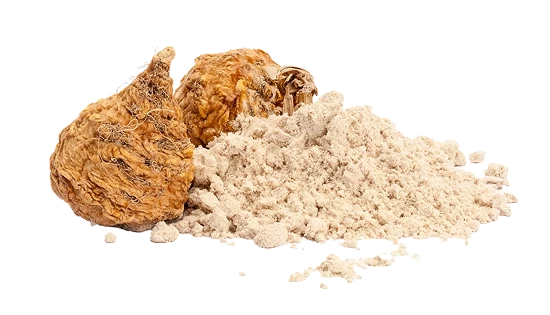
Red maca
Contributes to maintaining healthy sexual function, boosts libido, and has a potentially beneficial effect on fertility. It can also support men's reproductive health and improve physical and mental performance.
Related products
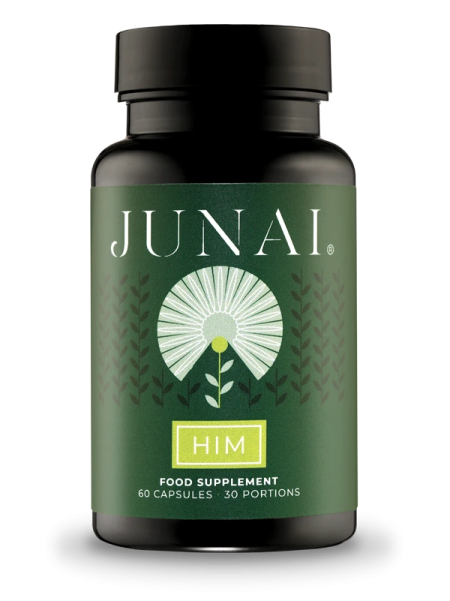
Junai Him
- Support faster body regeneration with zinc, which is essential for cell division, and vitamin B6, which helps in the formation of red blood cells.
- Piperine contributes to increased blood flow, and with that, to a more capable body during physical exertion.
- It increases libido and supports optimal well-being, extended endurance, and vitality through red maca.
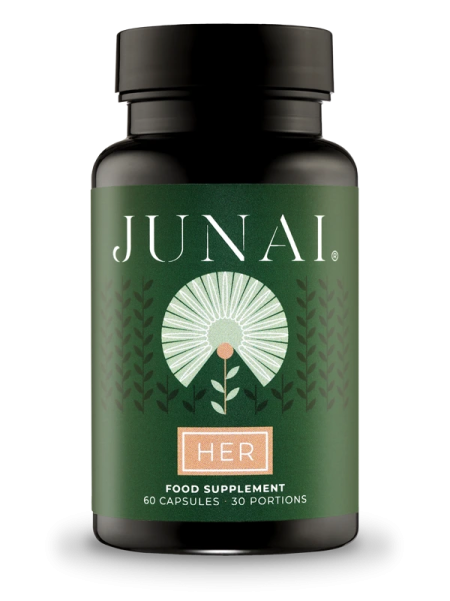
Junai Her
- Iodine from brown algae supports the thyroid.
- 10⁹ cultures of L. rhamnosus that support a healthy natural flora.
- Chlorella, vitamin B6 and black pepper help support the body’s defense against free radicals.
- Vitamin B6 contributes to the regulation of hormonal activity and helps reduce tiredness and fatigue.
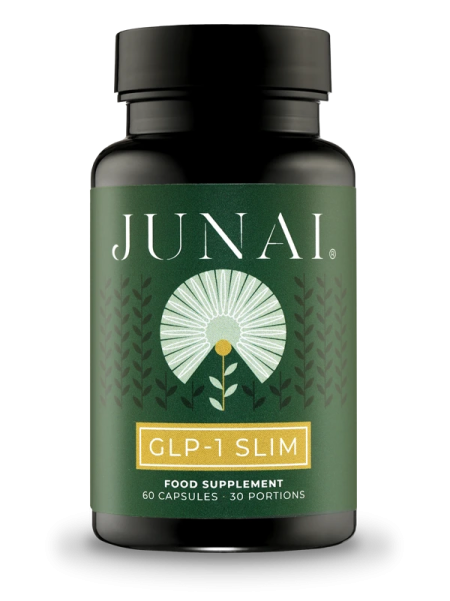
Junai GLP-1 Slim
- Helps balance blood sugar levels with chromium, which supports stable energy reserves.
- Piperine helps with body weight management.
- Contributes to carbohydrate metabolism with white mulberry and zinc.
- Zinc contributes to normal macronutrient metabolism.
Related posts
Turmeric: The Golden Ritual of Balance and Recovery
All about Turmeric's Benefits: A Potent Antioxidant and Anti-Inflammatory for Recovery & Daily Health

Piperine: What Makes It So Important in Dietary Supplements
Piperine, a bioactive compound found in many dietary supplements, plays a key role in the absorption of other compounds.

Biological availability: why nutrient absorption plays such a key role in dietary supplements
Biological availability describes the amount of an ingested substance taken that passes into the bloodstream after digestion and is thus available for the body to use.
