





Biological availability describes the amount of an ingested substance taken that passes into the bloodstream after digestion and is thus available for the body to use.
In dietary supplements, it's not just important how many nutrients they contain and provide, but also how much of them your body actually absorbs and can use.
Often, a large part of the vitamins, minerals, or plant compounds you take in can be broken down in the digestive system or are absorbed only in very small amounts. Consequently, the quantity of an ingredient on the label doesn’t always tell you how much your body will actually utilize.
This phenomenon is called bioavailability, a term that describes the proportion of a substance you consume that passes into the bloodstream after digestion and is available for your body to use.
This means that, when deciding on a supplement, it's important not just to choose the ingredients carefully but also check the quality of the formulation, or how the various ingredients are combined and prepared so that your body can make the most of them.
Why some ingredients in supplements work better than others
It's not just about what ingredients a product contains, but about how those ingredients are formulated. Two supplements can list the same amount of a certain ingredient on the label, but can behave very differently in your body.
Several factors affect bioavailability, including:
the chemical form of the ingredient
the method of extract preparation
the combination with other bioactive compounds
the ability to pass through the digestive system
That's why modern formulations of dietary supplements often include synergistic ingredients that complement and compound the effect of the main active components.
One of the most well-known examples of this formulation strategy is the use of black pepper extract (piperine). Piperine is often added to plant-based formulas, as it can drastically influence the absorption processes of certain bioactive compounds in the digestive system.
Even in complex formulas like Junai HER and Junai HIM, black pepper extract primarily plays a supporting role. It's added in small amounts as part of the formulation, where it helps the other ingredients shine and contributes to the overall product design.
What Influences Nutrient Absorption
Nutrient absorption is a complex process influenced by various factors. Even consuming a certain nutrient in abundant quantities doesn't necessarily mean that your body will absorb and utilize it effectively.
The biological availability of nutrients can be affected by different factors, including:
the form of the nutrient – some chemical forms of vitamins or minerals are absorbed more easily than others
metabolic enzymes – enzymes in the digestive system are involved in breaking down and absorbing nutrients
the condition of the digestive system – what's going on in the stomach, intestines, and gut microbiota can significantly impact nutrient utilization
ingredient combinations – some ingredients can work synergistically and affect the absorption of other bioactive compounds
For these reasons, modern formulations of dietary supplements often include synergistic ingredients that complement the action of the main active components and help optimize the entire formulation.
The Role of Formulation
When it comes to dietary supplements, it’s not just important which ingredients the product contains, but also how these ingredients are combined in the final formula. The formulation method can significantly affect the product's stability, the interactions between ingredients, and their biological availability.
A well-designed dietary supplement formula usually combines several different groups of ingredients:
active ingredients, the product's primary component, usually by weight but definitely by significance of effect
supportive ingredients, which complement the actions of the main components or assist in the formulation
stabilizing elements, which help maintain the product's quality, stability, and consistency
This approach allows the individual ingredients in the formula to not act in isolation, but to complement each other and create a synergistic effect.
A similar formulation approach is also used for complex dietary supplements, like Junai HER and Junai HIM, both designed as a combination of several carefully selected ingredients. Each ingredient has its own role in the overall design of the product, and together they form a balanced and thoughtfully crafted complex.
Why bioavailability is increasingly important for dietary supplements
In recent years, the development of dietary supplements has focused not only on the choice of ingredients but also on their bioavailability. This determines what percentage of the ingested substance the body actually absorbs and can use.
Research hsa clearly demonstrated that many botanical bioactive compounds have compelling properties, but they can only be absorbed in limited amounts in the body [1]. Product formulation is thus becoming an increasingly important factor in developing modern dietary supplements.
Manufacturers are therefore more frequently turning to standardized plant extracts, combinations of ingredients, and supportive components that complement the action of the main active compounds. This approach allows for more controlled formulation and stable product quality.
One of the most well-known examples of such a formulation strategy is the use of black pepper extract (piperine). Research indicates that piperine can influence the absorption processes of certain bioactive compounds in the digestive system [2]. Because of this, it is often used as a supportiing ingredient in complex formulas.
Even in modern dietary supplement formulas, such as Junai HER and Junai HIM, the product design is focused on a thoughtful combination of different ingredients. This approach allows individual components to function as part of a comprehensive formulation, complementing the role of other bioactive compounds in the product.
Does a larger amount of a supplement also mean a greater effect?
When it comes to dietary supplements, a larger amount of an ingredient doesn't necessarily mean a better effect. The bioavailability plays a key role, meaning the percentage of the substance that the body actually absorbs and can use after consumption.
If a certain compound is poorly absorbed or quickly metabolized in the digestive system, the body may simply excrete a large part of the amount consumed. In such cases, the quantity of the ingredient on the label doesn't indicate how much the body will actually utilize.
Because of this, modern development of dietary supplements increasingly focuses on product formulation, meaning the selection of appropriate ingredient forms, standardized plant extracts, and complementary combinations.
This approach allows individual ingredients to work as part of a thoughtful whole. Even with formulas like Junai HER and Junai HIM, the emphasis is on a combination of different ingredients, where each contributes its part to the overall design of the product.
In simple terms: when it comes to dietary supplements, it's not just important how many ingredients a product contains, but also how effectively the body can utilize them.
FAQ Frequently Asked Questions about Bioavailability and Nutrient Absorption
1. What does bioavailability mean?
Bioavailability refers to the proportion of a substance that, after digestion, is absorbed into the bloodstream and is available for the body to use. In dietary supplements, it determines how much of the ingested ingredient the body can actually utilize.
2. Why isn’t nutrient absorption always the same?
Nutrient absorption can be influenced by various factors, such as the chemical form of the nutrient, the condition of the digestive system, the presence of other nutrients, and the formulation of the dietary supplement.
3. Does a larger quantity of a supplement mean a greater effect?
Not necessarily. If a particular ingredient is poorly absorbed by the body, a large portion of the ingested amount may simply be excreted. Therefore, the quantity of an ingredient on the label doesn’t guarantee that the body will utilize it fully.
4. What affects the absorption of vitamins and minerals?
The following factors can influence absorption:
the chemical form of the nutrient
the functioning of the digestive system
the presence of other nutrients
the combination of ingredients in the formulation
5. Why is the formulation of a dietary supplement important?
A well-designed formulation can impact the stability of the ingredients and their interactions. Combining different ingredients can help optimize the product's overall effectiveness.
6. What does synergy of ingredients in dietary supplements mean?
Synergy means that multiple ingredients in a formula work together and complement each other. This approach is often used in complex dietary supplement formulas.
7. Why are standardized plant extracts used in supplements?
Standardization ensures that the extract contains a precisely defined amount of bioactive compounds, which allows for more consistent product quality.
8. Do all plant compounds get absorbed equally well?
No. Some bioactive plant compounds may be absorbed by the body less effectively than others, which is why product formulation is an important factor in the development of dietary supplements.
9. Why do manufacturers combine multiple ingredients in one supplement?
Combining multiple ingredients allows for the creation of complex formulas where certain components enhance the effectiveness of others.
10. Why is bioavailability important in dietary supplements?
Because it determines how much of the ingested ingredient the body actually absorbs and uses. Therefore, alongside ingredient selection, the design of the overall dietary supplement formula is also crucial.
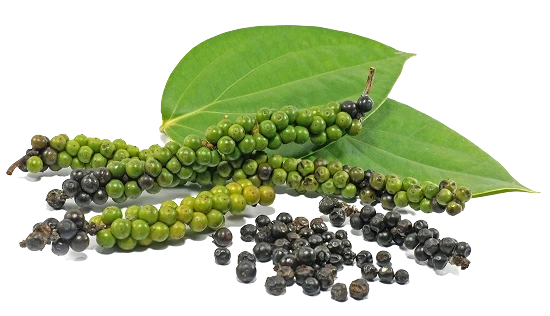
Black pepper
Black pepper isn't just a popular spice; it's often linked to many health benefits in traditional medicine. It’s thought to stimulate digestion, support nutrient absorption, invigorate the nervous system, and improve circulation, which is said to be good for your skin and liver.
Related products
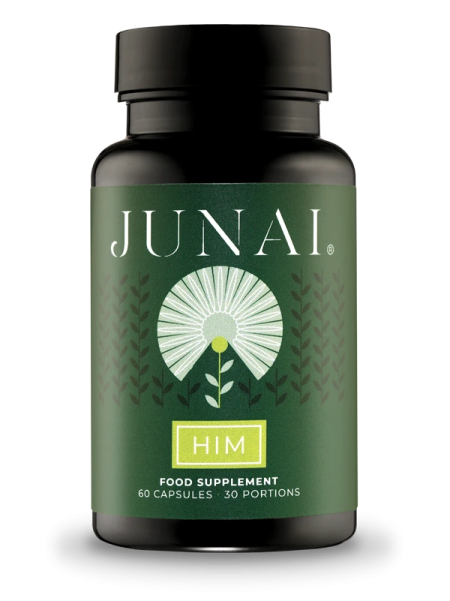
Junai Him
- Support faster body regeneration with zinc, which is essential for cell division, and vitamin B6, which helps in the formation of red blood cells.
- Piperine contributes to increased blood flow, and with that, to a more capable body during physical exertion.
- It increases libido and supports optimal well-being, extended endurance, and vitality through red maca.
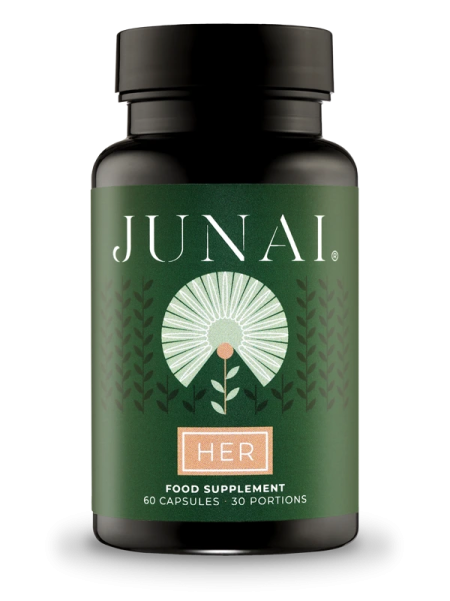
Junai Her
- Iodine from brown algae supports the thyroid.
- 10⁹ cultures of L. rhamnosus that support a healthy natural flora.
- Chlorella, vitamin B6 and black pepper help support the body’s defense against free radicals.
- Vitamin B6 contributes to the regulation of hormonal activity and helps reduce tiredness and fatigue.
Related posts

Piperine: What Makes It So Important in Dietary Supplements
Piperine, a bioactive compound found in many dietary supplements, plays a key role in the absorption of other compounds.
