




WHAT IS REISHI?
Reishi (Ganoderma lucidum), also known as the lacquered bracket or by its Chinese name lingzhi, is a type of shelf mushroom that grows on hardwood trees or fallen logs. It can act both as a parasite on living trees and a saprotroph, meaning it feeds on dead organic matter.
The term lingzhi (靈芝) translates roughly to "numinous" or "divine mushroom". References to the fungus's medicinal use date back over 2,000 years ago in Chinese texts. Similar reverence is found across other Asian traditions, where reishi was often divinely linked to longevity, vitality, and balance.
Modern science has confirmed cultural practice, identified a wide range of bioactive compounds within reishi, including its polysaccharides, triterpenes, and peptidoglycans (see the section below on HOW REISHI WORKS for an explanation of those multisyllabic words). These compounds are now studied for their effects on immune modulation, stress response, and recovery. As a result, reishi earned its place as one of the original and lasting members in the hall of the traditional adaptogens, alongside ingredients like ashwagandha and the other classics.
Reishi

WHY REISHI EXISTS FOR YOU
Ganoderma lucidum exists to ground the part of your life that never really powers down. Ours is a culture that rewards productivity, ignoring recovery at best and, at worst, openly scorning it. Hypercaffeination is our daily bread, since our energy and output are expected, with little external interest in why we might not be performing our best. In that social milieu, nobody bats an eye at your fifth cup of coffee for the day, but people get suspicious and judgmental the second you turn to something to decelerate and calm down. As if peaceful quiet itself were taboo and a sign of weakness.
That's exactly where reishi comes in, not to dull, not to sedate, not to make drowsy, but to support your body's shift out of a prolonged stress state and back toward balance. Where ingredients like ashwagandha help you handle stress while you're in motion, reishi is there to facilitate the transition to night mode. It helps your system let go of the day, so sleep becomes deeper, recovery becomes real, and you wake up with something actually restored.
WHAT REISHI DOES
First we'll give a list of what reishi does here in simple, understandable terms. In the following section, we'll describe in scientific terms the mechanisms behind each function.
Reishi works across three core domains: immune balance, stress regulation (with downstream effects on sleep), and recovery.
Supports Immune System Balance
Reishi helps regulate immune responses rather than simply boosting or increasing them. It supports the body when immune activity is low, while also helping to prevent excessive or prolonged activation, so inflammation doesn't continue unabated. This balancing effect is especially relevant in the conditions created by modern life and diets, as a result of which chronic, low-grade inflammation is more the rule than the exception.
Helps Regulate Stress Response
Reishi supports the body’s ability to handle ongoing stress by reducing the physiological burden associated with long-term stimulation. Instead of amplifying performance, it helps prevent the system from remaining in a constant state of activation, allowing for a more stable and sustainable response to stress. This is the classic hallmark of what makes an adaptogen.
Promotes Restful Sleep
Reishi does not act as a sedative. It doesn’t force sleep or create artificial drowsiness, so there's no need to worry about nodding off mid-sentence. Instead, it helps create the internal conditions required for sleep to occur naturally. By supporting a shift away from prolonged stress activation, it allows the body to enter deeper, more restorative sleep cycles.
Supports Recovery and Regeneration
By contributing to improved sleep quality and reduced systemic stress, reishi supports the body’s natural recovery processes. This includes both physical recovery and broader systemic restoration, helping the body return to baseline more efficiently after periods of strain.
HOW REISHI WORKS
Forewarned is forearmed: this section gets a little bit sciency. We'll try to keep the language readable, but the science itself will not be watered down.
The primary active compounds in reishi are polysaccharides and triterpenes, which play powerful roles in immune regulation, inflammation and recovery, and stress response.
Supports Immune System Balance
Reishi’s immunomodulatory effects, or its ability to help regulate the immune system, are largely driven by its beta-glucans, a class of polysaccharides that interact directly with innate immune cells. Innate immunity here refers not to antibodies, which are the product of adaptive immunity; innate immune responses are rather linked to inflammation, the body's first response to infection or irritation.
These beta-glucans bind to what are known as pattern recognition receptors such as Dectin-1, as well as Toll-like receptors (TLR-2 and TLR-4) on macrophages, dendritic cells, and neutrophils, all of which are innate immunity cells. This binding acts as a signal that mimics the presence of a pathogen, initiating a controlled immune response without an actual threat.
Once activated, these cells increase phagocytic activity (phagocytes are the cells that ingest and break down bacteria, dead cells, and foreign particles) and begin producing signaling molecules such as cytokines, including interleukins (IL-1, IL-6) and tumor necrosis factor-alpha (TNF-α). In cases of underactive or inadequate immune function, those cytokines help elevate responsiveness, improving the body’s ability to detect and respond to challenges.
At the same time, reishi contains triterpenes, particularly ganoderic acids (named, fittingly, for the Ganoderma genus itself), which act on transcription factors, proteins that control the rate at which genetic information is transcribed from DNA to messenger RNA, such as NF-κB, a central regulator of inflammatory gene expression. By modulating NF-κB activity, these compounds can reduce excessive cytokine production, preventing the kind of prolonged inflammatory signaling that characterizes chronic immune activation.
The result is not a linear increase in immune activity, but, crucially, a bidirectional adjustment. Immune responses become more appropriate to the context, more responsive when needed, and more restrained when overactive - right in the Goldilocks zone.
Helps Regulate Stress Response
Reishi’s effect on stress regulation is closely tied to its influence on the hypothalamic-pituitary-adrenal (HPA) axis, the central neuroendocrine system responsible for coordinating the body’s response to stress. If you need a refresher, we wrote extensively on the HPA axis in our blog on adaptogens. In brief: when you encounter any type of stressor, the hypothalamus releases corticotropin-releasing hormone (CRH), which signals the pituitary gland to release adrenocorticotropic hormone (ACTH). ACTH then stimulates the adrenal glands to produce cortisol, the body’s primary stress hormone.
Under healthy conditions, this system is self-limiting. Cortisol rises in response to a challenge, helps mobilize energy and sharpen alertness, and then gradually declines once the stressor has passed. The problem, particularly in modern environments, is that the system is often activated too frequently and for too long, keeping cortisol elevated beyond the period in which it is useful.
Reishi's triterpenes and polysaccharides have been shown to help modulate signaling across the HPA axis, reducing excessive cortisol responses and supporting a smoother return to baseline after stress exposure. Rather than suppressing the stress response outright, reishi helps restore feedback sensitivity, allowing the system to recognise when the threat has passed and to disengage accordingly.
At the same time, reishi may help shift autonomic balance away from sustained sympathetic nervous system dominance (the fight-or-flight state) and toward greater parasympathetic tone, which is associated with digestion and with the recovery and restorative rest discussed below.
The result is not numbness or sedation, but a more proportionate physiological response to stress: sharper activation when required, followed by a more efficient return to equilibrium.
Promotes Restful Sleep
Reishi’s effects on sleep are not driven by sedation, but by its influence on the neurochemical systems that regulate arousal and circadian rhythm. One of its key pathways involves histamine, a neurotransmitter that plays a central role in maintaining wakefulness (one of the reasons that strict antihistamines, like Benadryl, make you drowsy). Histaminergic neurons in the hypothalamus help sustain alertness throughout the day, but when histamine signaling remains elevated into the evening, it can interfere with the body’s ability to transition into sleep. Certain compounds in reishi, particularly its triterpenes, have been shown to modulate histamine release and receptor activity, helping to reduce excessive signaling promoting wakefulness without suppressing normal daytime alertness.
In parallel, reishi appears to influence GABAergic activity (discussed extensively in our blog on adaptogens), which is responsible for inhibitory signaling in the brain. GABA (gamma-aminobutyric acid) reduces neuronal excitability, acting as a counterbalance to stimulatory neurotransmitters. By supporting GABAergic tone, reishi may help facilitate the shift from a state of cognitive and physiological activation into one more conducive to sleep onset.
There is also evidence suggesting that reishi can indirectly support circadian alignment by modulating stress-related pathways. By helping regulate HPA axis activity, reishi contributes to a more appropriate decline in cortisol levels later in the day, reinforcing the body’s natural sleep-wake rhythm.
The combined effect is subtle but meaningful: not forced sedation, but a reduction in the internal signals that prevent sleep from happening when it should.
Supports Recovery and Regeneration
Reishi’s role in recovery is closely tied to its effects on inflammation and oxidative stress. At the cellular level, reishi’s polysaccharides and triterpenes interact with signaling pathways that regulate inflammatory responses, including NF-κB and MAPK pathways. By modulating these pathways, reishi can reduce the production of pro-inflammatory cytokines while preserving the signaling necessary for normal immune function and tissue repair.
In addition to its effects on inflammation, reishi exhibits strong antioxidant activity, helping to neutralize reactive oxygen species (ROS). While ROS play a role in cellular signaling, excessive accumulation can damage lipids, proteins, and DNA, impairing recovery processes. Reishi compounds have further been shown to enhance the activity of endogenous (innate) antioxidant systems, including enzymes such as superoxide dismutase (SOD) and glutathione peroxidase. This supports the body’s ability to manage oxidative load more efficiently, particularly during periods of increased demand.
There is also emerging evidence that reishi may influence mitochondrial function, the cellular systems responsible for energy production. By supporting mitochondrial efficiency and reducing oxidative damage, reishi contributes to more effective energy utilization and recovery at the cellular level.
Taken together, the mechanisms described above support a more efficient return to baseline after stress, whether that stress is physical, metabolic, or psychological. Recovery becomes less about passively resting and more about actively restoring the systems that sustain performance over time.
RESEARCH ON REISHI
Reishi has been subject to scientific research for decades, producing pages and pages of studies on the effects of its triterpenes and polysaccharides.
EFSA Claims and Regulatory Status
Health claims for botanicals such as reishi (Ganoderma lucidum) occupy a unique position within the European regulatory framework.
Several claims related to reishi, including those referring to immune function, cholesterol levels, and circulatory health, have been submitted and are currently listed in the EU Register as “on hold.” This means they have been published and formally recorded, but have not yet undergone full scientific evaluation by the European Food Safety Authority (EFSA). The official on-hold claims are:
Induces cytokine production (e.g. TNF-alpha and IFN-gamma), helping to support the immune system
Helps decrease cholesterol levels
Stimulates the body in exhaustion
Contributes to maintaining a healthy circulatory function
Officially, then, there are currently no authorised EFSA health claims for reishi that can be used in the same way as approved claims for vitamins or minerals. This does not mean that reishi lacks scientific support. On the contrary, a substantial body of research exists exploring its effects on immune modulation, stress response, and recovery. However, the regulatory process for botanicals has remained unresolved for years, leaving many traditionally used and scientifically studied ingredients hanging in limbo in this interim category.
For this reason, rather than relying on simplified, pre-approved claim language, the information presented on this page focuses on:
established mechanisms of action
findings from international research
and historical patterns of use across traditional systems
International Studies
The state of EFSA's red-tape in letting botanicals languish in limbo is a bit bizarre given the mountains of research on reishi, which explain at the mechanistic level how and why reishi is such a prized member of the adaptogen family. To give you a clearer picture of how reishi works in real-world contexts, here are a few key studies for your reading pleasure, some of which are already linked in the footnotes of the previous section.
Reishi's effects on immunomodulation
This article explores all the compounds in reishi that the body can use to help guide its immune response.
An article on how reishi's polysaccharides help the body control signalling proteins for regulating immune response.
A study investigating the immune effects of some of reishi's star compounds: β-1,3; 1,6 D-Glucan.
Another study showing how reishi helps the body control its immune response through signalling proteins.
Mood and stress response
A fascinating study demonstrating how reishi's mechanisms for stress regulation can even be used to treat chronic depression
Anticancer and antitumor effects
A study exploring the anti-cancer and anti-tumor effects of reishi's bioactive compounds.
Effects on sleep and recovery
Exploring the connection between intestinal bacteria, reishi, and serotonin pathways.
Extract of Ganoderma lucidum potentiates pentobarbital-induced sleep via a GABAergic mechanism
An article explaining how reishi influences GABAergic activity.
Though the title suggests perhaps that some extracts don't work as well, this study investigates in detail how reishi aids in specifically restful sleep.
A study showing how reishi can help with chronic conditions related to sleep induction.
HOW TO USE REISHI
Consistently, over time. Reishi does not contain fast-acting compounds. Their effects build gradually, supporting systems involved in stress regulation, sleep, and recovery. Consistency matters far more than precise timing, though it is most commonly used in the evening to support the transition into rest. We strongly recommend combining it with ashwagandha for the optimum way to combat stressors throughout the whole day and night.
Traditional usage
Reishi has a long history of use in traditional Chinese medicine, where it was classified as a superior herb, meaning it was believed to support long-term health, vitality, and balance without depleting the body.
Unlike many medicinal mushrooms, reishi was rarely consumed as food due to its tough, woody structure and intensely bitter taste. Instead, it was traditionally prepared as a decoction, simmered for what might seem like comically long periods for basically brewing a tea (including up to a whole day) to extract its active compounds into water.
These preparations were often used as part of daily tonics aimed at supporting longevity, calming the mind, and strengthening what traditional systems described as shen, loosely associated with mental clarity and emotional stability. The emphasis was not on acute effects, but on long-term regulation, aligning closely with how reishi is understood today.
Modern usage
Reishi’s modern use reflects the same needs it has always addressed, most commonly included as part of evening routines designed to counter stressful lifestyle patterns stemming from modern culture. Not as a sedative, but as a way to help the body shift out of prolonged activation and into a state more conducive to rest. Today, reishi is most often consumed in the form of extracts, powders, teas, and capsules, each offering different advantages in terms of convenience, concentration, and spectrum of compounds.
Dosage and forms
Reishi is available in several forms, each with slightly different characteristics.
Extracts are the most common in supplements, often standardized for polysaccharide or triterpene content. These provide more consistent dosing and are typically used in the range of 1,000 to 3,000 mg per day, depending on concentration and extract ratio (for example, 10:1 extracts). Powders made from the whole fruiting body retain a broader range of compounds but are less concentrated. Because of this, dosages tend to be higher and less precise, often falling in the range of 1,500 to 5,000 mg per day. Teas and decoctions reflect traditional use, though they require longer preparation times to effectively extract active compounds. These are often used more for ritual and consistency than precise dosing.
As with most adaptogens, the goal is not acute effect but steady, repeated input. Start with lower doses and increase gradually based on individual response.
When to take reishi
Reishi is most commonly taken in the evening, where its effects on stress regulation and sleep quality are most noticeable.
Evening use supports:
transition out of a prolonged stress state
improved sleep onset and depth
more effective overnight recovery
It can also be taken earlier in the day in smaller amounts, particularly by people experiencing heightened stress, though its primary role is in supporting the wind-down phase.
Other ingredients to combine it with
Reishi works well on its own, but its effects are most noticeable when it is paired with ingredients, especially other adaptogens, that support the other side of the stress cycle. It is often combined with:
ashwagandha, to support the whole stress response system
magnesium for nervous system support and for better sleep
other compounds that support sleep architecture and recovery
In these combinations, reishi acts less as a driver and more as a regulator, helping other ingredients operate within a more balanced physiological environment. We strongly recommend pairing reishi with ashwagandha; used together, they form a more complete approach: one helps you handle stress as it happens, the other helps you let go of it when the day is done.
This pairing reflects a more natural rhythm: activation followed by recovery and effort followed by restoration. Rather than pushing the system in one direction, it supports the full cycle, making sure that what you take from the system during the day is properly returned at night.
Consistency over intensity
Taking more reishi does not necessarily produce stronger effects.
Its primary mechanisms involve gradual modulation of immune, endocrine, and nervous system activity. These systems respond best to consistent, repeated exposure, not large, irregular doses.
Think of reishi less as something you “feel” immediately, and more as something that quietly reshapes how your system behaves over time.
What to mix it with
Reishi, especially in the raw powder form that we carry, has a naturally bitter, earthy taste that can be difficult to consume on its own. Capsules and extracts are the most convenient way to avoid the taste entirely. If using raw powder, we suggest incorporating it into warm liquids such as tea, coffee, or cocoa, where its bitterness can be balanced or masked.
This mirrors its traditional use as a decoction, while adapting it to modern preferences and routines. Keep in mind that reishi has both water- (polysaccharides) and alcohol-soluble (triterpenes) compounds, which is why dual extraction methods are usually employed. Taking reishi with healthy fats increases absorption, but it is not like, e.g., turmeric, which relies on fat for bioavailability.
WHO NEEDS REISHI?
Reishi is not for people looking for a spiritual bridge to Ancient China, nor does it provide a feeling either of immediate stimulation or immediate sedation. Indeed, there is little noticeable short-term effect. Instead, reishi is for people who feel like their system rarely powers down. It's for people who struggle to fall asleep, then wake up a few hours later, unrested and confused as to what the point of going to bed was in the first place. It's for people in this modern life whose days are defined by output, but whose recovery feels incomplete.
Reishi is particularly relevant if:
your stress feels constant rather than situational
your sleep is light, interrupted, or unrefreshing
you are bombarded by stimulus during the day, but struggle to slow down in the evening
Reishi also makes sense for people who are not necessarily overwhelmed, but who recognise the long-term health costs and risks of keeping your system in a low-level stress state for too long. It is not about fixing a single symptom, but about supporting the systems that allow the body to return to balance, consistently, over time.
HOW AND WHY JUNAI USES REISHI
Junai uses the whole fruiting body of 100% pure, organic Ganoderma lucidum of Chinese origin, ground into a fine powder. As with the other adaptogens we offer, the choice to use raw powder was a conscious one. While extracts certainly have their advantages, they are costly on one hand and they fail to supply you with ancillary compounds the source material contains. Raw powder allows us to make reishi more accessible to you, while providing you with the whole range of bioactive compounds the mushroom contains.
We are thrilled to offer reishi as a standalone product, as well as in support of all 3 of our hero products:
Junai HIM → resilience, support for recovery and regeneration
Junai HER → nervous system support, immune support
Junai SLIM → mitigated stress-related cravings
CONTRAINDICATIONS
Research has shown that reishi is mostly safe, with few contraindications; nonetheless, a few exist, and you should be aware of them. Reishi has been shown to potentially thin the blood, and so is strongly contraindicated for people:
with bleeding disorders or taking anticoagulants/immunosuppressants, as reishi has been shown to potentially slow blog clotting
with low blood pressure or on blood pressure medication, as the combination with reishi can cause BP to drop too low
taking diabetes medications, due to reishi's potential for lowering blood sugar
taking other medications known for liver toxicity,
Reishi should be avoided 2 weeks before surgery due to the potential for bleeding risks during the operation.
Reishi is also not recommended for women who are pregnant or breastfeeding. This is not due to any research demonstrating an actual risk, but because of a lack of robust science on the subject. When pregnant and in doubt, always err on the safe side.
WHAT TO EXPECT WITH REISHI
Reishi isn't an ingredient you feel in an instant. Its effects build gradually, often becoming noticeable over the course of several days to weeks of consistent use. The changes are subtle at first, but they compound.
Most people report enjoying:
an easier transition into sleep
deeper, more restorative rest
a calmer baseline during the day, and especially during the evening
Rather than producing a distinct, acute effect, reishi's role is in reducing friction points within the body that trigger or keep activated its stress response system. Falling asleep becomes easier, waking up actually feels like a good idea, and stress responses become less dramatic, less prolonged, and less taxing in resources.
As with most adaptogens, consistency is key. The benefits of reishi emerge through consistent, repeated use, as regulatory systems gradually shift toward a more balanced state.
What NOT to Expect with Reishi
It is also worth noting what reishi does not do: it doesn't act as a sedative, it doesn't impair alertness or cognitive function, and it doesn't override the body’s natural rhythms. Instead, it supports them, allowing those rhythms to reassert themselves more clearly.
Potential side effects
Reishi mushroom can cause dizziness, dry mouth, itching, nausea, stomach upset, and rash.
QUICK RECAP OF REISHI
Much more than just a mushroom used in Ancient Chinese medicinal practice, reishi or Ganoderma lucidum is:
One of the most classical adaptogens, along with ashwagandha,
Full of bioactive compounds that help regulate the body's stress response, control its inflammation response, modulate the immune system, and help you fall asleep and wake up rested.
A key ally in the modern world, which is designed to keep your stress response system in constant overload
Available in many formats, including standardized extracts and Junai's raw powder
Both water- and alcohol-soluble, and mixing with healthy fats increases absorption
Effective in consistency, not immediate effect. That means it's not important what time of day you take it, though we suggest using it during the day and combining it with ashwagandha for the evening.
Not a mystical miracle fungus, despite being used in Ancient China. It's a slow, gradual burn, taking weeks to build up a cumulative effect.
To be taken in small quantities at first and gradually increased as the body adapts and responds
UNDER NO CIRCUMSTANCES to be taken when pregnant or breastfeeding, when on blood pressure medicated, diabetes medication, or anticoagulants, or in combination with other medications known for liver toxicity.
Related ingredients

Ashwagandha
Ashwagandha (Withania somnifera) is an adaptogenic plant usually consumed in the form of ground, dried root powder. Used for centuries in Ayurveda, it is one of the most classic adaptogens, known for its ability to bring the nervous system back to baseline.
Related products
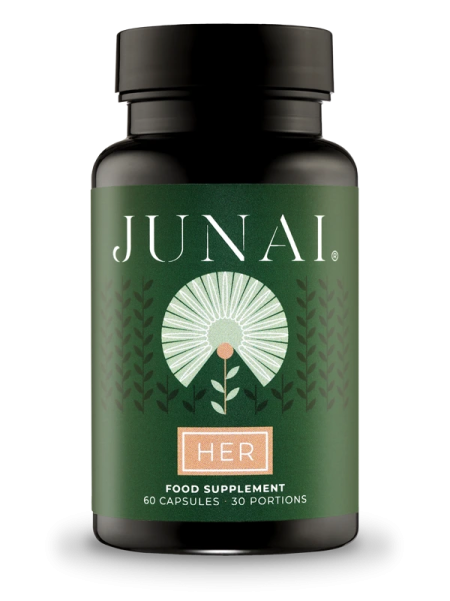
Junai Her
- Iodine from brown algae supports the thyroid.
- 10⁹ cultures of L. rhamnosus that support a healthy natural flora.
- Chlorella, vitamin B6 and black pepper help support the body’s defense against free radicals.
- Vitamin B6 contributes to the regulation of hormonal activity and helps reduce tiredness and fatigue.
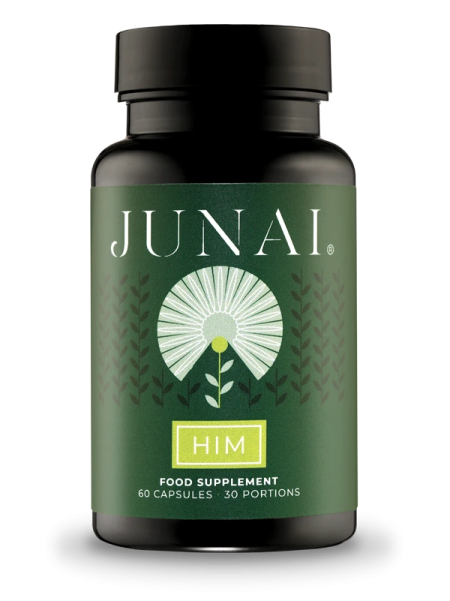
Junai Him
- Support faster body regeneration with zinc, which is essential for cell division, and vitamin B6, which helps in the formation of red blood cells.
- Piperine contributes to increased blood flow, and with that, to a more capable body during physical exertion.
- It increases libido and supports optimal well-being, extended endurance, and vitality through red maca.
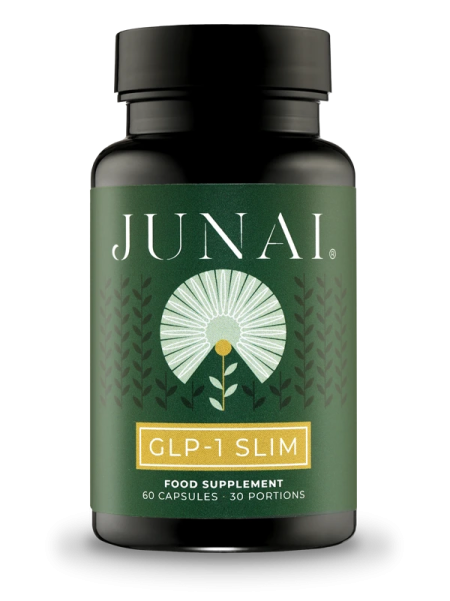
Junai GLP-1 Slim
- Helps balance blood sugar levels with chromium, which supports stable energy reserves.
- Piperine helps with body weight management.
- Contributes to carbohydrate metabolism with white mulberry and zinc.
- Zinc contributes to normal macronutrient metabolism.
Related posts

Adaptogens Explained: Breaking Down the Buzzword
All about adaptogens, from breaking down the buzzword to an exploration of the HPA, cortisol spikes, and how to bring the body back into balance.

Biohacking intro
Take your base state to a new level by controlling when, what, how, and how much you put in your body.

Turmeric: The Golden Ritual of Balance and Recovery
All about Turmeric's Benefits: A Potent Antioxidant and Anti-Inflammatory for Recovery & Daily Health
