





All about Turmeric's Benefits: A Potent Antioxidant and Anti-Inflammatory for Recovery & Daily Health
Familiar to any home cook who has ever tried to scrub its stubborn yellow stains from a countertop, turmeric is most often seen as a simple spice, dye, or seasoning.
Hiding within that vivid color is something far more interesting. Turmeric contains a range of powerful bioactive compounds, most notably curcumin, known for its antioxidant properties and its ability to boost the body’s natural response to inflammation and stress. Science is discovering enough qualities about curcumin to rank turmeric rightly among the adaptogens.
Spice Market

The Golden Spice: From Building Empires to Modern Medicine
With a color so unmistakable, turmeric has drawn attention for millennia.
Native to India, turmeric was one of the most valuable commodities travelling the Silk Road, finding its way into kitchens, rituals, and traditional practices across Asia, the Middle East, and beyond.
In Ayurveda, India’s traditional medical system, it was valued not just as an ingredient, but as a daily support for overall balance and wellbeing. Still today, turmeric holds divine connotations in many Indian traditions. Its role in trade helped shape entire regions, providing the wealth that built the major port of Malacca and the Calicut kingdom in Kerala.
What traders and healers understood through experience, modern science has begun to explain.
Curcumin, the compound behind turmeric’s deep color, has been widely studied for its antioxidant and anti-inflammatory properties, as well as its broader role in supporting metabolic health, mental clarity, and long-term wellbeing.
Turmeric may no longer be traded like gold, but its value hasn’t diminished. If anything, we’re only beginning to understand how valuable this humble rhizome really is.
Turmeric in the Bhandara (Great Turmeric) Festival in Jejuri

Botanical Basics: How and Where Turmeric Grows
Native to India, the turmeric plant thrives in warm, humid climates, where seasonal rains, familiar to us as monsoons, help shape its growth cycle. It’s a perennial plant that sends up broad green leaves in alternating rows, with flowers that range from white to yellow, nestled within pink or green conical bracts.
Though all of it is edible, the part of turmeric we traditionally consume is its rhizome, similar to ginger or galangal. Rhizomes are underground stems, which slowly expand either completely or partially underground, while sending out both roots and shoots.
Over the course of 8 to 10 months, this subterranean jewel develops its characteristic deep golden-orange color, the natural signature of the compounds that make turmeric so valued. It is not a quick crop, just as the support curcumin provides the body is gradual and methodic, so is turmeric’s growth slow and steady.
Turmeric Rhizome

A Potent Remedy Hiding in the Pantry
Turmeric joins a list of other seemingly innocent ingredients in the pantry that are secretly hiding wonderful health benefits.
As we pointed out in our blog on bladderwrack, the line between remedy and medicine is very fine. Often what we consider medications are just concentrated forms or extracts of a bioactive compound found in a plant (think aspirin, originally inspired by salicin in the bark of willow trees) or fungus (think penicillin and other myco-antibiotics).
By no means is the list below exhaustive, but it serves as a subtle reminder that, with a little bit of understanding about bioavailibility, familiar foodstuffs can become powerful amelioratives:
Joint pain/inflammation: ginger, garlic, turmeric
Digestive issues: walnut, ginger, peppermint, clove, rosemary
Antioxidants: rosemary, cranberries
Blood sugar management: cinnamon, fennugreek
Cognitive function: lemon balm
Circulation: black pepper, chili peppers, rosemary, garlic
Etc.
Individually, these ingredients are useful. Combined thoughtfully, they become something far more effective. Our Junai Her deeply respects both the tradition of garden to wellness and the premeditated combination of coactive ingredients. It incorporates into a synergy rosemary, lemon balm, and black pepper, which, as you’ll read below, is far more important than you ever realized.
Turmeric and Other Spices

Golden Milk and the Bioavailability of Curcumin
It’s hard to have spent any time online in the past decade without encountering “golden milk”, a warm blend of milk and turmeric, glowing with that unmistakable yellow hue.
Its popularity peaked during the COVID pandemic, when people began searching more actively for ways to support their health and cure their boredom. Unlike many short-lived wellness trends, though, this one rests on something more solid than aesthetics.
It solves a real biochemical problem:
Curcumin, the active compound that makes turmeric so interesting from a modern scientific perspective, is notoriously difficult for the body to absorb. On its own, very little of it actually makes its way into the bloodstream.
There are three main reasons for this:
Low water solubility
Curcumin does not dissolve well in water, which limits its stability and absorption in the digestive tract
Rapid metabolism
It is quickly broken down in the liver and intestines, often before it can be utilized
Poor bioavailability
A large portion of turmeric passes through the digestive system largely undigested and thus unabsorbed
Golden MIlk

Mixing Curcumin with Fat
This is where things become more interesting (and not to mention tastier).
Curcumin is fat-soluble, which means its absorption improves significantly when consumed alongside fats, including the natural lipids found in milk.
Golden milk, then, is not just Instagrammably appealing; it’s a simple, effective way to make curcumin more usable for the body.
Ironically, though, using skim milk, the so-called healthiest version of milk, defeats the whole purpose of fat solubility. This highlights an important principle that’s worth emphasizing: true health rarely lives in extremes.
While reducing excessive fat intake is certainly beneficial, completely removing fat from your diet can also, among other things, limit how well certain nutrients are absorbed.
Context matters. Balance matters. And in this case, a pinch of healthy fat makes all the difference.
Absorption: Why Turmeric Needs Piperine
If lipids crack open the door for increased delivery of curcumin, black pepper throws it off the hinges.
Piperine, the active compound in black pepper giving its characteristically spicy aroma, is one of the most effective natural enhancers of curcumin absorption.
It works through several mechanisms:
Enhanced nutrient uptake
Piperine increases blood flow in the digestive tract, facilitating the transport of nutrients into the bloodstream
Improved intestinal permeability
It induces the intestinal lining to expand in a way that increases surface area and allows greater absorption of compounds like curcumin
Slower metabolic breakdown
Piperine inhibits certain enzymes (UDP-glucuronyl transferase and aryl hydrocarbon hydroxylase) in the liver and intestines, preventing them from breaking down curcumin and letting it remain active in the body for longer
Without being combined with fat or black pepper, turmeric is mostly just potentially good for you. In combination, it becomes functional, and curcumin starts slowly but steadily working its wonders.
Turmeric and Black Pepper

Turmeric Benefits for Joints, Recovery, Metabolism, and Daily Vitality
Nearly all of the benefits associated with turmeric can be traced back to one overarching truth:
Curcumin powerfully supports the body’s natural response to inflammation and oxidative stress.
Understanding those two processes is the key to grasping why regular consumption of turmeric feels the way it does over time.
Natural Inflammation Support
Inflammation is such a misunderstood concept that we should probably write a whole blog about it. To start with, inflammation is not inherently bad. It’s actually a necessary part of how the body protects and repairs itself.
Broadly speaking, there are two types:
Local inflammation
This is the acute, targeted response most people recognize. A sprained ankle becomes swollen, warm, and sensitive as the body directs healing resources to the area. This process is localized and temporary, focused on healing a specific site.
Systemic inflammation
This is a more diffuse, long-term state, where inflammatory signals circulate throughout the body. It is often associated with chronic stress, poor recovery, and modern lifestyle factors, and has been widely studied for its connection to long-term health challenges.
Hiding within those concise descriptions, though, is a complex network of signals and responses that modern science is still working to fully understand. Inflammation, as modern medicine is discovering, is either responsible for or inextricably connected to a staggering amount of illnesses and conditions.
Freshly Grated

Luckily for those of us with access to a spice rack, curcumin has been extensively studied for its ability to support the body’s regulation of inflammatory pathways, helping maintain balance without interfering with necessary healing processes.
Oxidation, Soreness, and Recovery
That familiar feeling of post-workout soreness isn’t just about muscles being “worked”.
It’s the result of two overlapping processes:
localized inflammation from physical stress
oxidative stress within muscle tissue
Curcumin addresses both.
As an antioxidant, it works in several complementary ways:
Direct support
Its structure allows it to neutralize reactive oxygen and nitrogen species, which helps repair cellular stress
Indirect support
It activates internal signaling pathways that help the body produce and propagate its own antioxidant enzymes
Protective role
It helps maintain cellular integrity under stress
The result isn’t an immediate numbing of soreness, but something more useful:
A body that gradually becomes better at handling physical stress.
Over time, this can translate into:
smoother recovery
less lingering discomfort
and a more consistent ability to stay active
What Turmeric Feels Like Over Time
As an adaptogen, turmeric’s benefits are cumulative. Consistency and optimizing bioavailability are crucial. While individual experiences vary, people often describe changes along a timeline like this:
1 week
The effects will be largely negligible, or even might seem bad at first, especially if you are taking too much. You might notice what people describe as a “warm” feeling in the stomach.
2 weeks
You should be looking forward to your daily ritual of consumption, finding comfort in your golden milk. This is the time where people first report feeling less anxious or jittery.
1 month
Most people report feeling lighter and less bloated. This is most likely due to the anti-inflammatory effects working in the gut. Some people report huge improvements in conditions like IBS.
2-3 months
This is where the body has fully adapted to regular, consistent intake of curcumin. The local and systemic inflammation responses should be significantly changed, and people report much more ease and comfort with mobility.
So... What Problem Is Turmeric Solving for You Right Now?
At the very least, it can save a meal from being bland or too visually boring. But more realistically, turmeric’s effects appear as solutions to quieter, more long-term problems. They don’t necessarily feel like emergencies, but they don’t feel quite right either:
Recovery that takes longer than it used to
Low-key, persistent fatigue and malaise
Lingering post-workout soreness and stiffness
The general sense that your body isn’t keeping up the way it once did
These aren’t conditions themselves but signals that often point back to the same underlying themes:
inflammation
stress
imbalance
Turmeric doesn’t fix any of these things overnight. What it does is support the systemic responses behind them. Gradually. Consistently. Even almost invisibly at first.
One day, things with and within your body just feel… easier.
A Habit Worth Its Weight in Gold
From building ancient empires to curry mixes to popping up in mid-pandemic Instagram trends, turmeric’s golden hue has been a culinary and medicinal treasure for millennia. That staying power mirrors curcumin’s role in the body: steady, consistent support over time, much like the slow movement of spice merchants trading along the ancient Silk Road.
Like the rhizome it grows from, its effects build slowly, beneath the surface, until one day it sprouts up and you notice the blossom. Use high-quality turmeric consistently and in the right way, and you will have formed a habit worth its weight in gold.
Indian style rice with chicken

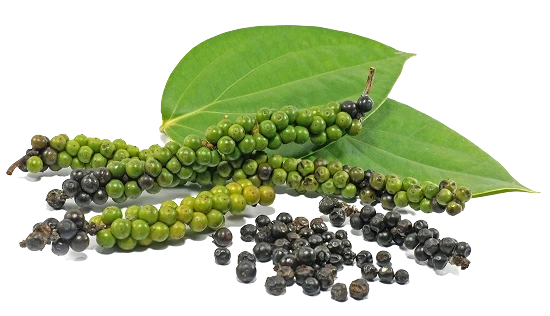
Black pepper
Black pepper isn't just a popular spice; it's often linked to many health benefits in traditional medicine. It’s thought to stimulate digestion, support nutrient absorption, invigorate the nervous system, and improve circulation, which is said to be good for your skin and liver.
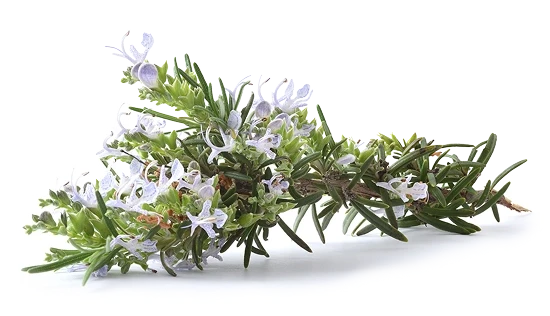
Rosemary
Rosemary is an aromatic Mediterranean herb that has been used in traditional medicine for millennia. Modern science has shown its potential for battling oxidative stress and aiding in bodily detoxification processes.
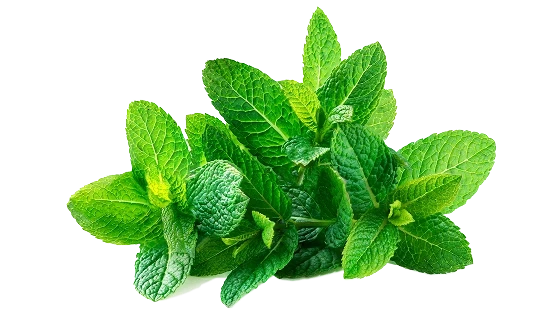
Lemon Balm
Melissa has been used for centuries in traditional medicine for its calming properties. Its bioactive compounds support mental well-being, improve cognitive functions, and aid in digestion.
Related products
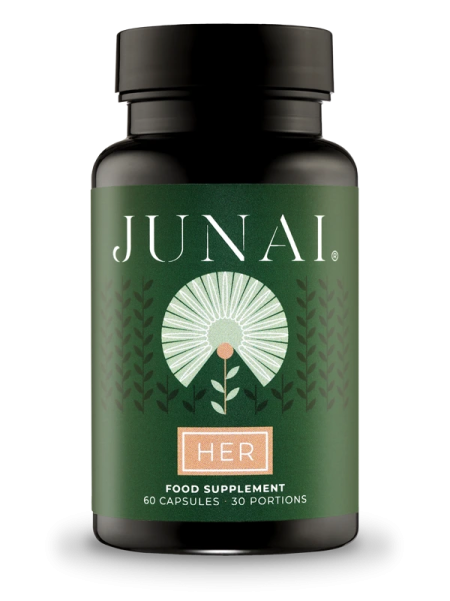
Junai Her
- Iodine from brown algae supports the thyroid.
- 10⁹ cultures of L. rhamnosus that support a healthy natural flora.
- Chlorella, vitamin B6 and black pepper help support the body’s defense against free radicals.
- Vitamin B6 contributes to the regulation of hormonal activity and helps reduce tiredness and fatigue.
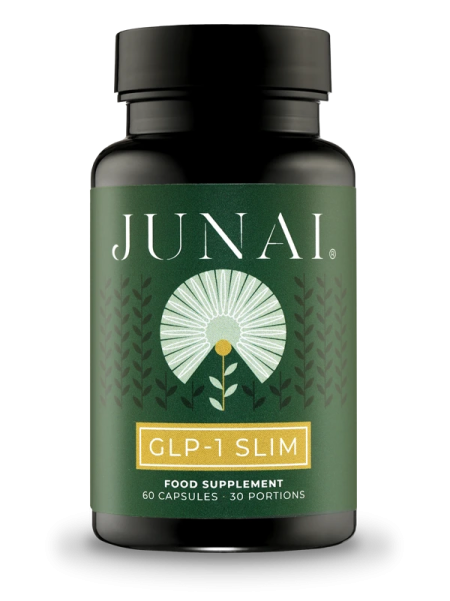
Junai GLP-1 Slim
- Helps balance blood sugar levels with chromium, which supports stable energy reserves.
- Piperine helps with body weight management.
- Contributes to carbohydrate metabolism with white mulberry and zinc.
- Zinc contributes to normal macronutrient metabolism.
Related posts

Adaptogens Explained: Breaking Down the Buzzword
All about adaptogens, from breaking down the buzzword to an exploration of the HPA, cortisol spikes, and how to bring the body back into balance.
